A Complete Guide to Cryptocurrency Regulations in the UAE (2026)

Crypto activity in the Emirates keeps growing. Chainalysis measured the inflows received by the country at more than 56 billion dollars across the 2024 to 2025 reporting window, a 33 percent rise that institutional money largely accounts for. Salaries, supplier invoices, and large one-off deals now change hands in digital assets across Dubai every day. What makes that ordinary commerce possible is a supervisory framework that regulators rebuilt almost from scratch between 2024 and early 2026.
National ambition has worn some loud labels, among them the Emirates Blockchain Strategy and pilots such as "Project Aber." Underneath the slogans, the federation has spent years assembling a digital economy its regulators can actually watch over. Responsibility for that supervision is split across five separate authorities today. Working out which one owns which question is where any firm should begin if it is weighing a license application, a token listing, or a treasury allocation in the region.
Cryptocurrency Regulations in the UAE [UAE Crypto Regulations]
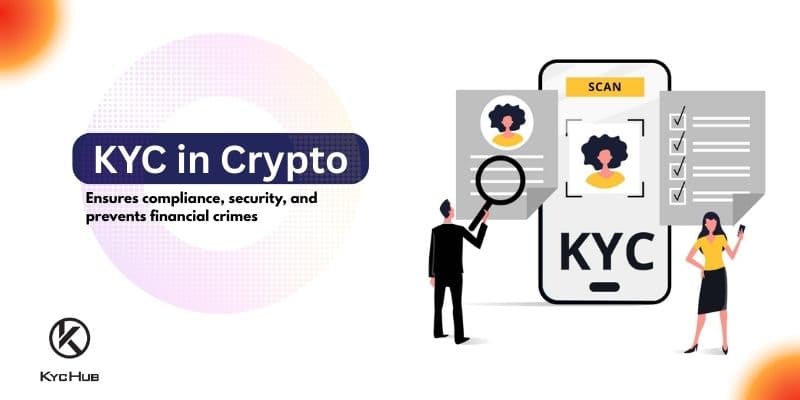
Demanding anti-money-laundering and know-your-customer standards form the legal base for cryptocurrency in UAE businesses. The point of those standards is to keep criminals from pushing Bitcoin and similar assets through laundering schemes or terrorism financing channels. Firms clear the bar by running AML screening and monitoring software, which tests each customer against UN, OFAC, EU, UK, and UAE-specific watchlists and continues to monitor that customer well past the onboarding stage.
What those standards require breaks down into a few headline obligations.
- AML and KYC Procedures: Any firm serving the crypto UAE market has to operate rigorous AML and KYC processes. Before a trader or investor can transact, they must hand over identification and evidence of their financial standing, and that gate keeps decentralized assets away from illicit hands.
- Regulatory Framework for VASPs: Cabinet Decision No. (111) of 2022 established the federal regime for Virtual Asset Service Providers, taking effect on 14 January 2023. Its reach covers virtual asset operations and management, exchange services, transfers, brokerage, and custody. Compliance binds VASPs to Federal Decree-Law No. (10) of 2025 on anti-money laundering and countering the financing of terrorism and proliferation financing, which replaced Federal Decree-Law No. (20) of 2018 from 14 October 2025 and now expressly reaches virtual assets. The same obligations extend to that law's implementing regulation and to the FATF standards governing virtual asset operations. From 1 January 2026, Federal Decree-Law No. (33) of 2025 brought virtual assets used for investment purposes under the new Capital Market Authority, which is the federal successor to the Securities and Commodities Authority.
- Compliance and Risk Management: VARA's Compliance and Risk Management Rulebook fixes the local benchmark for AML and CFT controls. Those duties belong to the Money Laundering Reporting Officer. Specifically, the MLRO runs the AML business risk assessment, keeps the policies current, supervises customer due diligence and transaction monitoring, files suspicious activity reports, applies the FATF Travel Rule, and retains records for a minimum of eight years. Under the Travel Rule, a VASP has to attach originator and beneficiary details to any virtual asset transfer above AED 3,500, which is roughly 1,000 dollars. Full compliance with VARA's updated Travel Rule requirements became mandatory on 19 June 2025.
These obligations reveal how seriously the authorities approach the task of standing up a safe venue for crypto activity that satisfies international expectations. The financial system gains protection from disciplined AML and KYC controls. They earn something else as well: the confidence of investors and companies placing bets on crypto in the UAE.
Is Crypto Trading Legal in Dubai?
Yes. You can legally trade Bitcoin, Ethereum, and other tokens in Dubai. Within the emirate, virtual asset activity falls under the Dubai Virtual Assets Regulatory Authority (VARA), and at the national level the federal Capital Market Authority (formerly the SCA) and the Central Bank of the UAE set the policy direction. Inflows to the country passed 56 billion dollars over the 2024 to 2025 period. VARA's public register now carries dozens of licensed virtual asset service providers, a combination that ranks Dubai among the more credible crypto jurisdictions found anywhere.
Recent Developments in the UAE's Cryptocurrency Regulations
Few jurisdictions revise their crypto rulebook as often as the UAE does, and the aim behind that churn is straightforward. Authorities want the country recognized as the world's reference point for regulated digital assets. Several developments from the last two years deserve a closer look.
- Strategic Initiatives and Regulatory Frameworks:
Half of all federal government transactions were supposed to move onto blockchain rails under the Emirates Blockchain Strategy, and that target told you early on how hard the leadership intended to push the technology.
When VARA was created alongside the 2022 Virtual Assets Law, Dubai gained a permanent regulator for cryptocurrencies, tokens, and NFTs in place of scattered, case-by-case guidance.
January 2026 brought the deepest structural change of all. On 1 January 2026, Federal Decree-Law No. (32) and No. (33) of 2025 dissolved the Securities and Commodities Authority and stood up the Capital Market Authority in its place, a federal body that reports to the Cabinet. Every right and obligation the SCA once held passed to the CMA. Explicit authority over investment-grade virtual assets came with it, as did the power to pursue criminal penalties reaching AED 250 million for unlicensed financial activity.
- Licensing and Compliance:
A VASP working out of Dubai requires a VARA license, while any firm conducting federal-level securities or virtual asset investment activity now reports to the CMA. On 13 April 2026 the CMA issued Decision No. 4/R.M/2026, a rulebook of five modules spanning general requirements, conduct of business, alternative trading systems, AML and CFT, and prudential requirements. Eight licensed activities are defined in it, with the minimum capital scaling from AED 500,000 for a multi-party trading platform up to AED 4 million for dealing as principal.
Virtual asset operations, platform management and trading included, have to secure prior authorization from VARA under the Virtual Assets Law before any service can go live.
VARA's Rulebooks hit Version 2.0 in 2025. A later extension to Version 2.1 then pulled exchange-traded virtual asset derivatives into scope and widened the rules covering market conduct, licensing, company operations, and cybersecurity.
- Innovation and International Positioning:
There is RAK Digital Assets Oasis (RAK DAO), the Ras Al Khaimah free zone purpose-built for Web3 and digital asset firms. It hands founders a common-law base and a legal wrapper they can use for decentralized autonomous organizations. Global crypto teams find that proposition hard to ignore.
Tax treatment makes the country more attractive still. No personal income or capital gains tax applies to an individual's crypto, and Cabinet Decision No. 100 of 2024 carved transfers and conversions of virtual assets out of VAT with retroactive effect, a step that widens Dubai's appeal for traders and operators across the decentralized economy.
Inside the financial free zones, ADGM and DIFC run parallel frameworks that betray the same instinct. Genuine innovation gets encouragement; stability and investor protection stay non-negotiable.
Behind all of this is a deliberate national strategy for digital currencies. It balances room to experiment against the demands of security, and it works to hold the UAE near the leading edge of the global digital economy.
The Role of Financial Free Zones in the UAE's Crypto Sector
Financial free zones carry much of the region's crypto story. Explaining the pull takes only a moment. A digital asset company that sets up inside one of these zones can settle into a regulatory home designed around the way it actually works, in place of the generic framework it would otherwise have to live with.
Those zones run from the Abu Dhabi Global Market (ADGM) to the Dubai Multi Commodities Centre (DMCC) and the newer Ras Al Khaimah Digital Assets Oasis. Each operates a framework of its own. Each opens a different set of opportunities to crypto businesses.
1: Abu Dhabi Global Market (ADGM):
Working through the Financial Services Regulatory Authority (FSRA), ADGM launched one of the first digital asset frameworks anywhere back in 2018. It has kept refining that framework ever since.
Spot activities in crypto-assets can be licensed at ADGM, and the firms that hold those licenses answer to demanding compliance standards. Revision is constant. Its Digital Asset Regulatory Framework gets amended on a continuing basis, and the most recent set of changes has been effective from January 2026.
2: Dubai's Progressive Free Zones:
More than 600 Web3 and blockchain companies now call the Crypto Centre home, the hub that DMCC built specifically to draw that kind of firm into one place. Density like that is striking. Across the whole of the Middle East, few crypto clusters rival it.
That cluster is a window onto the broader UAE posture on Dubai crypto regulations, the same posture that runs through every part of this story. Innovation gets paired with security. On the strength of that pairing, the country puts itself forward as a serious participant in the global digital economy.
3: Ras Al Khaimah Digital Assets Oasis:
RAK DAO holds a particular distinction. It is the country's first free zone dedicated entirely to digital and virtual asset firms, designed to channel straight into the national digital economy.
Because the Oasis enjoys financial, legislative, and administrative independence, it can operate as an incubator. Teams building in the space receive grants, technology support, and business-incubation services.
Its ecosystem has grown through partnerships with bodies such as the HBAR Foundation, RAKBANK, and Humans.ai, and those ties reinforce its reputation as a launchpad for digital asset ventures.
Through these free zones, a crypto organization can operate inside sensible, purpose-built rules that respect creativity and security at once. Results show up in concrete form. Targeted services, clear licensing routes, and active partnerships are together what let the zones turn the UAE's digital asset ambitions into something a founder can actually build a company on.
Who Regulates Cryptocurrency in the UAE?
Several authorities guide the UAE's crypto sector, and their mandates run from initial coin offerings across the whole spread of virtual assets. Investment-grade virtual assets fall to the Capital Market Authority at the federal level, the body that has succeeded the Securities and Commodities Authority since 1 January 2026, while payment tokens and stablecoins are overseen by the Central Bank of the UAE. Knowing which body controls which lever is essential for anyone operating in this space.
Capital Market Authority (CMA, formerly SCA):
- ICOs Regulation: Investment-grade ICOs are treated by the authority as securities. That classification subjects issuers to disclosure obligations and investor-protection rules.
- Licensing for Crypto Businesses: CMA authorization is required for federal-level virtual asset investment activity, covering eight defined activities with minimum capital that runs from AED 500,000 to AED 4 million under Decision No. 4/R.M/2026.
Financial Services Regulatory Authority (FSRA)
Inside the Abu Dhabi Global Market (ADGM), financial services are regulated by the FSRA.
- Fintech and Cryptocurrency Framework: Among regulators, the FSRA was an early and active author of fit-for-purpose crypto rules. Its framework reaches AML and CFT duties, market surveillance expectations, and licensing obligations.
- Innovation and Security Balance: By holding firms to strict compliance while keeping an authorization path clearly open, the FSRA gives secure innovation room to grow.
Virtual Assets Regulatory Authority (VARA) is based in Dubai
- Broad Regulation of Virtual Assets: The offer, use, and trading of virtual assets across Dubai all fall under VARA. It tracks a wide set of activities so that licensed firms stay aligned with regional and international expectations.
- VASPs Supervision: As the dedicated virtual asset regulator for Dubai outside the DIFC, VARA occupies a central place in oversight and in keeping the sector consistent.
Dubai Financial Services Authority (DFSA) and Dubai International Financial Centre (DIFC):
Risk gets weighed against reward by the DFSA, which then writes rules that shield investors and still leave space for digital asset innovation. Its updated Crypto Token regime took effect on 12 January 2026. The change moves the burden onto firms, which now have to assess whether each token meets DFSA criteria, and it retires the regulator's prescribed list of Recognised Crypto Tokens. With that, the DIFC's pitch as a global venue for virtual assets gets firmer ground.
Through these focused mandates and specialist frameworks, the regulators keep the UAE near the front of the crypto field. Their combined work serves a national goal: becoming a global hub for digital assets, built on an environment that is secure, transparent, and inventive.
Licensing Requirements and Compliance
Running a crypto business in the UAE means moving through a licensing and compliance system arranged in layers. Layering here is deliberate. Encouraging innovation is one goal of that design, and guarding both market stability and the confidence of shareholders is the other, which is why a firm rarely clears a single hurdle and then walks away free of further obligation.
What follows is a closer reading of the licensing requirements.
CMA Licensing for Crypto Businesses:
- Activities Covered: Eight defined activities, among them dealing as principal or agent, custody, multi-party trading platforms, investment advice, and portfolio management.
- Recognition of Certain Cryptocurrencies as Securities: Investment-grade tokens fall under securities laws and regulations.
- Licensing Regime: Decision No. 4/R.M/2026 superseded the 2020 SCA Virtual Asset Regulation and set capital thresholds from AED 500,000 to AED 4 million, with higher figures possible where risk justifies them.
VARA Licensing for VASPs:
- Rulebook Compliance: Four mandatory rulebooks bind a licensee, and they cover company operations, compliance and risk management, technology and information, and market conduct.
- Application Necessities: A VASP in regulated activities has to apply for a license and pay the relevant application, extension, and annual supervision fees.
Compliance Procedures
Financial Standing and Security Measures:
- Evaluation Criteria: Licensing puts an applicant's financial standing, security controls, and adherence to AML and CFT rules under close examination.
- Legal Clarity and Market Confidence: Certainty for businesses and confidence for investors are what the framework aims to deliver, lifting overall security and consumer protection.
Operational and Market Conduct:
- Virtual Asset Services: VARA permits have to be in hand up front for platform operation, for management services, and for the safekeeping, management, or control of virtual assets.
- Regulatory Compliance: Firms have to meet VARA's standards, and that holds true for anyone wanting to invest in cryptocurrencies through centralized exchanges in Dubai.
- Licensed Exchanges: Major venues including Binance, OKX, Crypto.com, and Deribit carry VARA authorization. In a separate milestone, Bybit secured a full SCA license at the UAE mainland level in October 2025.
What this structured approach shows is the UAE's determination to build a digital asset ecosystem that is both safe and thriving. Payoff flows to the compliant. A firm that follows the rules can work through the regime with real confidence and, in doing so, add its own weight to the continuing growth of cryptocurrency in the UAE.
Regulation of ICOs and Token Offerings:
How the UAE treats ICOs and security token offerings is still developing, and that leaves some questions open for businesses and investors alike. The direction, though, is clear enough. Specific legal requirements already apply to these activities, and shareholder protection runs through all of them as the consistent thread.
ICO and STO Regulation
Capital-raising through ICOs and token offerings that qualify as securities under UAE law calls for authorization from the CMA, the successor to the SCA.
Qualifying ICOs and token-based fundraising have been treated as securities by the authority since 2017. That status carries heavy regulation, full disclosure obligations among the demands it imposes.
Any company contemplating an ICO or a token issue ought to take qualified legal advice at the outset, since the analysis turns on the specific facts of each case.
Regulatory Framework for STOs:
No standalone STO law exists in the UAE. STOs are instead folded into blockchain fundraising and governed by the general securities rules.
The relevant Cabinet Resolution captures security and derivative tokens, while fiat money, payment tokens, and CBUAE-regulated digital currencies stay outside that scope.
Regulations for DLT and Token Offerings:
ADGM's Registration Authority took this from proposal to law. Its DLT Foundations Regulations 2023 set up a governance and disclosure regime for foundations that use distributed ledger technology.
Registration, reporting, disclosure, publication, and arrangements for insolvency or liquidation all get addressed in those regulations, which hands organizations that want to raise funds through DLT a clearer route to follow.
Is Binance legal in the UAE?
Yes. Binance operates legally in the UAE. VARA Broker-Dealer authorization in Dubai is held by Binance FZE, and the firm conducts institutional OTC activity through an ADGM-licensed entity in Abu Dhabi.
Best Crypto Exchanges in the UAE
As a major hub for crypto trading, the UAE supports platforms that run from retail spot buys all the way to institutional derivatives.
A few of the top crypto exchanges in the UAE are listed here:
- Binance
- Bybit
- OKX
- Crypto.com
- Kraken
Challenges and Opportunities Ahead
Legal change here is constant, and the motion works in two directions. Frequent rule revisions, together with the close cooperation between regulators and industry, give crypto operators ground they can stand on. Yet the same speed opens gaps. A complete, settled system has yet to be finished, and the unfinished parts are exactly where most attention belongs. Maturity, when it comes, will keep the emphasis on fresh innovation set against secure conditions.
Future Outlook and Emerging Trends
A forward-leaning stance on digital currencies and blockchain has given the UAE solid footing for the sector to grow further.
Here is a look at the emerging trends and the likely path of cryptocurrency regulations and developments in the UAE.
1: Innovative Regulatory Frameworks:
Having succeeded the SCA on 1 January 2026, the Capital Market Authority has laid down a clear track for regulating cryptocurrencies, and investment-grade tokens are recognized as securities under UAE law.
The DFSA has been active in parallel. It launched its Crypto Token regime and updated it from 12 January 2026, so firms now make their own assessment of whether a given token qualifies.
VARA's detailed rulebooks, extended through Version 2.1 to reach derivatives, give virtual asset operations a sound structure and signal Dubai's intent to remain among the leading virtual asset destinations.
2: Emerging Business Models and Technologies:
End-to-end crypto rules open a path to fresh business models in the UAE, from asset tokenization through to remittance products built on digital rails.
Web3 momentum here is real and measurable. A 2 billion dollar fund was committed by Abu Dhabi to support Web3 projects, which points to a sharpening focus on the next phase of internet infrastructure.
Pair regulatory certainty with that pool of capital, and the country draws in the kind of companies that bring both innovation and wealth-creation opportunities to Dubai's crypto and blockchain economy.
Add these efforts up, and the UAE is positioned to keep underpinning a digital asset ecosystem that stays secure, transparent, and inventive. Given its recent and continuing work on crypto regulation, and its openness to foreign crypto firms, the country is well placed to lead the modern crypto world.
Conclusion
A crypto economy is something the UAE is building on purpose. The Emirates Blockchain Strategy, the creation of VARA, the federal upgrade from the SCA to the CMA, and the VAT exemption on virtual assets all run in the same direction, toward a digital finance future the country means to shape rather than follow. KYC Hub supplies advanced crypto compliance solutions built for regulated businesses, so you can keep pace with compliance as this field keeps moving. Curious how KYC Hub can help protect your blockchain operations? Get in touch.