PAN Verification Online in India: A Practical 2026 Guide
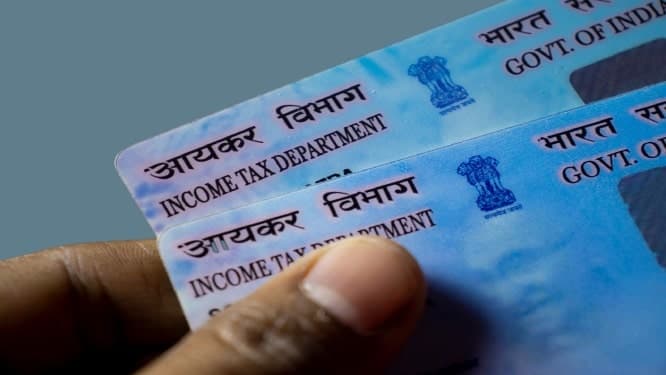
India runs one of the densest financial-compliance regimes anywhere, and almost all of it pivots on a single ten-character code that follows a person or business through nearly every formal transaction they will ever make. Regulators want every rupee traceable. For businesses and financial institutions, the cost of getting financial-crime controls wrong has climbed sharply, because digital payments now move at volumes that older manual checks were never built to police and laundering schemes keep growing more sophisticated.
PAN 2.0 and What It Means for Verification
PAN verification is mid-transition. Cabinet's Committee on Economic Affairs cleared the PAN 2.0 project on 25 November 2024 with a total outlay of ₹1,435 crore, and the build itself went to LTIMindtree, picked as Managed Service Provider on a separate contract valued at ₹792.5 crore with an 18-month clock that started in August 2025. So the two figures are not the same thing. One is the programme budget. ₹792.5 crore is the vendor contract.
Central to the upgrade is a dynamic QR code. Encoded inside it are the holder's name, date of birth, photograph, and PAN number, all encrypted, and unlike the static codes printed on older cards it mirrors whatever the database currently holds rather than freezing the data at the moment of issue. New PANs already ship with it. Existing holders can request a free upgraded e-PAN, delivered to the registered email within 30 minutes.
For anyone running customer checks, the destination matters more than today's mechanics. PAN, TAN, and related services that currently sit fragmented across Protean (formerly NSDL), UTIITSL, and the e-Filing portal are meant to fold into one Income Tax Department platform, though that consolidation is still in flight. Live status has not arrived. As of June 2026 the three existing portals remain the route, and machine-readable, QR-backed checks are clearly where the system is headed.
Online PAN Verification in India
At the core of India's financial fabric sits the Permanent Account Number (PAN), a credential that reaches into almost every formal money movement an individual or business undertakes. Open a bank account, draw a taxable salary, or close a high-value purchase, and a valid PAN is the thread tying that transaction back to your tax identity. Far more rides on it than a number. What follows walks through what PAN is, how online PAN verification actually works in 2026, and why the check carries the weight it does right across the financial system.
What is PAN?
A Permanent Account Number is a unique financial identity. The code is ten characters long. Issued by India's income tax authorities through a deliberate vetting process, that alphanumeric string anchors how individuals and entities are tracked across the financial transactions they enter into.
Five letters open the sequence. Four digits follow. One letter closes it. Such a fixed structure makes each PAN distinct and quietly encodes specific information about the holder, including the category of taxpayer to which they belong and a check character that guards against simple transcription errors.
More than an identification code rides on those ten characters. Picture a digital passport. It is the single point through which a person or business enters the formal economy and becomes legible to regulators, and because PAN issuance ties financial behaviour back to a verified identity, the credential does real work in deterring illicit activity.
Issuance follows a deliberate process. Run by the income tax authorities and cross-checked against supporting identity documents, that process yields a credential that adds a meaningful layer of integrity to every transaction it later touches.
Role of PAN Card in Financial Transactions and Taxation
A PAN is not an arbitrary string. Functionally, it operates as the digital signature of financial activity, the marker that unlocks a wide range of avenues and lets individuals and businesses transact across categories, from buying and selling assets to settling payments above specified statutory thresholds. Nothing about that reach is accidental.
PAN's presence keeps financial footprints traceable. Such traceability is precisely what blunts illicit activity and shores up the integrity of the wider system, which is why individuals and entities are required to quote their PAN across a long list of transactions: buying or selling assets, opening bank accounts, filing returns, and more.
Importance of PAN Verification for Regulatory Compliance
Compliance in Indian finance is not optional. Firms and individuals alike operate under strict rules that were written specifically to choke off financial crime, and falling outside them tends to carry consequences that escalate faster than most teams expect.
PAN verification earns its place right here. As a core piece of the Know Your Customer (KYC) process, PAN authentication confirms that the PAN a customer supplies is genuine and matches the official records held by the tax department. Verifying who someone actually is keeps transactions transparent, traceable, and on the right side of the law.
Legal Framework and Regulatory Mandates
PAN verification rests on a clear statutory base, and that base shifted in 2026. India's Income Tax Act of 1961 long carried the mandate for PAN and underpinned its use in specified financial activities, but from 1 April 2026 the 1961 Act stood repealed and the Income Tax Act, 2025, a consolidated code of 536 sections across 23 chapters, took its place. The PAN obligation survives the change intact. Most of what practitioners already knew has simply been renumbered rather than rewritten.
PAN verification draws in several regulators that have to coordinate. Issuance sits with the Income Tax Department. Banks weave PAN into account opening and statutory reporting. Authorised service providers, namely Protean eGov Technologies and UTIITSL, run issuance and verification on the department's behalf, and they supply the public-facing tools that the overwhelming majority of everyday PAN checks actually pass through.
PAN Card Verification Process in India
With the significance and the legal base in place, the next question is mechanical. How does the check actually run? PAN verification works through a carefully calibrated set of channels, each one confirming that the PAN details presented during a transaction are authentic before any money or account access changes hands. More than one route exists, and the right one depends on volume and use case.
Methods of PAN Card Verification
Several methods exist. Each one is built for a different scenario, and the options span the simple browser-based lookup at one end and the fully automated system integration at the other, so a single freelancer checking one number and a large bank screening thousands can both find a fit.
- Screen-based Verification
Screen-based verification is the lightweight option. After logging in to the verification facility, an authorised user keys in up to five PANs on a single screen and submits them together, after which the full set of details for each one comes back on the response screen. Speed is the draw. For an entity that needs an answer on the spot, it is hard to beat.
- File and Screen-based Verification
For organisations clearing PAN checks in bulk, this method does the heavy lifting, because a single upload can carry up to 1,000 PANs at once provided they sit in the prescribed file format. Login comes first.
Processing happens server-side, and a response file carrying the PAN details comes back within 24 hours, with any format problems flagged inside that same window so a malformed upload never sits silently failing. Responses stay accessible for 15 days. That retention window keeps reconciliation manageable across busy teams.
- Software (API) Based PAN Verification
API verification is the modern route, and the one most product teams care about. API stands for Application Programming Interface, a data bridge that moves information between two software systems, sitting between applications, software products, and web servers to hand records across cleanly and without manual re-keying. The exchange is programmatic.
Submitting PAN details through the API returns a response matched against the relevant government databases, and because the whole exchange runs programmatically, API-based PAN verification ends up both accurate and scalable enough to fit platforms that onboard customers continuously. Registration for the API is gated. Applicants supply legal-entity documents, including a Certificate of Incorporation, the company PAN and TAN, a Class II or III Digital Signature Certificate, an authorisation letter, the latest ITR-V acknowledgement, and a signed declaration, after which access runs on an annual validity.
- Online and Offline PAN Verification
Online PAN verification leans on familiar public infrastructure. The Income Tax Department's e-Filing portal carries a free Verify PAN Status service, where entering the PAN, full name, date of birth, and mobile number triggers validation through a one-time password that stays valid for 15 minutes and is capped at three attempts. Clear the OTP and the portal confirms whether the PAN is active. Offline channels still exist for those who prefer traditional modes or lack ready online access, while the API route supports real-time verification for businesses that need a decision in the moment.
Where is PAN Verification Used?
a. PAN Verification for Banking & Financial Institutions
PAN verification is a frontline barrier against unauthorised financial activity. Financial institutions trade on credibility as they hold assets and clear transactions, so the check helps ensure that each interaction they process stays squarely within the bounds of the law. Common triggers include:
- Opening a new bank account.
- Applying for a credit or debit card.
- High-value cash transactions (a single cash deposit of ₹50,000 or more requires PAN or Form 60 under Rule 114B; the Draft Income Tax Rules, 2026 propose shifting some thresholds to an annual aggregate basis).
- Applying for loans or credit facilities.
b. PAN Authentication for Business and Trade
Businesses sit at the centre of credibility too, accountable for safeguarding assets and clearing payments, which is why PAN authentication acts as a standing check on that activity and confirms each exchange meets legal requirements from account opening through to the largest transactions. Scope here runs wide. For business and trade, PAN verification applies to:
- Registering a company or a Limited Liability Partnership (LLP).
- Applying for licences or permits to operate.
- Transacting on behalf of a company or business entity.
c. PAN Verification for Salary and Taxation
PAN is woven into an individual's financial identity, and nowhere more tightly than in matters of tax and salary, where employers depend on PAN authentication to report employee earnings accurately and keep payroll processes transparent. Collection depends on it too. On the tax side, the same check underpins correct assessment and sits squarely inside how salary and taxation are administered.
d. PAN Verification for Investments
- Opening a Demat account for stock trading.
- Investing in mutual funds.
- Purchasing bonds or debentures.
e. Government Services:
- Applying for government tenders.
- Availing subsidies or benefits from government schemes.
- Registering for Goods and Services Tax (GST).
f. Utilities and Services:
- Applying for a new mobile or landline connection.
- Registering for utilities like electricity or water connection.
g. Vehicle Transactions:
- Purchasing a new vehicle.
- Transferring vehicle ownership.
h. Foreign Transactions:
- Sending or receiving money from abroad (under the Liberalised Remittance Scheme or other routes).
- Applying for foreign visas or immigration (some countries may ask for PAN as an additional identifier).
i. E-commerce and Online Platforms:
- Making high-value purchases online.
- Registering as a seller or service provider on e-commerce platforms.
j. Legal and Judicial Matters:
- Filing legal claims or suits.
- Verification during legal contracts or agreements.
k. Insurance:
- Purchasing life or general insurance policies.
- Making claims on existing policies.
l. Know Your Customer (KYC) Processes:
- PAN is often a mandatory document for KYC verification across various sectors.
PAN verification is everywhere. Yet the exact triggers shift, because regulatory changes and individual institutional policies both move the line on when a PAN must be quoted, so the precise list any given firm faces can differ from the one next door even within the same sector.
Importance of PAN Verification for AML
PAN verification is a sharp instrument against money laundering. Matching submitted details against official records exposes fraudulent transactions before they settle, and that single preventive step measurably cuts the odds of tainted money working its way into the financial system. Identity-theft attempts surface the same way.
Because PAN ties a transaction back to a known identity, institutions can watch patterns, flag anomalies against a customer's history, and weigh emerging threats with far more confidence than an unverified record would ever allow them. Reliability is the point.
PAN verification connects to anti-money-laundering controls directly. Each one reinforces financial integrity and keeps the institution compliant. KYC forms a foundational layer of AML compliance, and PAN verification keeps that layer honest by continuously confirming that the customer information on file is accurate and current rather than stale.
KYC and PAN Verification
KYC practices form the bedrock of financial-crime prevention, and PAN verification carries real weight within them, since folding PAN authentication into the onboarding flow signals an institution's commitment to transparency, lower risk, and the wider integrity of the system. Both were designed to work together.
KYC protocols and PAN verification reinforce each other. Working in tandem across the whole customer lifecycle, the two form the framework that keeps financial systems sound even as transaction volumes and fraud techniques both keep climbing year after year.
Effective customer onboarding turns on accurate identification and genuine due diligence, with PAN sitting at the centre as a primary identifier that institutions can corroborate against official databases to meet KYC norms and head off laundering before it starts. Done well, the payoff compounds over time.
Three jobs run at once. Fraudulent activity gets blocked at the door, due diligence deepens with every record checked, and the institution stays continuously aligned with the KYC regulations that govern its particular sector when PAN verification is woven into onboarding.
Challenges and Risks
No system this large runs without friction, and PAN verification is no exception, because the work demands a constant balance between compliance obligations, security controls, and an individual customer's right to privacy. Those tensions are real. Three pressures stand out: the threat of PAN-related fraud, the fallout from non-compliance, and the privacy exposure that comes with handling sensitive identity data.
1: Risks of Non-Compliance with PAN Card Verification
Skipping PAN verification carries a long tail of consequences for institutions and businesses, because bypassing the authentication step quietly loads an entity with financial and operational risk that can compound until it threatens the firm's stability. Exposure of this kind builds silently.
Regulators worldwide require strict checks to head off money laundering, tax evasion, and related crimes, and most of them have steadily widened the scope of what a regulated firm has to verify before it transacts. Penalties bite hard. Fall short of those requirements and the consequences can be severe.
2: PAN-Related Fraud
PAN-related fraud is the clearest argument for robust verification. Fraudsters keep growing more sophisticated, which forces institutions to refresh their verification systems continuously and stay watchful for the warning signs that a submitted document has been tampered with. Vigilance is the price of admission.
Bad actors may try to forge or manipulate PAN documents to reach financial services, launder money, or commit other offences against the institution that lets them through.
3: Privacy Concerns in PAN Card Authentication
Institutions walk a fine line. Strong security has to coexist with an individual's right to privacy, and while PAN verification sits at the centre of anti-money-laundering work, the very same process can expose personal data to fresh security risk whenever it is handled carelessly. The balance is delicate.
High data-protection standards are non-negotiable here. Sustained customer confidence depends on them, as does keeping sensitive information out of the wrong hands, which is why modern encryption and layered security mechanisms have become the baseline shield around any serious PAN authentication setup.
Conclusion
In a financial system built on traceable identity, the Permanent Account Number is the anchor, and verifying PAN details accurately is how businesses and individuals contribute to a transparent ecosystem, deter fraud, and keep their tax obligations properly met. Real stakes sit behind each check.
KYC compliance is both a legal duty and an ethical one. As a cornerstone of that process, PAN card verification strengthens the due-diligence measures every regulated firm leans on, and a lapse in those measures rarely stays neatly contained to the single transaction where it first occurred. The ripple effects spread.
India's regulatory landscape keeps moving, and the shift to the Income Tax Act, 2025 alongside the PAN 2.0 rollout makes that motion impossible to ignore for any firm operating in the market. Strong PAN verification practices are the hedge. Firms that maintain them are well placed to operate safely as the rules evolve.
KYC Hub comes in right here. We treat PAN authentication as load-bearing infrastructure for financial integrity, and through our India-centric APIs businesses authenticate PAN cards by cross-checking authenticity against core details such as the holder's name and date of birth. Precise photo and image checks run alongside, lifting the accuracy and reliability of automated PAN authentication. Built around strict compliance and real efficiency, the platform helps businesses build trust and strengthen their operations.
Explore KYC Hub's India-specific verification solutions, built to fit the way you actually onboard customers rather than forcing your process to bend around the tooling. Whether you are just starting out or refining an existing stack, connect with our experts to work through India's compliance landscape with precision.