What Is Compliance Case Management
Compliance case management is the structured process a business uses to open, investigate, document, and resolve compliance issues. Think anti-money laundering (AML) alerts, Know Your Customer (KYC) reviews, suspected fraud. When that work lives across scattered spreadsheets and inboxes, things slip. A case management system fixes that by giving compliance teams one place to assign cases, track every action, and produce an audit-ready record. For regulated firms it is the operational backbone that turns a flood of alerts into defensible decisions.
So what does that look like in practice? This guide walks through what compliance case management is, the features that matter, the problems it solves, and how a business runs the whole process end to end.
What is compliance case management?
Compliance case management is the structured process to manage compliance-related tasks, investigations, and workflows to ensure regulatory adherence. Systems and tools do the heavy lifting here, collecting, organizing, and analyzing data so that resolving compliance cases becomes far less of a slog.
Key aspects include:
- Centralized Management keeps compliance data in one platform, accessible to everyone who needs it.
- Workflow Automation: routine tasks run on their own, so manual errors drop.
- Risk Assessment Tools weigh the potential risk sitting inside a transaction or activity.
Why does any of this matter so much? Regulatory scrutiny runs high in sectors like finance, healthcare, and retail, and compliance case management is a must in each of them. Software built for managing compliance cases lets businesses meet those regulatory challenges head-on while protecting day-to-day operations.
Key Features of Effective Compliance Case Management Software
A system worth its budget tends to share a handful of features. Here is what an effective platform for managing compliance cases should bring to the table.
1. Workflow Automation
Automated workflows take the grind out of repetitive tasks. Cases close faster, and they close more accurately.
2. Customizable Dashboards
Dashboards that update in real time put the metrics that matter front and center. Teams watch progress and catch bottlenecks before those bottlenecks turn into backlogs.
3. Risk Assessment Tools
These tools check and rank compliance risks. Payoff is simple: high-risk cases rise to the top, and your team works them first.
4. Sanction Screening
Built-in sanction screening flags transactions or people tied to sanctioned groups, the kind of link that is easy to miss by hand and costly to miss at all.
5. Fraud Detection Capabilities
Smart fraud detection systems use AI and machine learning to spot suspicious activity as it happens.
6. Regulatory Compliance Solutions
Most case management tools for compliance ship with features that help you follow industry rules. KYC compliance and AML standards are the usual starting points.
7. Teamwork and Case Assignment
Multi-user features let teams work a case together. Nothing falls through the cracks, because every case has an owner and a path.
8. Audit Trails
Complete records of every action provide clarity. Audits and investigations lean on them too.
How a Business Runs the Compliance Case Workflow
A compliance case tends to follow the same shape at most regulated firms, whatever set it off. Grasp that shape and you have the difference between an ad hoc scramble and a repeatable, auditable process you can actually trust.
- Intake and triage. A case gets created from an alert, a flagged transaction, an onboarding review, or an internal escalation. The system captures the source, the entity involved, and why it was opened.
- Assignment. Predefined criteria route the case to an analyst or investigator. Risk level, jurisdiction, current workload all factor in, and nothing sits unowned.
- Investigation. Now the real work begins. Gathering documents, reviewing transaction history and screening hits, logging findings against the case, that all falls to the analyst, while risk scores point to which cases deserve attention first.
- Decision. The case is approved, escalated, or rejected, and the rationale gets logged. Automated decisioning can clear low-risk cases on its own and reserve human review for genuine risk.
- Reporting and closure. Where the rules demand it, a Suspicious Activity Report (SAR) goes to the relevant authority, the case closes, and the full history is retained for audit.
Documenting each step is what makes the outcome defensible. A regulator or auditor asks why a decision was made; the case record answers.
Compliance Audits and Why the Case Record Matters
A compliance audit reviews whether your firm is actually following the rules it is subject to. Maybe the review runs in-house, maybe an outside examiner handles it. Either way, auditors do not just want to see that you have a policy on paper. Consistent application, case by case, is the evidence they are after.
Here is where the case record earns its keep. A complete audit trail shows who opened each case, what evidence was reviewed, who made the decision, and when. One source of truth turns audit preparation from a frantic document hunt into a straightforward export. Better still, it surfaces gaps before an examiner does, so issues get fixed on your timeline rather than theirs.
Still weighing how to run this in your organization? The right system pays for itself the first time you face an audit.
How Compliance Case Management Helps Businesses
1. Better Efficiency
Compliance case management software lifts productivity in two moves: it automates manual tasks and it puts all your data in one place.
2. Greater Accuracy
People make mistakes. Automation lowers that risk and helps make sure compliance tasks get done right.
3. Cost Savings
Trim the manual work, steer clear of regulatory fines, and the savings add up fast for most companies.
4. Fraud Detection and Prevention
Strong fraud detection tools help you catch and stop fraud before it has a chance to escalate.
5. Regulatory Adherence
Rules keep changing. Compliance case management tools keep your business in step with them, which cuts down on legal risk.
6. Better Decision-Making
Data analysis and reporting tools surface the insights behind smart business choices.
Challenges Addressed by Compliance Case Management
1. Managing Complex Regulations
Rules and regulations shift constantly, and staying current is hard. Systems that manage compliance cases feed teams new information and resources to handle that churn. A risk-based approach to compliance helps direct effort toward the exposure that matters most.
2. Too Much Data
Handling mountains of compliance information by hand is slow, and slow work breeds mistakes. Systems that automate the load make the data far easier to work through.
3. Fraud and Scams
Catching and stopping fraud is a real problem. Software built for managing compliance cases packs strong features for catching bad actors.
4. Limited Resources
Few people, tight budget. Following the rules under those constraints is tough, so these tools automate routine work and prioritize smartly, helping you get more out of what you already have.
Why Should Your Company Use Compliance Case Management?
Folding compliance case management tools into your workflow brings real upside:
- Scalability: meet rising regulatory demands without piling more onto your team.
- Consistency means every department follows the same compliance rules, no exceptions.
- Proactive Risk Mitigation: catch and fix potential compliance problems before any of them cause trouble.
Companies that put real weight behind systems for managing compliance cases come across as trustworthy and responsible. That reputation hands them an edge over rivals in the market.
How KYC Hub Handles Compliance Case Management
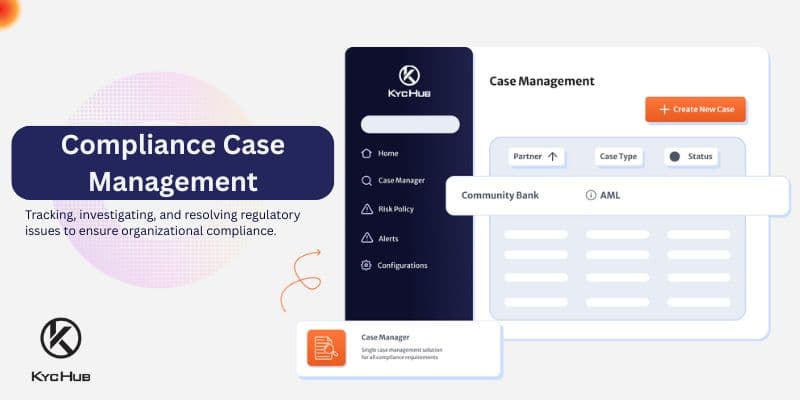
KYC Hub's compliance case management and reporting solution pulls AML, fraud, and KYC cases into one workspace, with configurable workflows and audit-ready histories. Here is how its core capabilities map onto the workflow above.
- Crime Flagging and Documentation: flag and document reported crimes through risk assessments, then shape the investigation process around how your team reviews, approves, and reports at each stage.
- Dynamic Case Assignment auto-creates and assigns cases to specific users by defined criteria. Managers monitor open cases, hand tasks to analysts, and track progress in real time.
- Automated Decisioning: AI-driven analytics and real-time data prioritize cases and allocate resources, backing a coordinated approach to due diligence and regulatory compliance.
- Suspicious Activity Reporting (SAR) speeds up SAR generation for potential money laundering activity. It automates the reporting and the back-and-forth with authorities, so filings land on time and on target.
- Thorough Compliance Checks: run deep compliance checks across the organization, with jurisdiction-based risk scores that surface risk early. For the alert side of this, see how AML checks for compliance feed the cases your team investigates.
- Proactive Notifications and Integrations: connect with other systems through APIs and push proactive notifications by email and message, keeping every stakeholder in the loop.
The platform is built for regulated teams. Banks, financial institutions, money service businesses, and other AML-regulated entities all run on it, and it scales from a startup's first compliance hire to a multinational's full operations team without forcing a change in process.
To see how it fits your compliance workflow, Book a Case Management Demo.
Conclusion
Compliance case management is a must in today's regulatory environment. Run compliance cases through a structured system and a lot falls into place: your firm keeps pace with regulatory change, catches fraud, files reports on time, and gets more productive in the bargain. KYC Hub's compliance case management software offers a strong, scalable, and genuinely usable way to manage cases end to end, from intake through SAR submission and audit. Invest in it now and you are protecting your business's future.