Biometric Authentication: A B2B Guide to Methods, Security, and Compliance
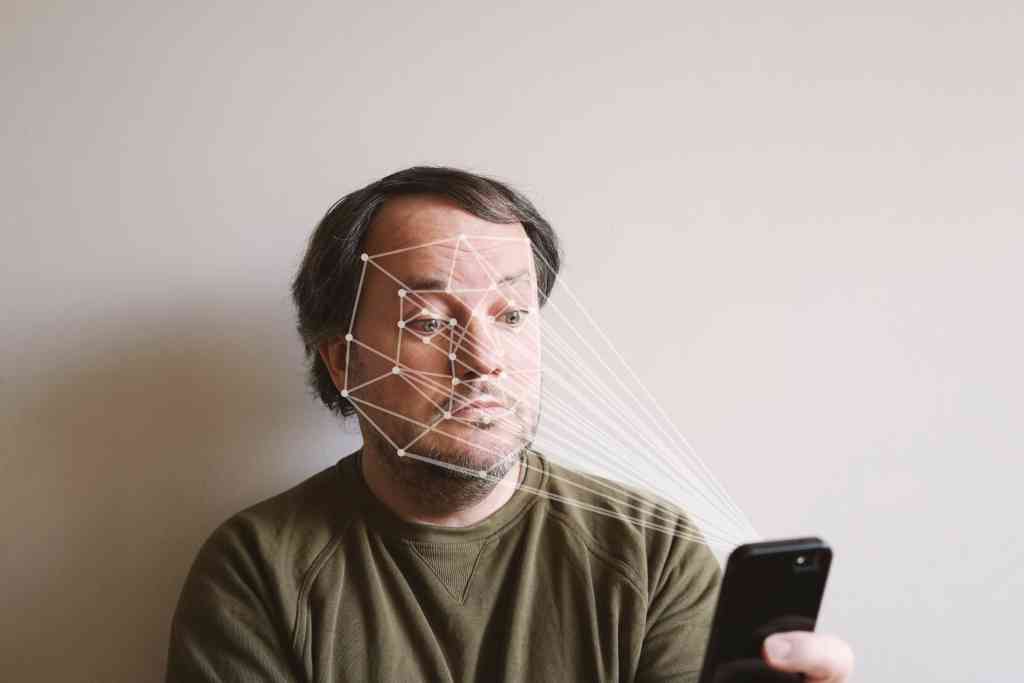
Biometric authentication verifies identity by measuring traits unique to a person: a fingerprint, an iris pattern, a voice, or a face. A password is something you know. A token is something you hold. A biometric is something you are. For compliance and fraud teams, that last category matters most, because a trait tied to the body is far harder to steal, share, or guess than a credential.
This guide walks through what biometric authentication is, the methods organizations use, where it fits inside an identity verification program, and the security and compliance questions a B2B buyer should ask before deploying it.
What Is Biometric Authentication?
Biometric authentication confirms that a person is who they claim to be by comparing a captured sample against a stored reference template. The system measures a distinctive trait, converts it into a mathematical representation, then checks whether the new sample matches the enrolled one closely enough to grant access.
For businesses, the appeal really comes down to how well it holds up against the usual attacks. Passwords and PINs get phished, reused across sites, or cracked through social engineering. A biometric trait, by contrast, is bound to the individual and tough to forge or copy. None of this makes biometrics infallible, but it pushes the cost of impersonation up sharply, which is why financial institutions and regulated firms increasingly anchor remote onboarding and high-risk transactions to a biometric step.
Biometric Methods of Authentication
Identity verification draws on several biometric modalities, each with its own accuracy profile, hardware needs, and user experience. Most enterprise deployments pair one or more of these with document and database checks instead of leaning on a single factor.
- Fingerprint recognition. Reads the ridges and patterns on a fingertip to build a unique template. Accuracy is high and friction is low, which explains its wide deployment, but it does need a capture sensor.
- Iris recognition. The stable, intricate patterns in the colored part of the eye are extremely hard to forge, so this modality ranks among the most accurate. The trade-off is that it usually requires specialized capture conditions.
- Voice recognition. Pitch, tone, and speech patterns get compared against a stored voiceprint. Great fit for phone channels, though background noise can throw it off.
- Face recognition. By mapping features and structure, such as the distance between the eyes and the shape of the jaw, this method verifies identity through any device with a camera. Non-intrusive and ubiquitous, it has become the dominant choice for remote onboarding.
- Behavioral biometrics. Rather than a static physical trait, it watches how a person types, signs, or moves. Programs often run it passively and continuously to flag anomalies mid-session.
It is also worth separating biometric authentication from the token-based kind. A token, such as a one-time passcode or a hardware key, proves possession of an object. A biometric proves a personal trait. Teams frequently layer the two so that a lost token alone cannot grant access.
Why Face Biometrics Lead Remote Onboarding
Face biometrics have become the default for digital onboarding, and the reason is a practical one. Almost every customer already carries a device with a front-facing camera, so nobody has to ship extra hardware. Capture is fast, unobtrusive, and familiar, which keeps abandonment rates low during account opening.
Face biometrics also pair naturally with a selfie-to-document match, where the captured face is checked against the photo on a government ID. One comparison ties a real person to a verified identity document, exactly the assurance KYC and account-opening workflows need. Here is the catch: a camera-based check is only as strong as its defenses against fake faces, and that is where liveness detection becomes essential.
Liveness Detection: Stopping Spoofs and Deepfakes
A biometric match alone does not prove the person is physically present. An attacker can hold up a printed photo, replay a video, or inject an AI-generated face into the camera feed. Liveness detection is the layer that confirms a real, live human sits in front of the camera at the moment of capture.
There are two broad approaches. Active liveness asks the user to do something, such as blink, smile, or turn their head, then analyzes the real-time response. Passive liveness works silently in the background. It reads a single capture for the subtle signals that separate a live face from a spoof, and since the user is asked to do nothing extra, it adds no friction.
Under the hood, liveness systems combine texture analysis, motion analysis, image-quality assessment, and deep learning models such as convolutional neural networks. Trained on large datasets of genuine captures and known spoof attempts, these models learn to recognize presentation attacks, replay attacks, masks, and increasingly convincing deepfakes. Attack techniques keep changing, so the models need continuous retraining to stay effective.
B2B Use Cases for Biometric Authentication
Biometric authentication turns up across several regulated and high-risk workflows:
- Customer onboarding and KYC. Remote customer onboarding pairs a biometric selfie with a document check to verify new account holders, no branch visit required.
- High-value transaction approval. A face check can gate large or unusual transfers, so banks and payment firms add assurance at the exact moment risk spikes.
- Account recovery and step-up authentication. When a session looks risky, a biometric step-up confirms the genuine account holder before sensitive actions go through.
- Workforce and access control. Here the check guards physical and logical access to sensitive systems and locations.
Across all of these, the biometric factor rarely stands alone. Treat it as one signal inside a broader identity decision that also weighs the document, database verification, and risk context.
Security and Compliance Considerations
Deploying biometrics responsibly starts with one premise: the underlying data is highly sensitive. Compliance teams evaluating a solution should work through a clear set of requirements.
- Data protection alignment. Collection, storage, and processing must comply with applicable data protection laws. Many jurisdictions treat biometric data as a special category that demands extra safeguards.
- Transparency and consent. Be clear about why biometric data is collected, and obtain informed consent that spells out how it will be captured, stored, and used.
- Secure storage. Strong encryption and strict access controls protect templates and facial data against breaches.
- Minimization and retention. Keep data only as long as you need it, delete it securely afterward, and apply anonymization or de-identification wherever feasible.
- Auditability. Regular audits of data-handling practices, plus session-level evidence for each verification, support both internal governance and regulator inquiries.
How KYC Hub Supports Biometric Verification
KYC Hub's Face Liveness and biometric verification gives compliance and fraud teams a deployment-ready way to add these checks to onboarding and high-risk flows. The product is built around the pillars that matter most to a regulated B2B program.
Decisions land in under a second, so customers are not left waiting. Passive liveness catches filters, deepfake masks, and lookalike spoofs without putting users through repeated prompts, while frame-by-frame analysis goes after AI-generated faces and video-injection attacks. Biometric matching then ties the live capture back to the claimed identity. The same flow, accuracy, and audit trail run across web, iOS, and Android. A single click produces an examiner-ready evidence pack for every session, which answers the auditability requirement laid out above. The checks combine with document and database verification for layered identity assurance, and the platform is built to align with regulatory standards including GDPR and CCPA.
To see how passive liveness and selfie-to-ID matching fit your onboarding flow, Book a Demo.