Aadhar Card OCR API for KYC & Document Verification: A Buyer's Guide
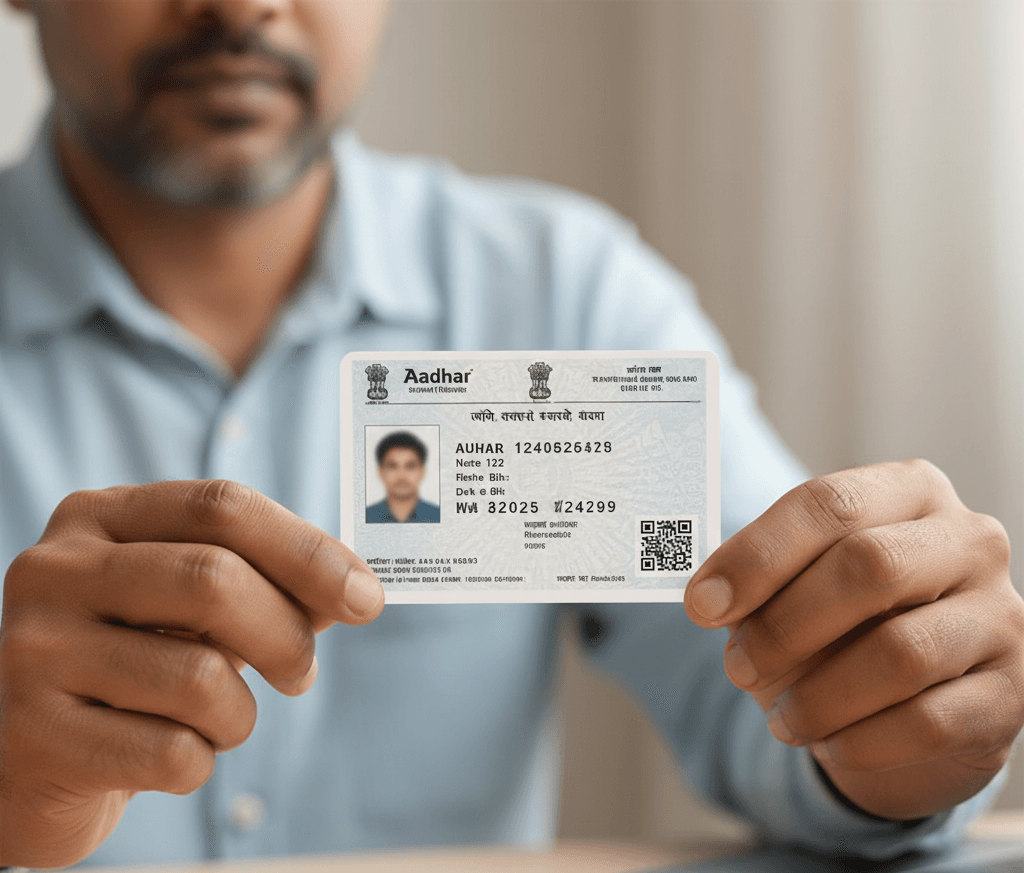
An Aadhar card OCR API is a service that reads an image or PDF of an Aadhaar card and returns the printed details as structured data: full name, date of birth, gender, address, and a masked Aadhaar number. It replaces manual keying during KYC. Your onboarding form fills itself, the data lands as JSON, and a verification time that used to run two or three minutes per applicant drops to seconds.
This guide is written for compliance and product teams choosing or building that capability. It covers what the API actually extracts, where it sits in a KYC flow, how OCR compares to UIDAI's offline e-KYC, the masking and consent rules you have to meet in 2026, and how to evaluate a provider without overpaying for accuracy you cannot verify. The numbers here are sourced. Nothing is invented.
What Is an Aadhar Card OCR API?
Aadhaar is a 12-digit unique identification number issued by the Unique Identification Authority of India (UIDAI). Launched in 2009, it is one of the world's largest biometric identity programs. It now reaches well over 1.3 billion residents, which is exactly why it became the default identity document for KYC across Indian banking, lending, telecom, and fintech.
Optical Character Recognition is the technology that turns a picture of text into machine-readable text. An OCR engine reads the light and dark patterns in an image. From those patterns it recognises characters. The output is data your systems can store and search. An Aadhar card OCR API wraps that engine in an endpoint. You send a card image, it sends back parsed fields.
The "API" part matters for a buyer. You are not licensing desktop software. You are calling a hosted service. Your onboarding app talks to it in real time, and so does your loan origination system or KYC platform. The validated result then gets pushed into your own database or compliance engine. That is the difference between a research project and something a product team can ship.
What an Aadhar Card OCR API Extracts
A good Aadhaar OCR API reads every demographic field printed on the card and returns each one as a labelled value.
Aadhaar number: the 12-digit identifier, validated against the Verhoeff checksum and then masked so only the last four digits remain. UIDAI requires the first eight digits to be hidden once KYC is complete.
Full name: the cardholder's name, often returned in both English and Hindi.
Date of birth: standardised to a consistent format such as DD/MM/YYYY, which supports age checks downstream.
Gender: Male, Female, or Transgender, as printed.
Address: the full residential address, parsed into components (building, street, locality, city, state, PIN code) so it is usable for address verification and database storage.
Photograph: the face image, which can feed a separate facial match or liveness step.
QR code: not OCR in the strict sense, but strong implementations decode the QR printed on the card, which carries a UIDAI-signed copy of the same demographic data. Cross-checking the printed text against the QR is one of the most reliable accuracy gains available.
Modern engines read both English and Hindi. That means supporting the Devanagari script, with all its connected characters. Vendor data sheets commonly cite extraction accuracy above 99% on clearly visible fields. Treat that as a best-case figure for clean images, not a guarantee for the blurry phone photos real users upload.
How the Extraction Pipeline Works
Behind a single API call, the card image moves through several stages before you get a result.
It starts with capture. A user photographs or scans the card with a phone, webcam, or document scanner. Capture quality drives everything that follows. The better APIs know this, so they return real-time guidance before the image is even submitted. Glare, a shadow, a skewed angle, low resolution: each one gets flagged for the user to fix on the spot.
Next is preprocessing. Raw photos are rarely ideal. The engine reduces noise, enhances contrast, deskews the image so text lines sit horizontal, crops to the document borders, and normalises resolution to roughly 300 DPI, the level most engines read most accurately.
Then comes detection and extraction. The engine finds the regions that contain text, separates them from logos and holograms, segments characters, and matches them against trained models. Models trained specifically on Aadhaar cards read the layout far better than a general-purpose OCR engine pointed at a card it has never seen.
Parsing turns that loose text into structured fields. The system decides which string is the name, which is the DOB, and which is the address, using position and context on the known Aadhaar layout. Dates get standardised and addresses get split into components.
Finally, validation applies the rules. The Aadhaar number has to be 12 digits and pass the Verhoeff check. Required fields have to be present. Cross-field logic runs too, such as a PIN code matching the stated region. Then each value gets a confidence score. Low-confidence extractions can be routed to manual review instead of being trusted blindly. The clean result is returned as JSON, ready to push into your stack.
Aadhaar OCR vs Offline e-KYC: Which Should You Use?
This is the question that separates a thin OCR integration from a defensible KYC design, and most buyer comparisons skip it.
OCR reads what is printed. It works on any card photo, recovers data even from a worn or partly damaged card, and gives users freedom in how they capture the document. What it cannot do on its own is prove the card is genuine. A photo can be edited, and OCR will faithfully read an edited photo.
UIDAI's Aadhaar Paperless Offline e-KYC is the cryptographic alternative. The cardholder generates a digitally signed XML (or QR), and because UIDAI signs it, your system can verify the demographic contents are authentic and untampered. UIDAI has confirmed that Aadhaar, e-Aadhaar, masked Aadhaar, and the offline XML are all acceptable as Officially Valid Documents for KYC. Adoption is real and growing, with well over 110 million offline e-KYC downloads reported nationwide.
So which one? In practice, serious teams use both. When the user can provide it, offline e-KYC gives you signed, verifiable demographics. OCR is the fallback. It still works when they only have a card photo, and it is the layer that pulls structured data out of the image and the QR. Lead with the signed path for assurance. Keep OCR for coverage. That way you never force users down a single brittle route.
Book an IDP demo to see both paths run in one onboarding flow.
The "API" in Aadhar Card OCR API: Integration Notes
Because the head request here is literally an API, the integration shape deserves its own section rather than a footnote.
A typical call is simple. Your app uploads the Aadhaar image or e-Aadhaar PDF over HTTPS. The service preprocesses the image and extracts the fields. It validates them and returns structured JSON. From there the verified data flows straight into your KYC database, CRM, or decisioning engine with no rekeying.
Two design choices matter more than the rest. First, masking must happen server-side and automatically, every time, so a full Aadhaar number never lands in a user-facing screen or a plaintext log. Second, build for the unhappy path. Extraction will sometimes fail, or come back low-confidence. When it does, your flow needs a graceful fallback to manual entry or review. A hard rejection there just kills the onboarding.
A few integration habits hold up well. Transmit and store card images encrypted. Restrict who can read extracted data, and log that access for audit. Apply your retention rules so images are purged on schedule. And test before you trust the accuracy number on the data sheet: throw old card designs at it, regional-language cards, and a few genuinely bad photos.
Where Aadhaar OCR Fits in the KYC Verification Process
Aadhaar OCR is one step in a wider KYC verification process, not the whole of it. Reading the card is data capture. It is not, by itself, identity verification.
A complete flow usually chains several checks. OCR (or offline e-KYC) extracts and validates the document data. A name and address match compares that data against your records or other sources. A face match plus liveness confirms the person holding the card is its owner. Screening and risk checks then run before the account is approved. Every one of those later stages depends on clean, structured input. OCR is what feeds it, so getting OCR right pays off across the whole funnel.
The benefits compound. Manual Aadhaar entry runs two to three minutes per document, while OCR returns in seconds, so a small team can clear thousands of verifications a day. Manual data entry carries a known error rate of roughly 1% to 4%, and removing the keystrokes removes those errors before they pollute downstream credit, fraud, and compliance decisions. Onboarding gets faster. Drop-off falls, because a user snaps a photo instead of typing out a form. And the same pipeline scales from 100 cards to 100,000 without new headcount.
Use Cases Across Regulated Industries
Aadhaar OCR shows up wherever an Indian customer has to be identified at speed.
Banking and lending: digital account opening, where a customer photographs a card and is verified in the flow, and loan processing, where automated identity and address extraction cuts application time from days to hours. It also speeds periodic KYC refresh, since customers can resubmit documents digitally.
Telecom and SIM activation: retail and e-KYC channels capture the customer's Aadhaar, extract the data, and enable activation in minutes, with the same data checked against records to catch repeat or suspicious registrations.
Fintech, wallets, and investment platforms: OCR strips friction out of sign-up while keeping the flow inside regulatory lines, and extracted DOB supports age gating where it is required.
HR and contractor onboarding: employee identity and address details are captured and standardised across records for payroll and access provisioning.
Insurance: IRDAI permits Aadhaar as an acceptable KYC document, so insurers use OCR to onboard policyholders and standardise the address data their records depend on.
Challenges Buyers Should Plan For
OCR has matured, but Aadhaar cards throw real curveballs, and a buyer should size a vendor on how it handles them.
Image quality is the big one. Phone photos bring poor lighting, low resolution, motion blur, and glare off the laminated surface, all of which cut accuracy directly.
Card variants matter too. UIDAI has issued several designs over the years with different layouts and security features, and the engine has to recognise all of them.
Multilingual text adds load, since Hindi means handling Devanagari alongside English. Security features such as holograms and watermarks can overlap text fields and confuse detection. Address complexity is chronic, because Indian addresses often lean on informal localities and landmarks that resist clean parsing. Worn or damaged cards and the occasional handwritten annotation round out the list. None of these is disqualifying, but they are exactly where cheap engines fall down, so test for them.
How to Choose an Aadhaar OCR API Provider
There is a crowded field of Aadhaar OCR and verification APIs in India, including names such as Surepass, IDfy, HyperVerge, AuthBridge, Perfios, and Cashfree, alongside platform players like KYC Hub. Naming them is not endorsing them. The point is that the shortlist is long, so judge it on criteria that actually predict performance.
Weigh accuracy on realistic images, not curated samples. Check language coverage for both English and Hindi. Confirm the provider was trained specifically on Indian identity documents rather than running a generic engine. Then look hard at the compliance features. Does it mask automatically? Does it encrypt in transit and at rest, log for audit, and let you configure retention? Ask too whether the API cross-verifies printed text against the QR code, since that single feature does a lot to reduce forged submissions. Last, the engineering side. Integration, error handling, documentation: all of it has to be good enough for your team to ship and maintain.
Above all, decide on scope. Do you want a single-purpose OCR endpoint, or a platform that also covers offline e-KYC, name and address matching, face match, and screening? A point tool is cheaper to start. A platform is cheaper once Aadhaar OCR turns out to be one step in a much longer compliance chain.
How KYC Hub Handles Aadhaar Document Processing
KYC Hub's intelligent document processing is built to do this work end to end inside a compliance flow, not as a standalone reader.
It uses OCR to extract data accurately from identity documents, with document forensics that run on IDs from more than 200 countries. That same capture step improves risk management. Tampered or inconsistent documents get flagged rather than waved through. And because extraction sits inside the platform, it speeds up the verification process. The data feeds straight into onboarding and screening instead of leaving your team with another disconnected tool.
The result is a better onboarding experience. A customer submits a document. The data is pulled and validated. They move forward without retyping anything. Aadhaar OCR becomes one configured step in a workflow that also handles matching, face checks, and risk decisioning. Assembling that yourself is exactly what a point API leaves you to do.
Book an IDP demo and we will walk through it on your own onboarding journey.
Conclusion
An Aadhar card OCR API removes the slowest, most error-prone step in Indian KYC: typing identity data off a document by hand. Done well, it returns validated, masked, structured data in seconds. It scales without new staff. And it feeds clean input into every check that follows. Done carelessly, it reads forged images faithfully and leaves you exposed.
The buying decision comes down to two questions. Does the engine hold up on real-world card photos in both English and Hindi, and does it sit inside a compliance design that pairs OCR with offline e-KYC, matching, and proper masking? Answer those well and Aadhaar OCR stops being a feature and becomes a genuine advantage in one of the world's fastest-moving digital markets.