Digital Identity Verification: How It Works and How to Choose a Provider

Digital identity verification is how a business confirms a customer is a real person who is who they claim to be. It does this remotely and in real time. The check takes the data and documents a person submits, weighs them against trusted sources and biometric signals, and returns a pass-or-fail answer in seconds. For regulated firms it sits at the front door of onboarding. There it does double duty: stopping fraud while satisfying Know Your Customer rules.
Passwords used to carry that load. They no longer can. The average person now juggles well over 100 logins, and stolen credentials feed a fraud problem that the FTC pegged at more than $12.5 billion in reported consumer losses for 2024, a 25% jump over the year before.
This guide walks through what digital identity verification actually does, the methods behind it, the regulations that shape it in 2026, and how to judge one provider against another.
What Is Digital Identity Verification?
Think of a digital identity as the online proof of who someone is. It is built from data points: a name and date of birth, a government ID, a face, a device, a phone number. Verification is the act of testing that those signals are genuine and that they belong to the living person on the other end of the screen.
Unlike a physical ID card, this identity is not something a customer carries in a wallet. It lives across the apps, websites, and banking platforms a person touches. Digital verification confirms it without anyone having to walk into a branch.
The aim is twofold. One side protects the customer's data and privacy. The other shields the business from impersonation, synthetic identities, and account takeover. Get both right at once and onboarding actually speeds up instead of dragging. That last part is what most teams underestimate.
How Digital Identity Verification Works
Most flows follow the same shape, even when the underlying tech differs by vendor. A customer submits an identity claim. The system tests it. A decision comes back.
In practice that breaks into a few steps:
- Capture. The customer enters personal data or photographs a government ID, often followed by a selfie. Good capture matters. Blurry inputs drive rejections that have nothing to do with fraud.
- Validation. The document is checked for tampering, forgery, and expiry, and the data is matched against authoritative sources such as credit bureaus, electoral rolls, government registries, or telco records.
- Biometric match and liveness. The selfie is compared to the photo on the document, and a liveness check confirms a real person is present rather than a photo, mask, or replayed video.
- Decision. The system returns approve, decline, or refer for manual review, and writes an audit record of how it got there.
Two broad approaches sit underneath this. The first reads the data a person gives, their name, address, phone, and birthdate, and tests it against external sources. The second works visually: it analyzes images of an ID document and compares them to a live selfie. Strong solutions blend the two. Run either one alone and you leave a gap a determined fraudster can walk straight through.
Types of Digital Identity Verification Methods
There is no single method. Teams usually combine several, matched to the risk of the action being taken.
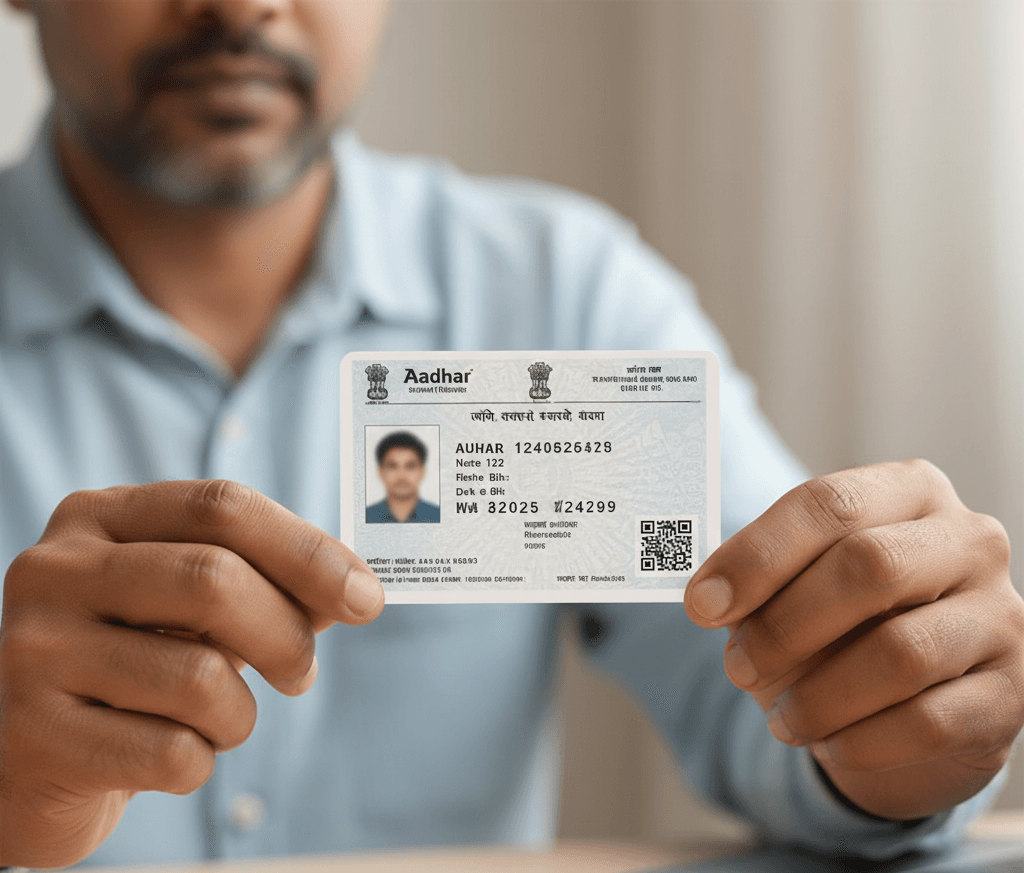
Document verification scans an official document such as a passport or driver's license, then checks it for forensic signs of tampering. It is the backbone of regulated onboarding because it ties a real-world credential to the session.
Biometric authentication and liveness use a customer's unique physical traits, typically the face, to confirm presence. A liveness check is the part that defeats a printed photo or a screen replay, and it has become the line of defense most fraud now targets.
Two-factor and multi-factor authentication add a second proof beyond a password, usually a one-time code sent to a registered phone or email. It is widely used in banking and account access. It is also weaker than biometrics on its own, since SIM-swap and phishing can intercept codes.
Phone and email verification sends an OTP or a secure link to confirm the customer actually controls the contact details on file. It is cheap, fast, and good at filtering fake or mistyped entries, though it proves control of a channel rather than a person.
Behavioral analytics watches how someone interacts, typing cadence, how a device is held, navigation patterns, and flags sessions that break the expected pattern. It runs quietly in the background and catches anomalies the other checks miss.
Knowledge-based verification asks questions only the genuine user should answer. It is fading fast, because so much of that information now leaks in data breaches.
Identity Verification as a Service (IDaaS)
Few firms build verification in-house anymore. Think about everything it would take to maintain alone: the data partnerships, the document coverage, the fraud models, the compliance upkeep. It adds up fast. Identity verification as a service delivers all of it through an API.
The pull is straightforward. A provider already holds connections to global ID document templates, government databases, and watchlists, and keeps them current as rules change. You integrate once and inherit that coverage. New markets open without a new build each time.
It also shifts the maintenance burden. When a country updates its ID format or a regulator revises a proofing standard, that is the provider's problem to solve, not your engineering backlog.
Email and Phone Identity Verification
Not every interaction needs a full document scan. A low-value signup or a returning-user check may only need confirmation that the email and phone on file are real and controlled by the user.
This is where lightweight signals earn their place. An email's age, its breach history, and whether a phone number is a disposable VoIP line all hint at risk before a single document is requested. Used as a first filter, they cut friction for good customers and route only the suspicious sessions into heavier checks.
The trade-off is honesty about what they prove. Controlling an inbox is not the same as being a specific human, so these checks belong in a layered approach rather than standing alone for high-risk actions.
KYC and Identity Verification: How They Fit Together
People use "KYC" and "identity verification" interchangeably, but they are not the same thing. Identity verification is one component of KYC. KYC is the wider regulatory obligation that wraps around it.
KYC identity verification confirms a customer exists and is genuine at onboarding. KYC then extends further: risk rating, screening against sanctions and watchlists, and ongoing monitoring through the relationship. Verification answers "is this the right person?" KYC answers "should we do business with this person, and on what terms?"
For a compliance team, that distinction shapes procurement. A verification check alone will not satisfy an AML examiner. It has to feed into the broader program.
Why Digital Identity Verification Matters for Businesses
The customer case is easy to see. The business case is just as strong, and it runs along three lines.
It blocks fraud before it lands. Identity fraud is the threat verification is built to stop, from stolen credentials to fully synthetic identities stitched together from breached data. The point is prevention. Catching a fake at the door costs far less than unwinding the damage after an account is live.
It keeps you compliant. Regulated firms are required to verify customer identities under KYC and AML rules, and to protect that data under regimes like GDPR. These are not optional. Firms that skip them face fines that dwarf the cost of doing it properly, and the penalties for AML failures keep climbing.
It builds trust. Customers know the risks of being online, and younger cohorts especially expect a business to guard their data. A verification step that feels secure and quick signals that you take their safety seriously, and that earns loyalty.
Want to see it work on your own users? Book an Identity Verification Demo.
How to Choose a Digital Identity Verification Provider
The market is crowded, and the brochures all sound alike. A handful of criteria separate a provider that fits from one that fights you later.
Accuracy, measured both ways. A high pass rate means little on its own. Ask for the false acceptance rate (fraud let through) and the false rejection rate (good customers blocked), because a provider that looks accurate by waving everyone through is selling you risk.
Liveness and anti-spoofing strength. This is where modern fraud concentrates. Confirm the provider tests for presentation attacks and, separately, for injection attacks where synthetic video is fed straight into the pipeline behind the camera.
Coverage that matches your footprint. Document support and data sources vary enormously by country. A provider strong in one region can be thin in another, so map their coverage to where your customers actually are.
Compliance fit. The solution should align with KYC, AML, and data-protection requirements in your markets, and produce the audit trail an examiner will ask for.
Pricing that scales sanely. Watch for models that charge for failed attempts and drop-offs. Pay-per-approved pricing, where you are billed only for completed verifications, tends to align the provider's incentives with yours.
Integration and conversion. Speed and developer experience are not luxuries. A clean API and a low-friction user flow protect onboarding conversion, which is often where the real money is won or lost.
The Deepfake Problem and Why Liveness Alone Is Not Enough
Verification got harder in the last two years. The reason is generative AI. It put convincing face-swaps and synthetic video within reach of ordinary fraudsters, and the attack data bears that out. Threat researchers tracked virtual-camera injection attacks rising more than 2,600% in a single year, with documented deepfake-enabled losses topping $200 million in the first quarter of 2025 alone.
The lesson is that a basic liveness check is no longer a complete answer. An attacker who can inject a deepfake stream directly into the verification pipeline bypasses the camera entirely, so the input looks authentic at the software layer. NIST's 2025 guidance reflects this. It requires presentation-attack detection for biometric capture at higher assurance levels, and treats protection against injection attacks as a separate requirement rather than something liveness covers by default.
Practically, that means a layered defense. No single check carries the whole load. Document forensics, presentation-attack detection, injection detection, and behavioral signals all work together instead.
Digital Identity Verification Regulations to Know in 2026
The rulebook keeps moving, and two developments matter most for buyers right now.
In the EU, eIDAS 2.0 (Regulation (EU) 2024/1183) requires all 27 member states to offer citizens an EU Digital Identity Wallet by December 2026, with obligated private-sector firms in sectors like banking and telecoms expected to accept it thereafter. Providers operating in Europe are aligning to the supporting standards to stay compliant.
In the US, NIST finalized SP 800-63 Revision 4 in July 2025. It moves from a checklist toward a risk-based model, tightens fraud-prevention guidance, and formally addresses digital wallets and injection-attack defenses. It is not binding on private firms the way a regulation is, but it sets the benchmark that auditors and partners increasingly expect.
Alongside these, the standing obligations remain: KYC and AML rules in each jurisdiction, plus data-protection regimes such as GDPR that govern how identity data is collected and stored.
Best Practices for Implementing Digital Identity Verification
Rolling this out well is a balancing act between security, usability, and compliance. A few habits keep that balance.
Match the method to the risk. Not every action needs a full document scan and biometric match. Reserve the heavy checks for high-risk steps, and use lighter signals where the stakes are lower, so good customers are not punished for routine activity.
Be transparent with customers. Explain what you collect, why, and how it is protected. People share sensitive data more willingly when the benefit and the safeguards are clear, and that transparency lifts completion rates.
Encrypt everything and secure the pipeline. Protect identity data in transit and at rest, and harden the verification flow itself against the injection attacks described above. The pipeline is now part of the attack surface.
Monitor and adapt. Fraud tactics change constantly. Treat verification as a living system, review its performance, and stay alert to new vulnerabilities rather than setting it once and walking away.
How KYC Hub Approaches Identity Verification
KYC Hub provides identity verification for global customers, built to mitigate fraud risk while keeping onboarding smooth. The approach leads with a few pillars.
Facial biometrics and liveness checks confirm a real person is present and match them to their document. That is the defense that matters most against today's deepfake-driven attacks. The flow is built to feel frictionless, so verification speeds onboarding rather than stalling it. On top of the biometric match sits a forensic layer: tampered-document and identity-fraud detection. Full reporting then keeps the whole process compliant, with the audit trail regulated firms need.
Because verification rarely stands alone, it connects into the wider KYC, screening, and monitoring program rather than sitting off to the side. That keeps the front-door check aligned with the AML obligations behind it.
Book an Identity Verification Demo
Conclusion
Passwords were enough once. Now they are a liability. They slow customers down and leave the businesses that rely on them exposed. Digital identity verification replaces that weak link with a check that is faster, safer, and built for the way people actually transact.
Done right, it does three jobs at once. It stops fraud at the door. It satisfies the compliance rules that regulated firms cannot ignore. And it earns the trust that keeps customers coming back. The providers worth choosing are the ones that handle all three without forcing a trade-off.