How to Choose KYC Compliance Software for Your Business in 2026
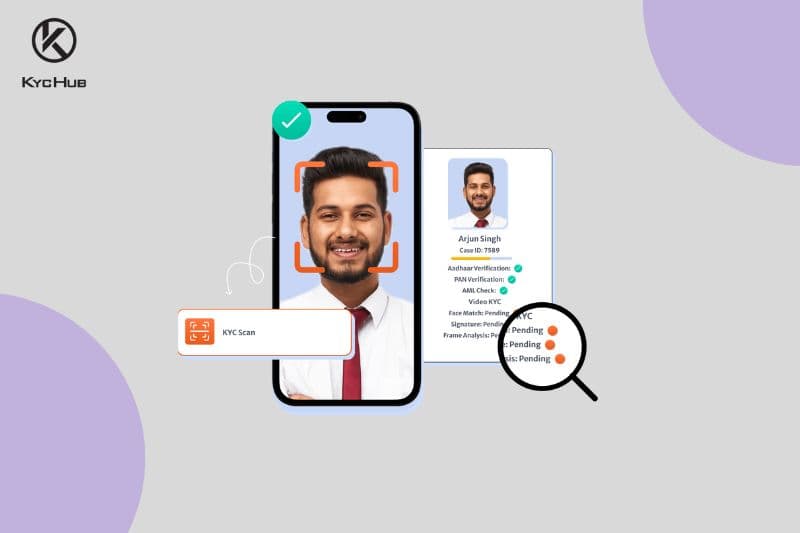
KYC compliance software is the system a regulated business uses to collect and verify customer identity information, then manage it over time, so it can meet Know Your Customer rules without doing the work by hand. The platform confirms who a customer is. It screens them against sanctions and watchlist data, and it keeps that picture current as their risk changes. Running one check is easy. The real test is picking a platform that handles the whole job well as your customer base grows from hundreds of accounts into millions.
Pressure to comply with AML and CTF regulations keeps mounting, and with it the need for a KYC solution that is both effective and efficient. This guide walks through what to look for.
Two selection criteria matter more in 2026 than they did even a year ago. Deepfakes have become one of the most common ways fraudsters attack biometric verification, so ask vendors how they detect injected video and AI-generated documents. Then ask what their roadmap covers for EU digital identity wallets, which every member state must offer by the end of this year.
What KYC Compliance Software Does
KYC software automates a sequence that a compliance team would otherwise run manually. It gathers customer details. Those details get verified against trusted sources, anything that looks off gets flagged, and every decision is recorded. Taking that work off people's desks saves a business time and cuts the risk that rides along with a missed check or a data-entry slip.
The market is crowded. Dozens of platforms promise the same outcome, which is exactly why a careful evaluation matters. What makes a choice right comes down to your risk profile, the rules that bind your industry, and how much your team can stomach in setup and training. A bank onboarding corporate clients needs different depth than a fintech verifying retail signups, and the software has to match.
In this article, we will work through:
- Why KYC compliance matters for businesses
- The key features to weigh in a KYC solution
- The process a good platform runs end to end
- Best practices for putting it in place and integrating it
- How to handle data security, audit reporting, and ongoing updates
The Importance of KYC Compliance for Businesses
KYC compliance is a critical component of AML and CTF regulations. The primary objective of KYC is to prevent businesses from being used as vehicles for money laundering or financing terrorism. Failure to comply with KYC regulations can result in severe penalties and reputational damage.
KYC compliance is a legal obligation and a sound business practice. Verifying who a customer is lets a business mitigate the risks tied to fraud and spot suspicious activity early. A strong KYC verification process also builds customer trust, which feeds retention and loyalty over time.
Key Features to Look for in KYC Software
When you evaluate KYC compliance software, a handful of features separate a platform that scales from one that becomes a bottleneck:
- Ease of use. A clean interface keeps KYC processes efficient. Look for intuitive navigation and minimal training overhead.
- Scalability so the software grows as your business does and adapts as regulatory requirements shift.
- Integration capabilities. The platform needs to connect cleanly with your existing systems and data sources.
- Workflows you can customize matter more than a fixed template, because they bend to your specific processes.
- Detailed reporting. Strong reporting and analytics let you track compliance efforts and find weak spots before an examiner does.
- On data security and privacy, customer data deserves strict protection, so confirm the platform meets recognized security standards.
- Customer support that responds fast keeps the system running and resolves issues before they stall onboarding.
One more thing worth checking when you shortlist: whether the tool exposes proper APIs and SDKs. APIs make system integration and data sharing far simpler. SDKs let your developers build the custom pieces you need rather than waiting on the vendor.
How KYC Compliance Software Works
Under the hood, KYC software runs the same three steps a compliance team would, just faster. It starts with the Customer Identification Program, which collects and confirms a customer's details. For a bank, that usually happens at registration. Next comes customer due diligence. This is the background check that gauges how risky a client is, and it can surface past involvement in financial schemes or investigations that a name search alone would miss. Then ongoing monitoring takes over, keeping verification data current and watching for transactions that do not fit. It flags large movements toward high-risk countries. Where warranted, it helps suspend accounts and notify regulators.
That continuous watch is the heart of any AML screening and monitoring setup. Biometric checks like fingerprint and face recognition increasingly sit on top of all this, hardening digital identities against theft.
Want to see how these criteria hold up against a live platform? Get a free demo and run them on your own onboarding flow.
The KYC Process a Compliance Platform Runs
Knowing the steps a platform actually executes makes it far easier to compare two vendors. Most KYC software follows the same core sequence:
- Collect. The customer submits identity details and documents through a web or mobile flow.
- Verify identity. The platform authenticates the document, reads its data fields, and confirms the rightful owner is the one presenting it, often with a biometric and liveness check.
- Screen. The customer is run against sanctions lists, PEP registries, and adverse media, with each match scored for confidence.
- Risk-rate. A score gets assigned based on geography, product, customer type, and screening results, which sets how closely the customer is watched.
- Monitor and review. Once active, the customer is watched on an ongoing basis, and their record is refreshed when risk or behavior changes.
- Record. Every step leaves a time-stamped audit trail that an examiner can later inspect.
The cycle never really stops. Screening reruns the moment lists update. Risk scores move as behavior changes. That is why continuous, or perpetual, KYC has replaced the old idea of a check ticked once a quarter.
What Automating KYC Actually Buys You
The case for automation is mostly about cost and time. Celent estimated (2021 Edition) that financial industry spending on AML-KYC compliance, across IT and operations, would reach $37.1 billion globally, much of it sunk into periodic and event-driven reviews where staff read paperwork and key in data by hand. Automation turns an hourly job into a matter of seconds.
Start with the money. Onboarding a client means gathering, entering, and validating data, and doing all of that manually eats hours. An automated KYC platform handles the sequence and can verify a customer on the spot instead of trading messages for days, which keeps people from abandoning onboarding halfway. Operating cost drops and productivity climbs.
Accuracy is the second payoff. Every manual review invites mistakes, and a single one either slows things down or opens a gap for bad actors. Automated checks catch and resolve those issues quickly. Pair them with AI and security tightens further, because the system can confirm whether the documents a customer submits are genuine.
Then there is the experience itself, on both sides of the desk. A slow, repetitive process wears down staff and frustrates customers enough to send them elsewhere. Take the drudgery out, and satisfaction lifts at the front desk and in the back office alike.
Compliance Audit Reporting and Audit Trails
Buyers often overlook this until an examiner asks for evidence, and by then it is too late to bolt on. A compliance audit is a structured review that checks whether your KYC program does what your policy says it does. The software's job is to make that review survivable.
Good KYC compliance software produces a compliance audit report on demand. The report draws on an immutable audit trail, which is a time-stamped record of every verification, screening hit, risk decision, and analyst action. When a regulator or an internal auditor wants proof that a given customer was screened and cleared, the trail is what answers the question. Look for a platform that retains these records in full, exports them cleanly, and ties each decision back to the person and the data behind it.
Two practices keep audits from becoming fire drills. Run regular internal reviews against your own controls rather than waiting for the external one. And keep the reporting configurable, so the same data can be sliced for a board summary, an examiner request, or a day-to-day quality check.
Best Practices for Implementing KYC Software
Putting KYC compliance software in place is a real project, not a switch you flip. A few practices keep it on track:
- Develop a clear plan. Set goals, scope, and timelines before the work starts.
- Assign a dedicated project manager. One owner keeps the rollout moving and stakeholders informed.
- Bring in relevant stakeholders early, management, legal, compliance, IT, and operations, so everyone is aligned.
- Allocate sufficient resources, meaning the time, people, and money the project genuinely needs.
- Provide thorough training. End users who know the software use it well, which is where the time savings actually land.
Integrating KYC Software With Existing Systems
A KYC platform earns its keep once it talks to the rest of your stack. These steps smooth the integration:
- Identify key integration points. Map the systems that must interact with your KYC software, such as your CRM, your risk management tools, and other data sources.
- Develop a detailed integration plan. Spell out timelines, resources, and who owns what.
- Test before you go live. Run the integration in a controlled setting first to surface and resolve issues early.
Ensuring Data Security and Privacy in KYC Processes
Protecting customer data is non-negotiable in KYC. A few measures keep it safe:
- Follow recognized security standards. Confirm the software meets rules such as the General Data Protection Regulation (GDPR) and the Payment Card Industry Data Security Standard (PCI DSS).
- Encrypt sensitive data. Protect customer data at rest and in transit against unauthorized access.
- Run regular security reviews. Audit the software and your processes to find and close vulnerabilities.
Keeping Your KYC Compliance Software Current
Regular updates keep a platform aligned with shifting rules and ahead of new fraud tactics. To stay current:
- Watch regulatory changes. Track shifts in KYC regulations and update the software to match.
- Schedule updates. Keep the platform on the latest features and fixes rather than letting it drift.
- Stay in touch with the vendor. Ongoing contact keeps you informed about what is changing and when.
Customizing a KYC Solution for Your Needs
A KYC solution fits best when it bends to how you actually work:
- Tailor workflows. Shape them to your specific processes and requirements.
- Adjust reporting and analytics. Surface the insights your business cares about.
- Connect custom data sources. Wire in internal databases to sharpen the platform's reach.
KYC Tools Worth Comparing
KYC Hub sits at the front of this list for a reason. One platform covers transaction monitoring, real-time sanctions checks, and PEP alerts. That same platform also runs ongoing monitoring, background and identity verification, an automated workflow engine, and adverse media screening. So the pieces a buyer usually stitches together from three vendors arrive already wired into each other. That is why the rest of this guide keeps coming back to it. When you shortlist, check whether each tool exposes proper APIs and SDKs. APIs make integration straightforward. SDKs let your developers build the custom pieces you need.
Other tools worth putting on a shortlist include HyperVerge, SEON, Shufti Pro, KYC-Chain, Veriff, Ondato, Togggle, and ComplyAdvantage. Each leans in a slightly different direction across identity verification, AML screening, and onboarding, so the right fit comes back to the business needs, features, and support you mapped out earlier.
Why KYC Hub Could Be the Right Choice
KYC Hub's Global KYC Solution brings document, biometric, and manual verification into one platform built for banks and fintechs. Here is what it leads with.
Video KYC handles remote customer identification with full session capture and an audit trail, so a customer can be verified from anywhere without a branch visit. Identity verification and ID verification pair biometric checks with document forensics, reading the document, parsing its data, and inspecting it for tampering. Then a liveness check confirms a real person is behind the camera rather than a photo, a replay, or a deepfake, and that defense matters most as injected-video fraud climbs. Digital signature rounds it out with legally binding eSign and a full audit trail, so onboarding closes inside the same flow that verified the customer.
Because these pieces run as one system, identity data, screening results, and verification records describe the same customer in one view rather than scattering across disconnected tools. Workflows are configurable, which keeps the platform workable for the way each business actually onboards. To see how it holds up on your own customers, get a free demo.
Conclusion
Choosing KYC compliance software is a decision that touches your compliance posture, your risk management, and your customer relationships all at once. So weigh the features that actually matter to your business. Ease of use, scalability, clean integration, and the room to customize a workflow tend to separate the platforms that scale from the ones that stall. Then follow the implementation practices that keep a rollout on track. Do that, and you land on a platform that meets your needs today and keeps pace as the rules change.