Panama Papers Scandal: Key Learnings on UBO, Data Leaks, and Adverse Media
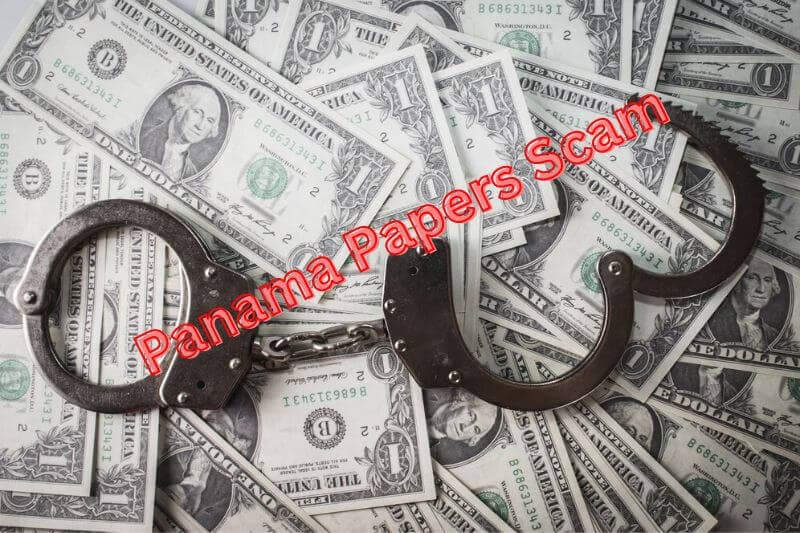
History records few data leaks on the scale of the Panama Papers. Offshore companies, the files showed, get used to conceal wealth, dodge taxes, and commit fraud. For compliance teams, the lasting lesson is that hidden ownership counts as a measurable risk, because the leak proved something uncomfortable: shell structures, tax havens, and politically exposed persons can stay invisible right up until a data breach drags them into public view. What happened is worth walking through. So are the practical takeaways for ultimate beneficial ownership (UBO) checks, due diligence, and leaked-data adverse media screening.
What is the Panama Papers Scandal?
A massive data leak from the Panama-based law firm Mossack Fonseca became known as the Panama Papers Scandal. The files told a story. Inside the leaked documents lay a complex network of offshore companies that the world's wealthy used to hide assets and evade taxes. Two things got exposed at once: the intricate mechanics of tax evasion, and the part intermediaries played in keeping those mechanics running.
Consider what this says about corporate groups and their tactics. Many manipulate profits and dodge taxes through a couple of well-worn moves. One is the letterbox company, an entity with no real employees. Another is the arbitrary use of transfer prices, which tax authorities find genuinely hard to evaluate, and together these let groups shift profits across borders with little to stop them.
Secrecy made the rest possible. Tax and secrecy havens, jurisdictions offering low tax rates alongside high financial secrecy, gave these practices room to operate, as the 2016 Panama Papers scandal showed.
So how did anyone orchestrate a network of financial secrecy this vast? Look to the mechanics of offshore tax evasion and the role of intermediaries. The work fell to a familiar set of professionals: financial institutions, trust companies, and the law and accounting firms behind them did the heavy lifting that made these secretive transactions work, client by client, jurisdiction by jurisdiction.
Setting up offshore entities for clients was a large part of that work. Such entities went by a nickname: "letterbox companies." They have no real employees or operations, and they exist mainly as a vehicle for financial transactions that take advantage of favorable tax laws.
Transfer prices were the other tactic. Picture the costs assigned to goods and services sold between related entities inside one enterprise. Manipulate those costs and profits move across borders, which is precisely what happened, trimming tax liabilities in the companies' home countries.
The Role of Tax Havens
Tax havens sat at the center of it. Also called secrecy havens, these jurisdictions offer low tax rates and high levels of financial secrecy, which makes them attractive destinations for individuals and corporations looking to evade taxes. Mossack Fonseca, the leaked documents revealed, had helped its clients set up offshore entities across various tax havens, and that assistance pushed tax evasion and money laundering further along.
Why does any of this matter to compliance teams? Picture a single tax-haven shell sitting several layers above the entity you are actually onboarding. Trace ownership up the chain and the picture clears. Skip that step and the risk stays hidden.
Politically Exposed Persons (PEPs) in the Leak
Global corruption had its own cast in the leak. Politically Exposed Persons (PEPs) are individuals who hold a prominent public position or function, which makes them potential targets for bribery and corruption given their ability to influence decisions and access public funds. Enhanced due diligence procedures are supposed to apply to these individuals. How often those procedures fall short is what the Panama Papers revealed.
Iceland offers a vivid example. Prime Minister Sigmundur Davíð Gunnlaugsson resigned following protests when the leak revealed his undisclosed interest in an offshore company. That moment landed as a global wake-up call, signaling a need for improved transparency and stricter UBO identification protocols.
Step back and the scandal reads as a reminder of two things: the sheer extent of tax evasion, and the mechanisms that keep it going. The case it made was broad. Greater transparency, stricter regulations, and international cooperation all became part of it, every piece aimed at taxing corporate groups appropriately. Protecting whistleblowers mattered just as much, since those are the people who pull such practices into the light.
The UBO and Its Growing Importance
Identification became the headline. Accurately identifying and verifying the Ultimate Beneficial Ownership (UBO) of corporate structures is exactly what the Panama Papers Scam underscored as necessary. Pinning down a UBO now matters everywhere, sitting at the heart of compliance with Anti-Money Laundering (AML) and Counter-Terrorist Financing (CTF) regulations worldwide.
Regulators moved. In 2020, the European Union implemented the 5th Anti-Money Laundering Directive (5AMLD), which tightened the focus on UBO transparency further. Member states across the EU now had to establish public UBO registers for companies and other legal entities, and that made hiding behind anonymous shell corporations a good deal harder.
Washington followed with its own measure. Enacted in 2021 as part of the National Defense Authorization Act, the Corporate Transparency Act mandates that all newly formed corporations and LLCs disclose their UBOs to the Financial Crimes Enforcement Network (FinCEN). Treasury can now reach this information, which curtails the anonymity of business owners that much more.
Why Leaked Data Became an Adverse Media Source
Here is a lesson that gets overlooked. Any leak instantly becomes an adverse media source. Adverse media screening is the practice of checking customers and the entities they connect to against negative news, investigative reporting, and other public records that point toward financial crime, corruption, or sanctions risk.
Publication changed everything overnight. When the Panama Papers went public, names that had sailed through traditional checks suddenly turned up in investigative coverage worldwide. Someone who looked clean on a sanctions list could still be tied to an offshore structure sitting in a leaked database. Closing that gap is the whole point of adverse media screening: it surfaces reputational and financial-crime signals that structured watchlists miss.
One practical takeaway runs against habit. Treat leaked-data investigations, and the reporting around them, as part of an ongoing negative news screening process rather than a one-time check at onboarding. Risk can shift the moment a new leak or news cycle breaks.
The Data Leak Phenomenon
Nothing this size had happened before. Unprecedented in scale and impact, the data leak behind the Panama Papers Scandal shed light on what unsecured data can do to individuals and businesses alike, which is why the incident pushed data security and leak prevention up the agenda. One result is the EU's General Data Protection Regulation (GDPR). Effective in 2018, it imposes strict penalties on companies that fail to protect personal data adequately.
Journalists and whistleblowers work differently now too. Analyzing the leaked data and presenting the findings to the public fell to the International Consortium of Investigative Journalists (ICIJ), which played a vital role. Hundreds of journalists collaborated across borders. People often point to that collaboration as a model for future investigative journalism.
The Need for Reform
Loopholes were the real revelation. Gaps in the global financial system, the ones that let the wealthy evade taxes and hide assets, came into view, and the scandal laid bare how poorly current regulations prevent such abuses. Calls for reform followed across several areas, among them campaign finance systems and the regulation of tax havens.
Take the United States as one case. Congress, the scam made clear, needs to set standards for disclosure and public access, both meant to prevent financial secrecy. Reform of America's campaign finance system became another pressing need, since today's rules let the wealthy hold a disproportionate influence over political decision-making.
For institutions, the harder lesson is operational rather than legislative. The bar moved. Regulators now expect firms to detect hidden ownership before a leak does it for them, which in practice means building UBO discovery, corporate due diligence, and adverse media screening into the onboarding workflow itself.
Ready to see how automated UBO discovery and screening work on real corporate structures? Book a Corporate Due Diligence Demo.
How KYC Hub Helps Uncover Hidden Ownership
One failure sat underneath everything the Panama Papers exposed: an inability to see who really stands behind a corporate structure, no matter how many entities had been stacked on top to keep the real owner out of view. KYC Hub's Global KYB Solution was built for exactly this problem. Corporate onboarding and due diligence here trace ownership rather than stopping at the entity in front of you.
Start with onboarding. Automated and swift, it verifies corporate customers without manual document chasing. Alongside that runs UBO and PSC (persons with significant control) detection, which maps ownership up through the layers of shell and holding companies the Panama Papers made infamous. Tailored workflows let compliance teams set their own risk rules and escalation paths. Global compliance coverage supports the cross-border KYB and AML obligations that leaks like this one accelerated. Screening for adverse media and negative news can run alongside ownership checks, which surfaces reputational and financial-crime signals inside the same review.
What stays with you is a simple lesson. Hidden ownership is a solvable problem once due diligence becomes automated, layered, and continuous rather than a one-time form at sign-up.
Book a Corporate Due Diligence Demo.
Conclusion
An awakening on many fronts is what the Panama Papers Scandal turned out to be. Greater transparency was one part of the case it made. Identifying UBOs rose in stakes, the dangers data leaks carry came into focus, and the part journalists and whistleblowers play in uncovering the truth grew clear. Lessons from this landmark incident now work as a guidepost, pointing toward a world where financial dealings are transparent, data stays secure, and accountability is non-negotiable.