What Are Deepfakes? Detection, Fraud Risks, and Global Laws in 2026
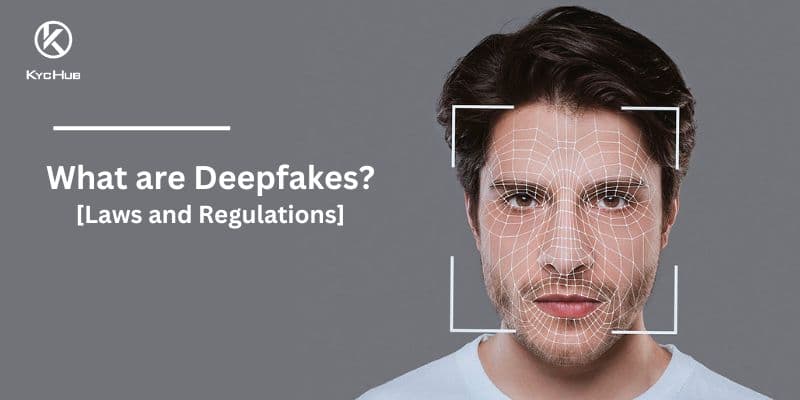
A deepfake is a synthetic image, video, or audio clip that AI generates to impersonate a real person convincingly. Telling genuine users and content apart from these AI-generated fakes is the job of deepfake detection, a set of techniques that runs from biometric liveness checks all the way to media forensics, and financial institutions and platforms rely on it daily. These forgeries keep getting harder to catch by eye. Detection, as a result, has shifted from a research curiosity into an operational control that any business verifying identities or trusting digital media now has to run.
Over the past year, deepfakes stopped being a future worry. They turned operational. Biometric verification systems saw deepfake fraud attempts rise 58% in 2025, and attacks that inject pre-recorded or AI-generated video straight into a verification feed climbed past 2,600% over the same stretch, a jump that caught plenty of fraud teams flat-footed. Regulation trails behind, and it trails unevenly. Clear labeling of AI-generated content is now required under the EU AI Act, yet most other jurisdictions still lean on the fraud and impersonation statutes they already had on the books.
What follows covers five things: what deepfakes are, how deepfake detection works, why they have become a fraud problem for financial services, the legal and ethical questions they raise, and how deepfake laws differ around the world.
What Are Deepfakes?
Synthetic media is the broad category, and deepfakes sit inside it. They use artificial intelligence to superimpose one person's image, voice, or both onto another. Its name is a mash-up. "Deep learning" supplies the first half, since that is the AI method driving these hyper-realistic forgeries, and "fake" supplies the rest, because that is exactly what they are.
A deepfake can imitate someone physically, vocally, or on both fronts at once, and most of the time the result is indistinguishable from real material. In entertainment and media the technology does plenty of good. Trouble starts when it gets misused. Typically that misuse shows up in situations where the subject never gave consent for their likeness to be used at all.
Three capabilities sit at the heart of the controversy: the power to deceive the public, to defame individuals, and to chip away at confidence in media. That mix is potent. Together those powers have pushed deepfakes into the middle of an ethical and legal debate, and the technology grows more sophisticated by the month, so countering it has become a serious goal for governments and technology companies the world over.
How Deepfake Detection Works
Manual review cannot reliably catch a modern deepfake anymore. So organizations lean on layered, automated detection instead, and the strongest controls combine several signals rather than trusting any single check to do the whole job.
- Liveness detection confirms that a real, living person is sitting in front of the camera at the moment of capture, not a photo, not a replayed video, not an injected synthetic feed. In a KYC context, a liveness check is the thing that stops a fraudster from clearing identity verification with a generated face.
- Active vs. passive liveness. Active liveness asks the user to do something, such as turn their head or blink. Passive liveness works the other way: it analyzes a single capture quietly in the background with no extra prompts. Both exist to separate genuine users from spoofs.
- Pairing liveness detection in biometrics with biometric face matching is standard practice. Face matching compares the live capture against the photo on a verified identity document and confirms they are the same person.
- Injection-attack defense matters because some of the fastest-growing deepfake attacks skip the camera entirely and push AI-generated video straight into the verification stream. Catching them takes checks on the integrity of the capture pipeline itself, not just a look at the image.
- Media forensics handles content rather than identity. Forensic analysis hunts for the subtle artifacts that deepfake generation leaves behind, traces buried in pixels, audio waveforms, and metadata.
Generators keep improving, and no single technique stays bulletproof against them. That is the whole reason effective deepfake detection layers these methods together and keeps the models in continuous retraining.
Want to see deepfake detection applied to live onboarding? Book a Fraud Prevention Demo.
Deepfakes and Financial Fraud
Banks, fintechs, and any business onboarding customers remotely cannot treat deepfakes as a reputational abstraction anymore. They are a fraud vector, plain and direct. The same technology that fabricates a celebrity video can fabricate a customer just as easily.
- Identity fraud at onboarding. Fraudsters reach for deepfakes to beat biometric identity checks, open accounts under stolen or synthetic identities, and push transactions through. Deepfake-driven KYC fraud lets one bad actor scale account creation to a degree that old paper-based fraud could never touch. A strong defense starts at the front door, which is why teams pair liveness with broader identity verification controls.
- Executive impersonation and voice fraud. Criminals use deepfake audio to impersonate trusted individuals and authorize payments. One widely cited case involved the CEO of a UK energy company, who lost roughly $243,000 to a realistic voice impersonation over the phone.
- Extortion. Blackmail is a growing use. Victims get threatened with the release of fabricated compromising recordings or images unless they pay.
- Erosion of trust in verification. Deepfake bank fraud, as it grows, undermines confidence in remote channels and pushes institutions to strengthen detection rather than retreat to slower, in-person processes. Related schemes such as authorized push payment fraud often pair social engineering with synthetic media.
Why Are Deepfakes Being Regulated?
Deepfakes moved from novelty to social problem fast, and governments and organizations recognized they had to step in, because the damage the technology causes reaches across so many fields. Several reasons drive that urgency, and each deserves a closer look.
Psychological and Reputational Damage
Fabricated media and deepfake pornography have left victims with serious psychological and emotional harm.
- Non-consensual explicit content. Victims of deepfake pornography pay in humiliation, anxiety, and trauma. What makes this kind of image or video so malicious is how close to reality it appears.
- Reputational harm. Damage of this kind runs further still. Forms of "revenge pornography" can wreck a victim's reputation for good. That hits especially hard given how many public figures depend on personal reputation for their livelihood.
Undermining Democracy
To the integrity and credibility of democratic processes, deepfakes pose a real risk, and the manipulation of public opinion is where that risk bites hardest.
- Election interference. Fake videos of political leaders making inflammatory statements or endorsing false agendas can surface and spread during election periods.
- Erosion of trust. Fake news and the post-truth era threaten institutions, media outlets, and the democratic process as a whole. Fears that deepfakes would be exploited in political campaigns ran high during the 2024 global election year.
Economic Losses
As a sophisticated tool for criminals, deepfakes feed significant financial damage through fraud, scams, extortion, and identity theft, a pattern the fraud section above already walks through. The money adds up. That financial impact ranks among the strongest drivers behind new regulation.
Threat to Trust in Media
Truth and authenticity in the digital age rest on a foundation that the rise of deepfakes directly challenges.
- Synthetic content dominance. Plenty of analysts expect that over the coming years a large share of online content could be AI-generated, which would leave audiences struggling to tell real material from fake.
- Misinformation amplification. Deepfakes get more realistic, and as they do, they make the spread of misinformation worse. A manipulated video of a public figure can sway opinion or sow chaos in a community.
- Legitimacy concerns. Some proposed fixes would certify legitimate content, an idea raised in the U.S. Presidential Executive Order on AI. The catch is that certifying content could split the information world into "certified" and "non-certified" tiers, which only complicates how people judge what is authentic.
Deepfake Laws Around the World
How a country restricts deepfakes depends on its legal, cultural, and technological makeup, so the rules differ widely from one place to the next. A handful of countries have built detailed legislation. Others fall back on existing laws to deal with the problems this relatively young technology throws up. The technology advances fast and misuse will only widen, which means the pull toward international cooperation and unified standards is set to grow.
USA
Federal Laws
For now, the United States has no federal legislation dedicated entirely to deepfakes, though talk of filling that gap is picking up. The No Artificial Intelligence Fake Replicas and Unauthorized Duplications (No AI FRAUD) Act would turn it into a criminal offense to build an electronic likeness of another person, living or dead, without consent, and it covers both appearance and voice.
Other federal proposals are in the mix. The Nurture Originals, Foster Art, and Keep Entertainment Safe (NO FAKES) Act takes aim at a performer's voice and likeness, while the Disrupt Explicit Forged Images and Non-Consensual Edits (DEFIANCE) Act seeks to shield individuals from non-consensual explicit images. Even so, the country still has no single comprehensive federal deepfake law.
State Laws
A number of U.S. states have passed laws targeting specific deepfake problems, among them election interference, non-consensual adult material, and identity theft. California leads with progressive statutes. Assembly Bill 730 outlaws deepfakes in political campaigns, and Assembly Bill 602 holds perpetrators accountable to victims of non-consensual pornography.
Texas went a different route with Senate Bill 751, which bans creating and distributing deepfake videos meant to alter the electoral process. Other states are moving too. Regulation is advancing in specific forms across Florida, New York, Illinois, and Virginia, yet their definitions and applications are not uniform, so what they add up to is a piecemeal, state-by-state patchwork of protections.
UK
In 2023, the UK passed the Online Safety Act, which made it a crime to share fake sexually explicit images where the act causes distress and the sender meant harm or was reckless about it. That was a real step toward addressing what deepfakes do.
Anyone targeted by other kinds of harmful deepfake content still has to fall back on existing laws covering defamation, harassment, or data privacy, and those can be awkward to apply. The gap shows why more regulation is needed to handle the newer, knottier issues deepfakes raise.
EU
A pioneering attempt to build a legal framework for AI systems, deepfakes included, is what the EU AI Act represents. Its transparency provisions require creators of deepfake content to disclose that the material was synthetically generated. An outright ban is not the approach. Instead the Act tries to weigh the potential benefits of the technology against the harm it can do to people's rights and freedoms. Approved in 2024, it positions the EU at the front of AI regulation globally as it comes into force.
China
China has moved fast to set strict rules over deepfake technology. The country requires labeling of AI-generated content so users are not misled and imposes sanctions when those rules are broken, a signal of the government's intent to keep a grip on content produced and shared online. China's regulations also tackle the practical side, the use of deepfakes in fraud and disinformation.
Australia
Australia is starting to develop more concrete legislation on deepfakes, with the current emphasis falling on online safety and harm minimization. Existing law does part of the job. Provisions on defamation, harassment, and data misuse cover some deepfake cases, yet they fall short of full protection against AI-generated content, so the Australian government's approach leans on engaging stakeholders to build policy that encourages innovation while protecting consumers.
France
To curb identity fraud and the spread of fake news, France has put anti-deepfake measures in place, penalizing producers and distributors of manipulated content that causes harm. French regulation, like the rules in many other countries, addresses particular concerns rather than the full sweep of deepfakes.
Other Countries
A growing list of countries is showing concern about regulating deepfakes, Japan, Singapore, and India among them. Legislation across these regions is still taking shape, but the aim is consistent: promote transparency and protect people from harm. Japan is drawing up ethical principles for AI use. Singapore is weighing laws against online harm and fake news.
Why Are Deepfakes Hard to Regulate?
Several factors make regulating deepfakes a tangled task.
- Anonymity of creators. Deepfake creators tend to operate anonymously, which makes enforcement hard.
- Global reach. Because the internet has no borders, deepfake content spreads fast across jurisdictions.
- Technology evolution. AI keeps improving. That makes detection harder and renders existing legislation obsolete.
- Balancing innovation and regulation. Laws have to guard against misuse while still allowing legitimate uses of AI.
Legal and Ethical Issues Surrounding Deepfakes
Complex legal and ethical challenges come with the spread of deepfake technology, and each one demands careful thought.
Freedom of Expression vs. Harm Prevention
How to square the right to free speech with the need to prevent deepfake harms remains far from settled. Too little regulation puts legitimate, innovative uses of AI at risk. Too much can leave victims and institutions out in the cold.
Privacy Violation
Someone's image, voice, or identity gets used without consent, and that violates the right to privacy and self-determination. The breach cuts deep. Non-consensual deepfake pornography and identity theft do the most damage of all, since the harm they cause can take years to undo.
Accountability
Assigning blame is hard when deepfakes cause harm. Who carries legal responsibility, the creator of the deepfake, the platform hosting it, or the party distributing it? The puzzle only gets tougher when anonymous accounts are behind the whole thing.
Discrimination and Bias
Over-policing particular creators or groups is a trap legal systems have to avoid, since it would only reinforce existing injustices. Fairness means no category of people should end up marginalized by the rules.
Manipulation and Trust Erosion
One major danger stands out: deepfakes erode trust in media and institutions, and that erosion eats away at shared notions of truth and authenticity.
Future of Deepfake Laws and Regulations
Deepfake technology keeps evolving, and the rules around it have to adapt through solutions that work on several fronts at once.
- Improved detection tools. Pushing AI forward to detect and verify synthetic media is central to enforcement, and staying ahead of ever-sharper deepfakes calls for governments, tech companies, and researchers to work together.
- Harmonized global regulations. Deepfakes cross borders, so coordinated international effort is the only way to build standardized frameworks and close jurisdictional loopholes.
- Awareness campaigns. Teach the public about deepfakes and you give people the means to spot and critically weigh manipulated media.
- Proactive legislation. Future laws have to anticipate how fast AI advances, which means building flexible, adaptive frameworks now.
- Ethical guidelines and best practices. Legal measures are not the whole answer. Ethical guidelines for responsible AI development can build accountability and trust among developers, platforms, and users.
How KYC Hub Helps You Fight Deepfake Fraud
Built for digital financial services, the KYC Hub fraud prevention platform helps institutions stop identity fraud before a synthetic customer ever clears onboarding. The remit is broad. It is designed to detect transaction fraud, cut chargebacks and losses, and protect high-risk environments such as trade finance and gaming and gambling.
Where deepfakes are concerned, the aim is twofold: keep AI-generated faces and injected video out of your verification flow, and catch the downstream fraud they set up. Layering is the point. Liveness and biometric identity checks at onboarding combine with ongoing transaction monitoring, and together they help teams close the gaps deepfake fraud is built to slip through.
Is your onboarding or payments flow exposed to synthetic-identity and deepfake risk? Book a Fraud Prevention Demo to see how KYC Hub can help.
Conclusion
Deepfakes can open a new chapter in communication and media, and they raise severe risks at the same time. Their use has spread fast. Such speed creates a need for clear legislation and standards alongside strong operational detection. Lacking both, the misuse of deepfakes can do serious harm to people, organizations, and financial systems and wear down confidence in digital environments. The real challenge is letting innovation flourish without amplifying the risk of harm.