CKYC Central Know Your Customer: A Compliance Guide for Businesses
CKYC central know your customer is India's shared registry that lets a regulated business verify a customer once and reuse that verified record across the financial system. Picture a bank running the check. Now picture an NBFC, a mutual fund, or an insurer doing the exact same thing for the same person. CKYC ends that loop. None of this is a consumer convenience, though. Reporting duty is closer to the mark: you collect the customer's KYC, upload the record to a central registry run by CERSAI, and you get back a permanent 14-digit identifier that any other institution can rely on later.
That single idea reshapes onboarding. One reporting entity does the heavy lifting up front. Every firm after it pulls a clean, pre-verified record instead of re-collecting the same documents. Below, you will find what CKYC means for the business that has to operate it, what the law expects of you, and how the registry is changing in 2026.
What is CKYC (Central Know Your Customer)?
CKYC stands for Central Know Your Customer. Think of it as a centralized store of an individual's KYC details, shared across the financial institutions they deal with inside the country. The Prevention of Money Laundering Act of 2002 empowered the Government of India to write rules that prevent money laundering. CKYC grew out of that mandate. Think of it as a proactive measure against money laundering. Terrorist financing falls under the same aim, and other financial crimes are meant to get blunted besides. Maintaining and managing the registry became the job of the Central Registry of Securitisation Asset Reconstruction and Security Interest, better known as CERSAI.
CERSAI sits under the Ministry of Finance. Day to day, it operates the Central KYC Records Registry, or CKYCRR, which is the actual database where verified records live.
What is the Full Form of CKYC?
CKYC's full form is Central Know Your Customer. You will also see the registry itself written as CKYCRR, which stands for Central KYC Records Registry.
What CKYC Means for a Reporting Entity
For a customer, "CKYC" mostly means one number they can reuse. For your business, it means a set of obligations that carry real penalties if you miss them.
Any institution regulated by SEBI, RBI, IRDAI, or PFRDA is a reporting entity. Roughly 7,166 of them sit inside the CKYC system today. When one of them onboards a customer, three things have to happen. First, collect and verify the KYC. Second, push that record into the CKYCRR. Third, keep that record accurate over time.
The deadlines are firm. A reporting entity must upload a new customer's KYC record to CERSAI within three working days of opening the account. Say a customer's address changes. Now the registry has to reflect that within seven days. Miss the upload duty and the exposure is steep. Penalties can run up to one lakh rupees per day under the PMLA. So CKYC is less a feature you offer and more a control you have to run without gaps.
Features of CKYC
- Unique Identification Number
After a successful CKYC registration, the individual receives a 14-digit number tied to their identity proof. Call it the KYC Identifier Number, or KIN. Across institutions, it acts as a universal key for accessing or verifying that customer's information.
- Data Storage
Customer details, including personal information and documents, sit digitally in a secure repository. That cuts physical paperwork and makes records easier to retrieve when a second institution needs them.
- Rigorous Document Verification
Submitted documents go through verification by CERSAI to confirm accuracy and authenticity before a record is accepted.
- Dynamic Updates
When an individual's KYC details change, the update propagates across connected institutions. That keeps the shared database consistent rather than letting stale copies drift apart.
What is a CKYC Number?
A CKYC number, also called a KIN, is the permanent 14-digit code that CERSAI assigns to a customer's record the first time it lands in the CKYCRR. Picture a national reference for that person's verified identity. Once it exists, any reporting entity can search for it and pull the underlying record rather than starting KYC from scratch.
Issued once, the number stays with the customer. Open a new account elsewhere, and it does not change. Therein lies what makes the registry useful. A second institution treats the KIN as proof that verification already happened.
How Does CKYC Work?
The CKYC process is built to remove duplicate verification across the financial system.
- Initial Registration: When an individual approaches a financial institution, such as a bank, mutual fund, or insurer, to start a financial relationship, CKYC registration is initiated.
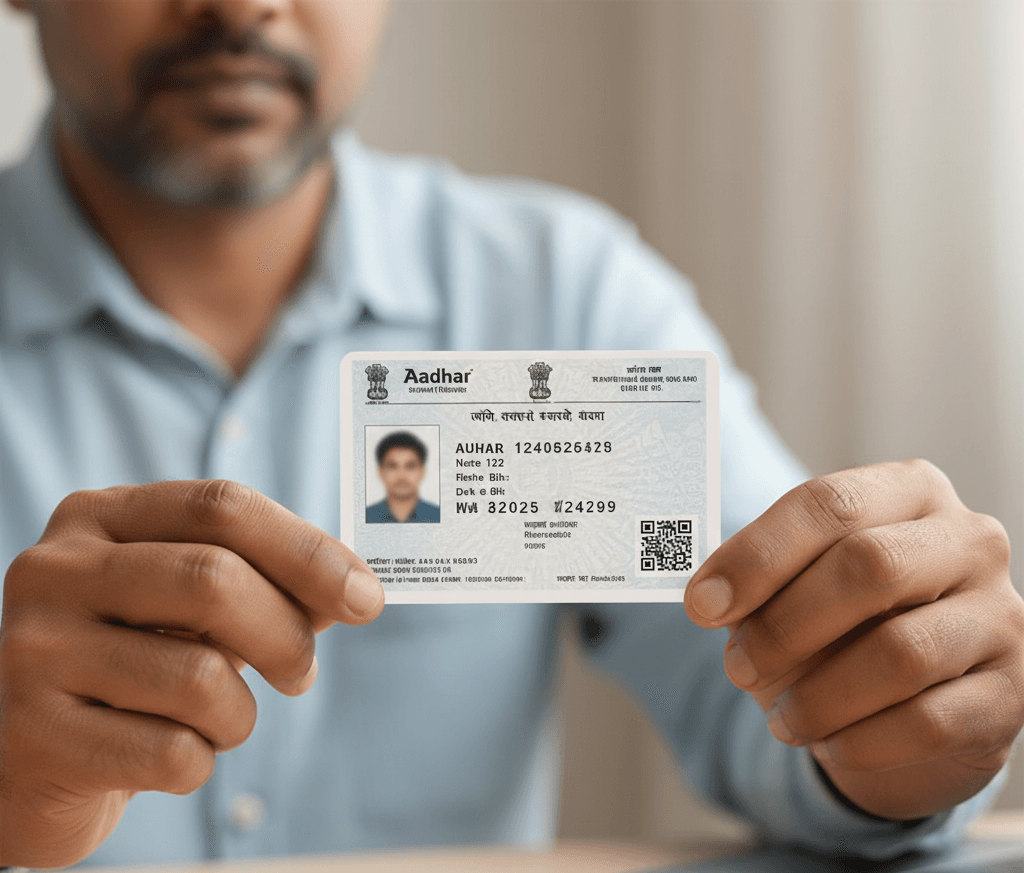
- Document Submission: Personal information and documents such as Aadhaar, PAN, and proof of address are submitted physically or electronically.
- Verification and Assignment: The institution forwards documents to CERSAI for verification. After successful verification, a unique 14-digit CKYC number is assigned.
- Reuse Across Institutions: From then on, the CKYC number can support transactions across different institutions without the customer resubmitting documents.
How a Business Looks Up or Generates a CKYC Number
On the institution side, generating and retrieving a KIN is a workflow your onboarding team runs, not something a customer does alone. Here is the pattern.
Search the registry first. Before creating a new record, your team queries the CKYCRR using the customer's identifiers to check whether a KIN already exists. If it does, you download the existing record instead of creating a duplicate.
Create the record if none exists. When there is no match, you submit the verified KYC data to CERSAI. Validation follows, and the registry issues a new 14-digit KIN.
Resolve probable matches. Sometimes a search returns a "probable" match rather than a clean one. Your team has to decide whether it is the same person before submitting. Good identity data and decision logic matter here.
Pull records on demand. Once a customer has a KIN, any subsequent onboarding can retrieve their record directly. Such reuse is the whole point of the registry. Time savings show up here too, especially for a high-volume business.
If you run onboarding at scale, you want to verify identities and resolve those matches programmatically rather than clicking through a portal one customer at a time.
CKYCRR 2.0: The Shift to Real-Time APIs
Big changes are coming to the registry, and they matter for any business with an onboarding integration. CKYCRR 2.0 was announced in the Union Budget 2025, with the core platform targeted to go live around the end of February 2026 and a phased migration continuing through the year.
At its core, the headline change is mechanical. Under the old model, batch uploads ruled: records were submitted in files and validated later. CKYCRR 2.0 replaces that with real-time API calls using structured JSON. Submissions are validated instantly. An incorrect record is rejected on the spot rather than failing silently in a batch you find out about days later.
Duplicates are the registry's next target. CERSAI has described AI-based matching and face-match technology to improve accuracy, with deduplication that draws on a customer's photo to merge or flag duplicate records. Aadhaar, PAN, and demographic data feed the same check. Every reporting entity is now asked, per a 2026 notification, to move to multi-parameter search and stop creating avoidable duplicates. For a business, the practical takeaway is simple. Your systems need to resolve probable matches cleanly before you submit, because the registry will increasingly reject sloppy records at the door.
Institutions Eligible to Enroll Customers for CKYC
Any financial institution governed by the following regulators can enroll customers for CKYC:
- Securities and Exchange Board of India (SEBI)
- Reserve Bank of India (RBI)
- Insurance Regulatory and Development Authority of India (IRDAI)
- Pension Fund Regulatory and Development Authority (PFRDA)
In practice that covers a lot of the market. Banks and NBFCs sit inside it. So do mutual fund companies, insurance providers, and more besides. RBI also issued sector-specific KYC Master Directions on 28 November 2025, with more detailed requirements across roughly ten institution types, so the exact operational rules can vary by what kind of entity you are.
Documents Required for CKYC Registration
The documents a reporting entity collects for CKYC include:
- Proof of Identity (POI): Aadhaar, Passport, PAN, Driving License, and similar.
- Proof of Address (POA): Aadhaar, Passport, Utility Bill, Rental Agreement, and similar.
- Recent Passport-sized Photograph.
- PAN Card Details.
- Bank Account Details (if applicable).
Exact requirements vary with the entity and the product or service the customer is taking up.
Types of CKYC Accounts
CKYC records are classified by how the customer was verified, which affects what your onboarding flow has to capture.
- Normal Account
Opened with any of the six officially valid documents: PAN, Aadhaar, Driving License, Passport, Voter ID, or NREGA job card.
- Simplified / Low-risk Account
Created using Other Valid Documents (OVDs) under RBI guidelines.
- Small Account
Opened without official documents by submitting a form and a photograph, subject to transaction limits.
- OTP-based eKYC Account
Created using an Aadhaar PDF verified with an OTP.
Mandatory Nature of CKYC
CKYC registration is mandatory for institutions registered under SEBI, RBI, IRDAI, or PFRDA. These entities are obligated to enroll their customers under the CKYC system. Hence the upload deadlines above land as a compliance matter rather than a nice-to-have.
Benefits of CKYC for the Business
- Less Duplicate Verification: Pulling an existing record beats re-collecting documents for a customer who is already in the registry.
- Stronger Fraud Detection: Centralized, deduplicated records make it harder for the same identity to slip through under different guises.
- Lower Paperwork Overhead: Fewer physical copies to handle, store, and reconcile.
- Faster Onboarding: A clean KIN lookup shortens the time from application to active account.
- Cleaner Data Management: One authoritative record per customer is easier to keep accurate than many scattered copies.
Impact on Existing Mutual Fund Investors
CKYC is not retroactively forced on every existing investor. Move into a new mutual fund house, though, and a CKYC record is required. So fund operators still end up enrolling long-standing customers as they expand relationships.
Difference between KYC, eKYC, and CKYC
CKYC, traditional KYC, and eKYC all aim at customer identification and verification, but they differ in approach.
Traditional KYC is the original method. Think manual work, built on physical documents and often physical presence, used to prevent fraudulent activity and meet regulatory requirements.
eKYC is the electronic version. Running online with digital documents, it makes the same verification faster and lighter to operate.
CKYC is the shared layer on top. Here you get a one-time KYC that multiple institutions can rely on, built on digital documents and biometrics, and its purpose is to remove duplication and give the customer a single verified identity across firms.
How KYC Hub Supports CKYC and India Onboarding
KYC Hub's India KYC stack is built for the reporting entities that have to operate CKYC at volume, not for individuals checking a status. Identity verifications come first on the platform. Financial checks round out the set. So do corporate ones, and employee verifications sit alongside them, all backed by a defined list of identification documents it verifies for the Indian market.
For CKYC specifically, that combination matters in two places. Clean identity verification up front means the record you push into the CKYCRR is accurate, which is exactly what CKYCRR 2.0's instant validation rewards. Strong matching is the other half. Identity data drives the first pass. Then comes the document. Demographic data feeds the same call, and together they help your team resolve probable matches before submission, so you stop minting avoidable duplicates the registry will flag. Other entity types a regulated business onboards get the same checks. Financial verifications cover one slice. Corporate verifications handle another, and employee verifications fill the rest, all from one place rather than a stack of point tools.
We do not run the CERSAI registry, and CKYC obligations remain yours as the reporting entity. What KYC Hub gives you is the verification and decisioning layer that feeds it cleanly, and it plugs into the same global KYC platform if your onboarding stretches past India. To see how it maps to your onboarding flow and your three-day upload duty, Book an India KYC Demo.