Effects of Money Laundering: Economic, Social and Sector Impact
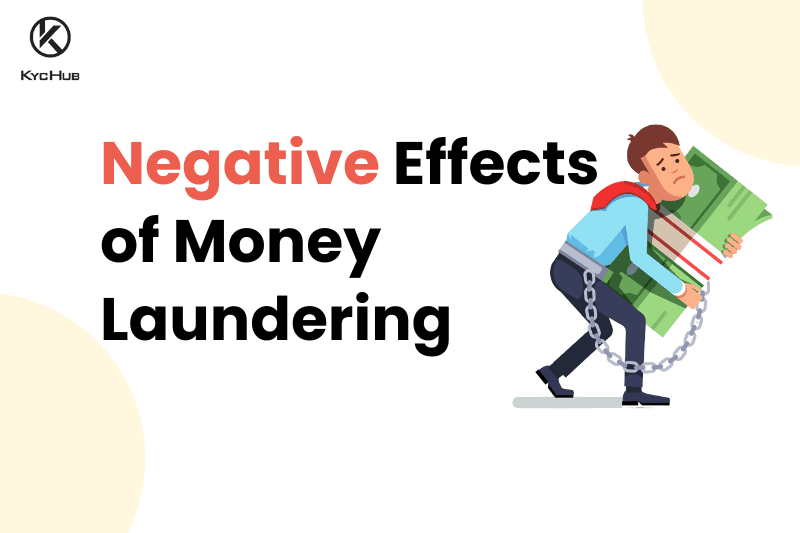
The effects of money laundering reach far beyond the criminals who profit from it. Dirty money warps whole economies. Home prices climb, public revenue quietly drains away, and the trust people place in everyday institutions starts to wear thin under the strain. Grasp these consequences first, and the defenses you build afterward stand a much better chance of holding.
Money laundering disguises the origins of illegally obtained funds so they appear legitimate. Once that money is inside the financial system, the damage is real. Growth stalls. Courts get dragged into cleaning up the mess, while public confidence in banks and governments takes a hit that rarely comes back fast. Because the harm jumps borders and sectors so readily, anyone designing countermeasures needs the full picture of where it lands.
What is the Impact of Money Laundering?
The impact runs deep, and it surfaces in more places than most people expect. Economic growth slows. Trust in the financial system gets eaten away, corruption and crime find room to spread, and over time the regulatory frameworks meant to stop all this start to buckle. Foreign investors get scared off. Meanwhile the hidden wealth piles up with a small group at the top, and the gap between them and everyone else keeps widening.
The United Nations Office on Drugs and Crime (UNODC) puts the amount laundered each year at 2 to 5% of global GDP, or $800 billion to $2 trillion. A range that wide tells you how far the economic consequences really travel.
How Money Laundering Distorts the Economy
When large sums of illicit money flow into legitimate markets, they bend the rules of supply and demand. Criminal funds chase assets for reasons that have nothing to do with genuine value, and prices climb in ways the market never intended.
The distortion shows up in several ways:
- Artificial price inflation. Real estate, commodities, and luxury goods absorb illicit money, which pushes prices above what honest demand would ever support. Speculative bubbles can form, and when they burst, the damage lingers.
- Misallocated resources. Rather than funding productive investment, capital drifts toward whatever assets make laundering easiest. Growth slows. Innovation dampens.
- Unreliable economic data. Policymakers depend on clean statistics to set interest rates, plan budgets, and judge the true health of an economy. Hidden criminal money muddies all of it.
- Sudden market volatility. Large pools of criminal money can move without warning, and that unpredictability rattles markets and discourages long-term planning. Catching those abrupt flows is one reason transaction monitoring sits at the heart of any serious AML program.
Foreign investors notice this instability. When a market looks compromised, capital goes elsewhere, and the country loses the investment it needs to grow.
Effects of Money Laundering on Different Countries
Developing Countries
Money laundering hits developing countries hardest, places like India, South Africa, and Nigeria among them. Regulatory frameworks and technological infrastructure capable of fighting financial crime effectively are often missing here. A few effects stand out:
- Growth gets stunted. Illicit outflows strip economies of resources they badly need, which holds back public investment in healthcare, education, and infrastructure. Research by Global Financial Integrity (GFI) highlights that developing countries lose hundreds of billions of dollars annually due to illicit financial flows.
- Corruption and crime take root. As laundering spreads, criminals find it easier to infiltrate political and judicial systems. Transparency International's Corruption Perceptions Index emphasizes how corruption undermines development in these regions.
- Inequality widens. When illicit wealth concentrates, economic disparity deepens, and marginalized communities feel it first. Illegal financial flows in Nigeria, for instance, have driven significant capital flight, reducing the funds available for public welfare programs (Brookings Institution).
Developed Countries
Wealth and strong institutions are no shield. Even in developed nations like the USA, Germany, and Singapore, the repercussions are severe:
- Reputations suffer. A high-profile laundering scandal tarnishes the financial institutions caught up in it and deters future investment. FATF's Mutual Evaluations demonstrate how these incidents impact financial stability.
- Regulation falls behind. Sophisticated laundering schemes outpace existing compliance measures, and loopholes open up.
- Markets take losses. When illicit funds get diverted into speculative investments, markets destabilize. The 1MDB scandal in Malaysia involved laundering activities that destabilized financial markets globally.
Impact of Money Laundering on the Real Estate Market
Property is one of the favorite destinations for dirty money, and the fallout lands on ordinary buyers. The Financial Action Task Force has flagged real estate as a high-risk sector for money laundering and terrorist financing, and the reasons are easy to see.
Illicit funds flowing into housing push prices above what local incomes can support. Families with legitimate savings get priced out. Criminal money can even shift where people are able to afford to live, displacing less affluent households entirely. Those artificial price elevations harm local economies, reduce market transparency, and put housing further out of reach for the people who need it most.
Regulators have started to respond. Anti-money laundering rules now extend to real estate professionals in many jurisdictions, and reporting on property transfers has tightened. Yet the distortion already baked into so many markets shows how deeply laundering can reshape an entire sector.
How Money Laundering Harms Legitimate Businesses
Honest companies pay a quiet price for money laundering, even when they sit nowhere near the crime. A criminal enterprise that washes its proceeds gets to operate on funds that cost it nothing, and that lets it undercut competitors who actually play by the rules.
Picture a legitimate firm trying to compete against a business funded by laundered cash. The criminal-backed operation can lower prices, absorb losses, and squeeze out rivals that depend on real profit to survive. Genuine businesses get driven toward closure over time, and productivity across whole industries drops with them.
Unfair pricing is only part of it. Money laundering tilts the playing field against the very companies driving real economic value, and that imbalance ripples out to workers, suppliers, and customers.
Impact of Money Laundering on Society
Socially, the damage cuts just as deep. As laundering helps crime and corruption take root, the sense of safety and trust that holds a community together begins to fray. Here is where that shows up:
- Public trust erodes. An institution seen as complicit in laundering loses credibility, and that credibility is exactly what financial stability depends on.
- Inequality hardens. Funds laundered through sectors like jewelry or luxury goods bankroll ostentatious lifestyles and widen the wealth gap. Proceeds usually accrue to a select few, deepening the divide between the wealthy and everyone else.
- Courts get strained. Prosecuting laundering cases burdens judicial systems and pulls resources away from other critical work.
- Crime gets fuel. Successful laundering lets drug traffickers, smugglers, and human traffickers expand, so the harm reaches well beyond finance and into the lives of vulnerable people.
Consequences of Money Laundering in Various Sectors
Banking Sector
- Compliance costs. Financial institutions spend billions every year to meet their AML obligations.
- Lost integrity. Once a bank is tied to a laundering scheme, its reputation takes the hit and customer confidence drains. Customers, investors, and partners tend to walk away, and that reputational damage can outlast any fine.
- Regulatory penalties. Fail to detect laundering and the fines come down hard. Back in 2012, the HSBC scandal led to $1.9 billion in penalties for AML failures. Gaps in sanctions screening run through cases like these.
Insurance
- Fraudulent claims. Money launderers exploit insurance policies to clean their funds.
- Higher premiums. The costs tied to fraud detection get passed straight on to consumers.
Healthcare Sector
- Diverted funds. Money laundering facilitates healthcare fraud, pulling resources away from patient care.
- Weakened public health. Illicit funds in healthcare lead to substandard services and corruption.
Education Sector
- Reduced investment. Laundered money often bypasses essential public sectors like education.
- Widening inequality. Funds funneled into private institutions widen the gap between elite and public education systems.
Spotting the warning signs early matters in every one of these sectors, because the damage compounds once dirty money settles in.
Legal and Personal Consequences for Compliance Failures
The cost of getting AML wrong is not just corporate. It can be personal. Compliance officers, executives, and board members can face individual criminal liability when they fail to put adequate controls in place. A weak program no longer hides behind the size of the institution.
For the business itself, the consequences stack up fast:
- Economic instability. Markets get disrupted and resources get pulled away from productive uses.
- Reputational damage. An organization linked to laundering loses trust and credibility, and winning that back is hard.
- Regulatory penalties. Miss your AML obligations and the fines and sanctions follow.
- Social inequality. Laundered funds concentrate wealth among criminals and widen social disparities.
This is exactly why a strong screening and monitoring program is worth the investment. The expense of doing it well is small next to the legal, financial, and reputational damage of doing it poorly. If you are weighing your options, book an AML screening demo to see what end to end coverage looks like in practice.
Fighting Money Laundering with KYC Hub
KYC Hub offers an end to end AML screening and ongoing monitoring solution built to counter the effects described above before they take hold. Rather than bolting separate checks together, it brings detection and oversight into one place.
- Exhaustive AML screening. Customers and counterparties get screened against sanctions, watchlists, and politically exposed person data, so risky relationships surface early.
- Continuous monitoring and AML alerts. Risk does not stand still after onboarding. Ongoing monitoring keeps watch for changes and flags suspicious activity as it emerges, not after the fact.
- Global adverse media intelligence. Negative news and reputational red flags get caught early, giving teams the context a name-only check would miss.
- Network intelligence. Hidden relationships and layered ownership structures become visible, which matters because laundering thrives on complexity and obscured connections.
- Global data coverage. Broad jurisdictional reach helps businesses apply consistent standards wherever they operate.
Bringing screening and monitoring together this way helps institutions cut the risk of unknowingly handling dirty money and the penalties that follow. Book an AML screening demo to see how it fits your compliance program.
Conclusion
The negative effects of money laundering reach across economies, societies, and sectors. Trust gets undermined, markets get distorted, growth slows. From the strain on developing countries to inflated housing prices and the unfair pressure piled on honest businesses, the damage is broad and it lasts. Pushing back takes collective action and modern technology. With strong AML measures and the right tools in place, businesses and regulators can protect economic integrity and support fairer growth for everyone.