Money Laundering in Forex Trading
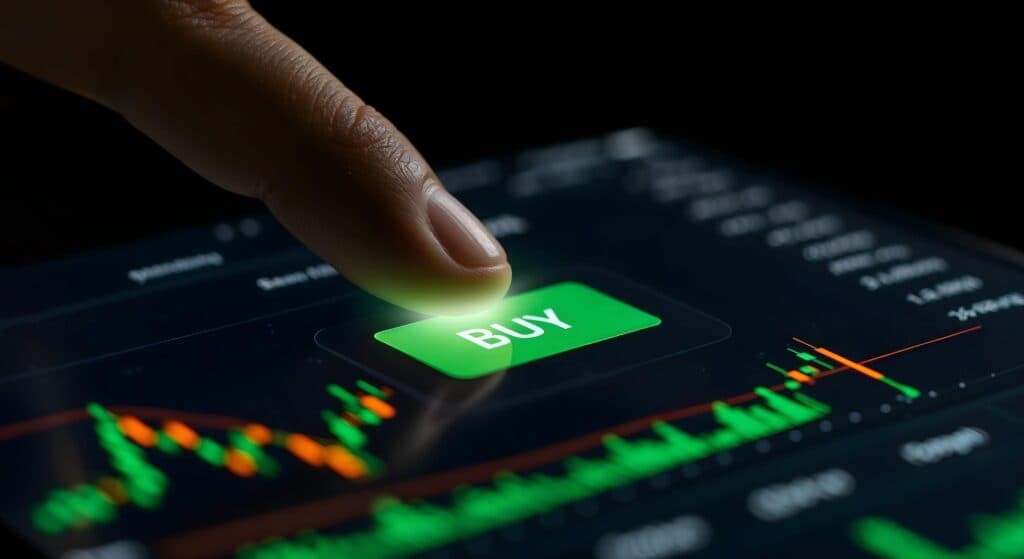
As one of the world’s largest financial markets, the forex market is among the most significant for any nation trading dollars, with daily exchange volume averaging several trillion dollars. This global scale, combined with the fact that it is a decentralised, 24/7-accessible, distributed market, opens the door for legit trader and financier operators to live down the hallway together alongside other legit cops and criminals. The internationalisation of forex trading in the 21st century has been linked to the increased exposure to Money Laundering in Forex Trading, requiring brokers, regulators, and compliance professionals to invest in strong anti-money laundering measures.
Money Laundering in Forex Trading through platforms is a significant risk not just for single firms, but for the very existence of the financial system. The forex broker has to be conscious of these risks and be careful where they operate to safeguard their practices and to comply with a greater number of regulators, and keep their name and reputation above reproach with the financial industry over the past two decades.
What is Forex Trading?
This includes simultaneous buying and selling of foreign currencies in an internationally interconnected and highly interconnected environment called the forex community. Unlike stock exchanges, forex trading is an OTC market at heart in that it does not regulate the central markets of international trade. This decentralised structure enables traders worldwide to participate in currency exchange 24/7, for instance, with a constant 24-hour market interaction facilitated by its decentralised model. The market is mixed, ranging from a few banks, hedge funds, institutional investors, corporate investors, and retail traders. The use of leverage traders, through leverage mechanisms, allows them to have prominent positions of relatively low capital, and this helps them in capturing profits at a greater risk. Supply and demand of currencies and their value change with the effect of economic performance, geopolitical events, interest rates, and the market.
Forex Trading Is Subject to Money Laundering — Why It Is at Risk
Cross-Border Transactions, Large Import/Export Volumes
And with trillions in transactions crossing borders each day, tiny abnormalities can be stealthily hidden behind the noise, easy to place money in a stack with consecutive currency trades, and stack it up among legitimate cash flows. In such a transaction volume, it becomes easy for criminals to conceal stolen funds within a typical business.
Variation in the Regulatory Framework from Jurisdiction to Jurisdiction
Formal regulation also failed to come about. That leaves holes that money launderers play into. Forex trading, given the inequality in regulatory standards among the markets, is a subject of Money Laundering in Forex Trading risk. These inconsistencies are exploited by criminals who funnel transactions to regions with weaker law enforcement.
Anonymity and Complexity
While regulations make it hard for foreign exchange platforms to disguise their identity, they can offer some anonymity that’s not usually guaranteed at other financial institutions. Investigators struggle to trace the origin of funds amid complex chains of trades, mixing different currencies and with multiple brokers and jurisdictions.
Multiple Trading Venues
The globalisation of forex brokers and fintech platforms also facilitates more access for illicit funds through the rise of foreign exchange intermediaries and online forex and fintech platforms around the world. The proliferation of online FX brokers makes the policing of FX more problematic, as more platforms are a sign of more potential weaknesses for money launderers.
Leverage and Fast Transactions to Operate and Quickly
The low cost of carrying out transactions and high-value transactions, along with the quick-paced financials, allows criminals to quickly move around and disguise a large sum of cash. Volatility adds another layer of obfuscation and makes it more challenging for anomalies to be discovered in the normal course of trading.
Ways of Money Laundering in Forex
Structuring/Smurfing
Structuring is the process of breaking financial transfers into chunks to avoid breaking the reporting threshold. In forex environments, criminals split significant deposits or offerings into money increments that do not meet reporting rules. Smurfing is a type of Money Laundering in Forex Trading in which large amounts are divided into smaller transactions to avoid detection by financial institutions by bypassing legal reporting thresholds. They take little, often illegal steps as they are executed either by individuals, referred to as “smurfs,” who conduct these transactions out of multiple accounts, branches, or platforms. The difference, though, is that structuring is a criminal activity in which a money launderer breaks down large transactions into smaller ones below reporting thresholds, typically transacting with several financial institutions, whilst smurfing means the crime is to attract multiple people to arrange these structured transactions.
By using several Accounts for Layering
Criminals form an intricate web of activities by routing money through numerous forex accounts, across various brokers, and across multiple jurisdictions. This technique of layering obfuscates the audit trail and severs links to the original crime. Launderers forge a confusing paper trail that complicates investigations by repeatedly flipping currencies and sending money between accounts.
Shell Companies and Offshore Accounts
Criminals will be able to launder money on forex platforms by purchasing those businesses, evade AML sanctions, and indirectly control the forex players via sub-agents or proxies. Shell companies with no legitimate business operations are used as vehicles for the movement of money through trade in dirty cash by way of forex and have some modicum of legitimacy. Offshore accounts in jurisdictions with lax regulations lend additional layers of anonymity. Criminals weaponise these structures to obscure legitimate ownership and profitably exploit them as well.
Use of Prepaid Forex Cards
Prepaid forex cards give criminals a third pathway for shifting dirty money. These instruments are capable of bearing currency and can be employed in transferring cash without needing to be strictly scrutinised like regular bank transfers. The relative anonymity and portability make these cards useful for layering operations.
Round-Tripping or Mirror Trading
Mirror trading is a Money Laundering in Forex Trading, which involves performing buy and sell orders for a currency pair at the same time and typically not in the same currency account, but in another currency in a different account. Round-tripping is the act of fast-tracking money through multiple forex trades that seem legitimate but are just fakes. As seen in some of the scandalous mirror trading cases, when a simultaneous buy-sell order camouflages transactions that were in fact improper actions, this involves repeated exchanges that are meant to create the illusion of legitimate trading but are, in reality, dirty deals. Because the trades are offsetting, financial losses are minimised, and the goal is to obscure the source of the funds.
Fast In-and-Out Transactions with Low Total Loss
Criminals carry out a small number of currency flips, tolerating minor losses as the cost of cleaning up currency. The speed and frequency of legitimate forex trading provide cover for these rapid movements. Launderers do this by cycling funds through numerous currency pairs and broker accounts within short periods into and out of their funds, creating a gap between the dirty and clean funds.
Red Flag Signs of the Dangers of Forex Trading
Transactions That Are Just Under Reporting Thresholds
Financial criminals would be able to operate within the jurisdictions below the regulatory thresholds with little to no attention paid to Customer Due Diligence, and could still conduct business and operations anonymously. The repeated deposits or trades below their requirement of reporting requirements are indicative of organised structuring.
High-Risk Jurisdictions Use
Transactions with countries declared by international organisations to have weak AML controls or high corruption should be looked at even more closely. Large-scale transactions of cash from jurisdictions with lax AML regulations or a high level of financial crime are high-risk indicators.
Unexplained Large Deposits or Withdrawals
If we are aware that your financial activity is quite unusual or that your profile is not consistent, then we are concerned in terms of the severity. A client makes small trades in most cases, before jumping into making big, quick trades, and that could be a red flag for money laundering.
Additional Warning Signs
Customers who conceal their identity and send vehicles in an attempt to act on their behalf, Politically Exposed Persons (PEPs) and Law enforcement investigators. No full documentation and KYC refusal from clients. Fake, forged or altered identity info that customers pass in KYC checks for fake or modified identities. Trading behaviour contrary to business purposes or financial capacity or financial capabilities, not reflected in financial performance. Application of third-party payment methods with no clear rationale. Inappropriate purchases and payments, which could be due to third-party payors, and without cause. Interest in products or markets contrary to the customer profile.
AML Compliance Measures for Forex Brokers
Know Your Customer (KYC) Protocols
One of the most critical aspects of AML compliance for forex traders is the implementation of Know Your Customer procedures, which refer to verifying customer identity before they are allowed to trade. Robust KYC processes form the foundation of effective AML programs.
Brokers must collect and verify personal information, including full names, addresses, dates of birth, and government-issued identification. Additionally, brokers must verify the legitimacy of the customer’s source of funds, ensuring that money used in trading is not derived from illicit sources.
Transaction Monitoring Systems
Forex brokers are responsible for monitoring transactions on an ongoing basis, scrutinising trades, and identifying any that appear suspicious or don’t fit within a customer’s known financial behaviour. Modern monitoring systems use sophisticated algorithms and machine learning to detect unusual patterns in real-time.
Automated systems analyse vast volumes of trading data to flag anomalies such as:
- Sudden changes in trading volume or frequency
- Transactions involving sanctioned jurisdictions
- Patterns suggesting structuring or layering
- Deviations from established customer profiles
Suspicious Activity Reporting (SARs)
When monitoring systems or manual reviews identify potentially suspicious activity, brokers must file Suspicious Activity Reports with appropriate financial intelligence units. If firms spot anything that could be structuring or smurfing, they must carry out enhanced due diligence on that customer.
Timely and accurate SAR filing helps law enforcement agencies investigate financial crimes and contributes to the broader AML ecosystem. Reports should include comprehensive details about the suspicious activity, parties involved, and supporting documentation.
Enhanced Due Diligence (EDD)
For high-risk customers, transactions, or jurisdictions, standard KYC procedures must be supplemented with Enhanced Due Diligence. EDD involves a deeper investigation into customer backgrounds, beneficial ownership structures, source of wealth, and business relationships.
This risk-based approach allocates compliance resources effectively, applying more stringent scrutiny where risks are most significant while streamlining processes for lower-risk customers.
Regular Compliance Audits
Periodic internal and external audits assess the effectiveness of AML programs and identify areas for improvement. Audits review:
- KYC documentation completeness and accuracy
- Transaction monitoring system effectiveness
- SAR filing quality and timeliness
- Staff training and awareness levels
- Policy adherence and procedure implementation
Regular audits demonstrate commitment to compliance and help organisations stay ahead of evolving regulatory expectations.
Regulatory Framework and International Standards
FATF Guidelines (Financial Action Task Force)
As a global standard with regard to financial crimes, FATF’s 40 Recommendations are classified into four key areas, namely, risk-based approaches and beneficial ownership transparency. These recommendations are the foundation of AML frameworks globally. FATF stresses that countries need to identify, assess and understand their money laundering and terrorist financing risks, and plan appropriate preventive and mitigating measures based on identified risks. Such a risk-based approach enables jurisdictions to customise their responses to particular threats.
Country-Specific Regulations
United States
Both the CFTC (Commodity Futures Trading Commission) and NFA (National Futures Association) oversee forex operations with U.S. retail clients. In a well-instigated forex-related example in particular, the CFTC alleged companies providing leveraged foreign currency transactions without proper registration and failing to establish a strong AML process.
European Union
The Money Laundering in Forex Trading sector is subject to regulation from the European Union Anti-Money Laundering Directive, under which the legal system must ensure regulatory compliance between brokers and trading platforms of the forex sector according to national bodies. Member states ratifying these directives through legislation at the national level establish a more or less harmonised level of compliance in the region.
United Kingdom
It is important to note that the Financial Conduct Authority (FCA) is pushing forex firms to create a risk-based mechanism that has strong KYC, tracking and reporting systems. The UK has high standards that frequently surpass the minimum required internationally.
Function of the Intelligence Unit (FIU)
FIUs act as national centres and collect, analyse and share suspicious activity reports and other financial information. They act as a liaison between reporting entities and law enforcement, examining the same patterns among institutions and discovering larger Money Laundering in Forex Trading networks. Having established both identification and understanding of risks associated with Money Laundering in Forex Trading and terrorism financing, the FATF Recommendations are on governments to harness their insights for mitigating actions to promote better cooperation between AML and counter-terrorist financing entities.
KYCHub’s AML Solutions for the Forex Trading Industry
To provide complete AML solutions, KYC Hub presents complete AML solutions specially adapted for forex brokers and trading platforms with a wide range of complete & detailed AML solutions. By integrating automation, artificial intelligence, and profound industry knowledge in its data-driven technology-enabled capability, our technology-focused approach creates strong compliance solutions that are backed by the best practices for smart solutions for this industry, to provide a strong compliance infrastructure from all sides to meet and leverage sophisticated AI-based compliance infrastructure.
Advanced Identity Verification
Our KYC verification is layered to ensure customer screening is complete from the onboarding process until the end of the relationship lifecycle. Global databases are used for document verification, biometric authentication, and liveness detection to combat identity fraud.
Real-Time Transaction Monitoring
They continuously analyse trading patterns and detect irregularities that are anomalies, and that may be associated with money laundering, but these intelligent monitoring systems from KYC Hub detect anomalies in trading activities by monitoring transactions. Machine learning algorithms keep pace with the ever-changing crime methods, improve detection precision and decrease detection errors and false positives.
Sanctions and PEP Screening
Automated screening against global sanctions lists, politically exposed persons databases and sources of adverse media allows you to identify high-risk individuals before they have even crossed the line on your platform. Conduct of regular re-screening reinforces compliance as risk profiles evolve.
Risk-Based Approach
One of these is a very sophisticated risk scoring methodologies which classify customers and transactions into specific risk profiles. Now funds can be shifted very efficiently in order to keep more emphasis on high-stakes investigations.
Regulatory Reporting
Simplified SAR generation and filing processes provide instant, accurate reporting to financial intelligence units. We have thorough audit trails and documentation to support any regulatory scrutiny.
An International Approach with Insights from the Heart
KYC Hub understands the nuances of forex regulation across jurisdictions, helping brokers with multi-faceted, complex cross-border compliance challenges. We work to localise our offerings based on relevant regulations, but with constant quality standards.
Scalability and Integration
No matter whether you’re a startup broker or a legacy platform, KYC Hub solutions scale with your business. Our APIs seamlessly interoperate with present systems, minimising disruption while maximising compliance effectiveness.
It is by partnering up with KYC Hub that forex brokers will get a trusted partner in the battle against money laundering, shielding their operations, customers, and the broader financial system from criminal exploitation.
Conclusion
Money laundering in forex trading represents a persistent, dynamic threat that demands vigilance, sophisticated technology, and robust compliance programs. The characteristics of the market—its high volume, cross-border nature, and decentralised structure—make it ripe for exploitation at every turn by criminals looking to abuse it with techniques such as structuring, layering, and shell companies, which criminal operators exploit and use.
Completing AML compliance, therefore, necessitates multi-layered and comprehensive measures spanning strong KYC and continuous monitoring of transactions, timely reporting of suspicious actions, and risk-based enhanced due diligence. Forex brokers are currently navigating the evolution of regulatory frameworks to comply with new requirements as recommended by FATF and jurisdictional requirements, but also the ever-evolving technology available, which can help discover more sophisticated ways of laundering (in particular, those that are more sophisticated and sophisticated.
And the costs of default are steep: serious fines, reputational harm, and potentially criminal liability. At its most basic level, enabling money laundering weakens the integrity of financial markets and leads to wider criminal enterprises.
Solutions like those of KYC Hub offer the forex brokers the tools, experience, and infrastructure they need to be able to rise to this challenge. Connected by deep compliance understanding together with state-of-the-art technology, brokers can safeguard themselves while also building a cleaner, more open global financial system.
As regulators get tougher and criminal approaches keep improving, you will only have to have more and more proactive and broad AML programs. Nowadays, forex brokers who put their money where their mouth is, ensuring the security of their operations today, are better prepared for long-term successes in an ever-more regulated world.
Screening names against sanctions, PEP, and adverse-media lists by hand stops scaling past a few hundred customers. KYC Hub's AML screening and monitoring runs those checks continuously and cuts the false positives your team clears manually. Book a demo to see it on your own data.