ID Verification in the UAE: A Complete Guide for Businesses

ID verification in the UAE is the process of confirming that a customer is who they claim to be, usually by matching their Emirates ID and supporting documents against official records held by the government. Businesses regulated for anti-money laundering have to do this before they onboard anyone. Get it right and you keep fraud out, satisfy the regulator, and let genuine customers through fast.
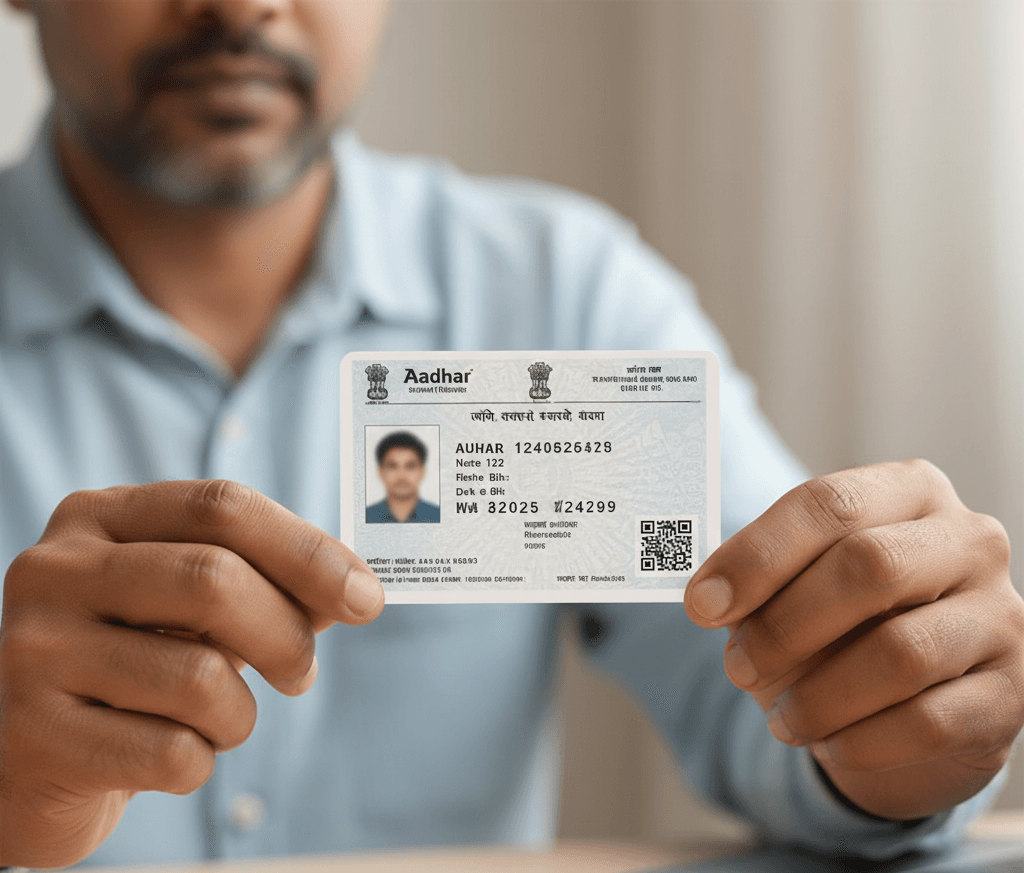
The Emirates ID is the backbone of identity in the country. It works much like the Social Security number in the USA or the Aadhaar in India, a single credential that ties a person to the official record. There are several steps in the ID verification process that confirm and authenticate that identity, and the exact mix depends on a company's risk and its sector. This guide walks through what verification looks like in the UAE, the laws behind it, and how businesses run it at scale.
ID Verification in the UAE
ID verification confirms a person's identity by matching the documents they provide against official records. In practice, UAE businesses lean on a few methods, sometimes one, often several together:
- Document Verification: This is the most common check. The identity document gets examined for authenticity, with a close look at its security features and the specific details printed on it. A fake or doctored card fails here.
- Database Identification: This method pulls data from several sources to confirm an identity. Those sources range across government registries and other reference databases that hold a record of the person.
- Knowledge-Based Authentication (KBA): KBA uses security questions only the real person should be able to answer. The questions are personal, and there is usually a time limit on the response.
- Online Verification: Online verification proves ownership of a government-issued ID and certifies that it is genuine. It runs on a hybrid approach that combines human review, AI, and biometrics.
In the UAE there is a fifth path that sits above all of these. Where a business onboards customers digitally, it can validate an Emirates ID through the official government gateway rather than building its own checks from scratch. More on that below.
Why ID Verification Matters in the UAE
Online fraud keeps climbing, and businesses cannot afford to deal with people who are not who they say they are. Here is why verification carries real weight in the UAE:
- Compliance with regulations. Anti-money laundering and Know Your Customer rules require strong ID verification across regulated industries. Skip it and you risk heavy fines along with the reputational damage that follows.
- Lower cost. Manual identity checks eat staff time. With its automated processing and digitisation, digital ID verification cuts the need for human labour and brings operating expenses down, which makes it far cheaper than the manual route over any real volume.
- Stronger security. Verifying and authenticating a person before you do business with them shrinks the attack surface. It keeps unauthorised users away from sensitive information and services, and that lowers the odds of a data breach.
What Is Digital ID Verification?
Digital ID verification confirms a customer's identity remotely, without anyone walking into a branch and without a stack of paper. The person signs up online, and software does the checking in the background.
Most digital checks rest on two pillars. The first is the document. A customer photographs their Emirates ID or passport, and the system reads it, tests its security features, and confirms it is real. The second is the face. The customer takes a selfie, and the system matches it against the photo on the document so the person presenting the ID is the same person it belongs to.
UAE regulation spells out what a sound automated check should do. Guidance from the regulator describes three layers working together. An ID Proofing Check confirms the identity document is valid and genuine. A Similarity Check matches the live person to the document. A Liveness Check confirms the person is physically present and not a photo, a mask, or a replayed video. Together these defend against the spoofing tricks that fraudsters reach for first.
This is the engine behind fast onboarding. A check that once took days of back-and-forth can finish in seconds, and the customer never has to leave the app.
Emirates ID Verification Card
The Emirates ID, sometimes called the Emirates Verification Card, is a valid form of identification for everyone living in the country. The Federal Authority for Identity, Citizenship, Customs and Port Security oversees it. That covers citizens and residents alike.
Every resident has to apply for one. Its main job is to bind a person to a verified identity that institutions can trust. Checking the status of an Emirates ID also matters before you can obtain or renew the card.
For businesses, the card is more than a document. It is the anchor that the UAE's digital identity systems verify against, which is why so much of identity assurance in the country flows back to it.
👉 Related Read: Proof of Address in the UAE: A Simplified Guide
UAE Pass: The National Digital Identity
UAE Pass is the country's national digital identity. It links a person's Emirates ID to a verified credential on their phone, then gives them a single sign-on into government and private-sector services. A UAE Pass account is checked against Emirates ID biometrics, so nobody can stand up a verified account without a valid, active Emirates ID behind it.
That tie to the Emirates ID is what makes UAE Pass useful for compliance. The government has already done the hard identity-proofing work. When a customer authenticates through UAE Pass, a business inherits that assurance instead of rebuilding it.
Adoption is broad and getting broader. The government has pushed UAE Pass into more and more services, and authorities keep extending it into new sectors. In May 2026, Dubai Customs announced that from 10 May, users of the Dubai Trade platform must log in with UAE Pass when filing import declarations and claims. Only Advanced or Qualified accounts qualify, meaning accounts that have completed Emirates ID verification in person or through biometrics. The aim is tighter identity assurance and less fraud across trade filings.
A Deep Dive into UAE Identity Verification Regulations
The UAE has built a detailed body of law to keep digital transactions safe, and identity verification sits at the heart of it. Follow these rules and a business can be confident its identity verification methods are both safe and legal. That builds trust with users and keeps legal trouble at bay.
The country has put strict measures in place against financial crime. The rules require financial institutions, DNFBPs, and VASPs to hold effective mechanisms for detecting and preventing money laundering and terrorist financing. Customer identification and verification are central to any AML compliance program. Regulated firms must follow rigorous identity procedures when they transact with corporate partners and with individual clients.
Where a firm verifies an Emirates ID, regulators point it to the official channels. Insurers and financial institutions are expected to use the government validation gateway, the UAE Pass application, or another government-supported solution rather than an unverified third-party lookup. Using the official source is what makes the check defensible if an inspector ever asks.
Data security is governed by Federal Decree-Law No. 45 of 2021 in the UAE, the country's personal data protection law. It sets the rules for handling data, the duties of those who process it, and the rights individuals hold over their own information. The law came into effect in early 2022, and serious breaches can draw administrative fines reaching AED 5 million. It protects the confidentiality of personal data when business is conducted inside the UAE and across its borders, which matters because identity verification is, by definition, the processing of someone's most sensitive details.
How to Choose ID Verification Software in the UAE
Plenty of digital identity verification companies sell into the UAE market, and the feature lists start to blur together. A few things actually separate a system that holds up from one that creates work later. Here is what to weigh when you choose.
Coverage that fits your customer base. The system has to read the Emirates ID cleanly, and it should also handle passports and foreign documents if you onboard people from outside the country. Thin document coverage means manual fallback, and manual fallback is where onboarding stalls.
Biometrics with real liveness. Face matching is table stakes. What matters is the liveness check underneath it, the part that tells a live person from a printed photo or a deepfake. Ask how the liveness detection performs against presentation attacks, because that is the line fraudsters probe.
Official UAE data sources. A solution that validates against the government gateway or integrates with UAE Pass gives you an audit trail rooted in the official record. That is far stronger ground than a generic database lookup if a regulator reviews the file.
AML screening in the same flow. Identity is only half of onboarding. The strongest identity verification software runs AML screening and monitoring on each new customer against sanctions and politically exposed person lists at the same time, so you are not stitching two systems together by hand.
Configurable workflows and clean reporting. Risk is not uniform. You want to set different checks for different customer segments, and you want reporting that an auditor can read without a translator. Look for adjustable risk rules and exportable records.
Integration that does not stall the build. A documented API and ready SDKs decide how fast you ship. Weak documentation turns a two-week integration into a two-month one.
Get these right and verification stops being a bottleneck. It becomes a quiet layer that clears genuine customers in seconds and routes the rest for a closer look.
Ready to see how this works end to end? Book an identity verification demo and walk through it with your own use case.
Emirates ID Verification Process: A Step-by-Step Guide
Before you can check the status of an Emirates ID, you need to know how one is issued. The first thing to keep in mind is that applying for an Emirates ID happens alongside applying for a visa to enter the country. Here are the steps to settling in the UAE.
- Entry into the UAE. You first obtain an entry permit. It is available to business owners who operate inside the country, and to employees hired by organisations based in the UAE. The entry permit is valid for 60 days.
- Medical check-ups. A visit to a Preventive Medicine Center for a medical examination is mandatory. Clear the medical and you can move on with the residency application.
- Application for the Emirates ID. This is done at any office of the Federal Authority for Identity, Citizenship, Customs and Port Security. They capture your biometric data and store it in the authority's system.
- Acquiring the residence visa. Finally, the visa is stamped in the passport. That stamp confirms both your Emirates ID and your place of residence.
Case Study: Industrial Services and the UAE Pass
As the UAE pushed deeper into digital government, the Ministry of Industry and Advanced Technology (MoIAT) mandated the UAE Pass in October 2023 for access to industrial-sector services. Under the country's National Strategy for Industry and Advanced Technology, the goal was safe and easy access to essential services.
MoIAT used to struggle to keep security tight while still opening up access to industrial services. Companies once secured industrial standards or accreditation through in-person meetings and paper records. The UAE Pass offered a faster, safer alternative. A business downloads the app, registers with its Emirates ID, and reaches a range of services from there.
The project fed directly into the UAE's National Strategy for Industry and Advanced Technology and its drive toward digital government. Take-up was a strong signal: more than 16,500 companies had already registered for the UAE Pass through MoIAT.
The shift to digital let companies sign and verify documents without meeting in person, which made the whole process quicker and easier. Single sign-on registration was switched on too, smoothing the experience further and opening every service the UAE Pass app offers behind one login.
As of June, more than five million IDs had been registered, a measure of how widely the UAE Pass had been adopted and accepted as a trusted digital identity.
How KYC Hub Handles ID Verification in the UAE
KYC Hub's identity verification is built to confirm identity for customers anywhere, the UAE included. It pairs document checks with facial biometrics and a liveness check, so the person on the screen is matched to the ID they present and confirmed as physically there. That defends the front door against the spoofing and deepfake attempts that automated fraud relies on.
The platform is built for the customer's experience as much as the compliance team's. Onboarding stays frictionless, which keeps genuine applicants from dropping off mid-flow. Behind that smooth surface sits the reporting and compliance record a regulated UAE business needs, with stronger checks reserved for high-risk transactions where the stakes are higher. Identity and risk signals come together in one flow rather than in separate tools you have to reconcile by hand.
The result is faster onboarding without loosening the controls a UAE compliance team has to answer for. Book an identity verification demo to see it run against your own onboarding.
Conclusion
If you are planning a move to the UAE, factor in how long registration takes. The same goes for any business arranging Emirates IDs for the people it sponsors. Issuing an Emirates ID can take anywhere from two days to two weeks, and the card may arrive at any point in that window.
Confirming a person is who they claim to be is the foundation of every KYC flow. In the UAE, that foundation runs through the Emirates ID and the national systems built around it. For businesses, the work is matching that official record quickly and keeping the audit trail clean, and the right software makes both routine.