Proof of Address in the UAE: A 2026 Guide
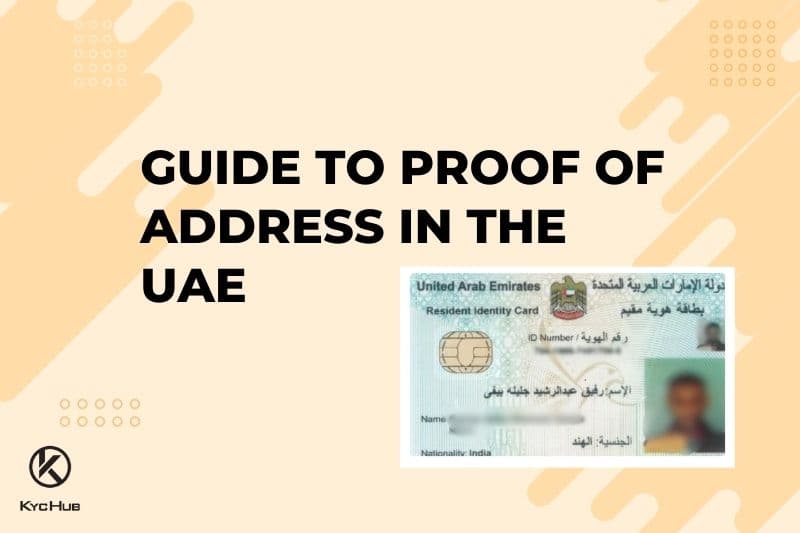
A surprising number of routine errands in the UAE depend on proof of address. Try to open a bank account, register a tenancy, or send a personal remittance abroad, and each one comes to a halt until you can produce it. Many people arriving from elsewhere are caught off guard by how strict the standard is, which is reason enough to understand what counts as valid proof of address in the UAE before handing over anything.
When a bank or regulated firm onboards you, checking where you actually live is one piece of the wider identity verification work it carries out.
Read on for an explanation of why address proof gets asked for, what documents will pass, which ones come back rejected, and how to obtain yours through reliable channels.
Proof of Address in the UAE in 2026
Throughout the UAE, address proof is a legal requirement, and it traces back to anti-money-laundering rules that apply to both financial firms and government bodies. The aim is identification. By confirming where a person resides, an institution shuts down one of the channels that fraudsters, money launderers, and sanctioned individuals rely on to pass through onboarding without being noticed.
Whenever you apply for something covered by KYC (Know Your Customer) checks, whether that is a bank account or a loan, the institution will want evidence that you genuinely live at the address you have given. Compliance here is mandatory. Licensed institutions are bound by Central Bank of the UAE requirements to verify the residential address of every customer as part of customer due diligence.
A second function runs alongside the first. Beyond identification, address proof also establishes whether you qualify for services that are tied to where you live, and those range from various forms of government assistance through to particular financial products. Residents and non-residents engaging with local financial procedures hit the same obstacle. Without a valid proof of address in the UAE, the great majority of transactions go no further.
What is Accepted as Proof of Address in the UAE?
A handful of documents will do the job. The complication is that every bank and organisation applies its own threshold, so the real task is matching your document to the standard of whoever you happen to be dealing with. Three details have to be present on anything you submit: the applicant's full name, the residential address, and a clear date of issue.
Across UAE institutions, the documents that follow are accepted as a matter of routine:
- Tenancy Contract or Agreement
Of all the options, a registered tenancy contract carries the most weight as proof of address in the UAE, precisely because the act of registration generates an official record that an institution can verify on its own without relying on your word. Registration is the reason. In Dubai the route is an Ejari contract registered with the Dubai Land Department, whereas Abu Dhabi runs a separate scheme known as Tawtheeq, administered by the Department of Municipalities and Transport. Hand over the complete document. Both the tenant's and the landlord's signatures need to be on it.
- Utility Bills
Statements for essential household services are accepted, and they rank among the documents people reach for most often. Recent bills from DEWA in Dubai, SEWA in Sharjah, or ADDC in Abu Dhabi will serve the purpose. Three months is the cutoff. Regardless of which provider sent it, the statement has to display your full name and home address, and the service it covers should be a fixed-line one such as home electricity, water, or internet rather than a mobile plan.
- Bank Statements
Most institutions will take a current statement from a recognised UAE bank, provided it is printed with your residential address. Recency matters. Following the same logic that applies to a utility bill, the statement is generally expected to be no more than three months old.
- Local Authority Tax Bill
In places where such a charge applies, a local authority tax bill bearing your name and address offers one more verifiable record that can stand as address proof.
- Driving Licence with Address
A driving licence showing a valid address occasionally serves as proof for some residents. Situations like this remain unusual across the UAE, given that the residential address of the holder is absent from most local licences.
- Employment Contract or Letter from Employer
People who have only just arrived frequently hold nothing in their own name. Where that is the case, proof of address can instead take the form of a signed employment contract, or a letter from the HR department of your employer that confirms your accommodation. Should your residence have changed recently, a letter dated within the past month is the tidier choice.
Latin script is expected on every document, and the particulars shown on it have to correspond to the records that the requesting organisation already holds.
What Documents are NOT Accepted as Proof of Address in the UAE?
Plenty of official paperwork falls short of the mark. Choosing the wrong document costs you time and delays whatever you set out to accomplish, which makes it worth knowing in advance what gets turned away.
The items below are not treated as valid address proof:
- UAE Driving Licences (without address)
Where no address is printed on the licence, it serves no purpose here. Standard UAE driving licences omit the holder's residential address, in contrast to licences issued in certain other countries, which is why a licence of this kind cannot establish where you live.
- PO Box Numbers
A mailbox is the issue. Because a PO Box points to a place where post is collected and not to an actual dwelling, regulators decline to treat it as proof of residence.
- Documents in Non-Latin Script
Paperwork written in Arabic, Chinese, or any other non-Latin script generally falls outside what an institution will accept as it stands. Where the underlying document is otherwise approved, a certified translation of it is usually permitted.
- Documents Without Key Information
Four fields are mandatory on any address proof: the full name, the residential address, the date of issue, and the issuing authority. Leave any one of them out, and the document comes straight back. One detail trips up a lot of people. Your Emirates ID does hold a registered address, yet on its own it falls short of proof-of-address requirements, and a separate document showing current residency is what most institutions ask to see.
How to Get a Proof of Address in the UAE?
Anyone who holds no acceptable document yet still has options. Obtaining proof of address in the UAE can be done through several channels, four of which are dependable enough to set out here.
- Lease a Property
Signing a tenancy contract and registering it is the most straightforward path to establishing residence for anyone who has recently arrived or relocated. Collect every signature before anything else. Register the contract through Ejari in Dubai, or Tawtheeq in Abu Dhabi, and the document then carries official weight should it come under scrutiny later.
- Get Utility Bills in Your Name
For anyone renting, the thing to check is whether the electricity and water bills name you as the account holder. Once a bill carries your name, it becomes usable address proof, and most utility providers will let a tenant move billing across to their own name as soon as proof of residency is presented.
- Request a Bank Statement with Your Address
Confirm that your current residential address is the one your bank has on record. With that in place, a statement displaying the address can be printed or downloaded, and it will then count as proof.
- Update Your Address with Your Employer
Anyone in employment can ask their company to enter the current address into its files and to issue either a letter or an employment contract stating where they live.
Conclusion
For a broad spread of activities, from commercial dealings through to opening a bank account, valid proof of address in the UAE has to be in place first. Many documents will qualify, though each one still has to satisfy the precise requirements set by the institution asking for it. Following the steps in this guide should get you there with little friction, whether you are securing address proof for the first time or bringing outdated records up to date.
Want a less painful route through identity and address verification? KYC Hub's identity verification platform confirms proof of address in the UAE next to document and biometric checks, and customers clear onboarding and meet their regulatory obligations without the usual back-and-forth.
Operating across several markets should not mean signing up five separate vendors just to satisfy KYC rules everywhere. Address verification, screening, and ongoing monitoring all come together in one place with KYC Hub's global KYC solution. Talk to us.