Non-Documentary Identity Verification: How It Works and When Regulated Firms Use It
Non-documentary identity verification confirms that a customer is who they claim to be by matching their personal details against trusted external data sources, rather than by inspecting an uploaded ID document. A regulated firm checks a name, date of birth, address, and identification number against credit bureau, telco, electoral, and government records, then scores the result. It is the data-driven half of a customer identification program. Firms run it alongside documentary checks, or instead of them, depending on risk and the data available.
Compliance teams like it for good reason. Non-documentary methods clear low-risk customers in seconds, widen coverage to people who lack a clean passport scan, and leave an auditable verification record. The trade-offs are real too. They sit at the center of how you design a defensible onboarding program.
What Non-Documentary Identity Verification Is
Non-documentary verification, sometimes called document-free verification, establishes identity without asking the customer to provide a copy of a physical or electronic identification document. The customer supplies identifying information instead: name, date of birth, residential address, and a national or tax identification number. A platform then compares those attributes against authoritative databases and returns a match result, usually with a confidence score and a list of which data sources corroborated the identity.
This is seldom a single yes-or-no check. A well-built non-documentary process queries several independent sources, looks for consistency across them, and flags contradictions that may signal a fabricated or synthetic identity. When risk calls for it, firms layer extra signals on top. A one-time passcode to a registered phone, knowledge-based questions, or a biometric selfie check can raise assurance without forcing a full document upload.
Non-Documentary vs Documentary Verification
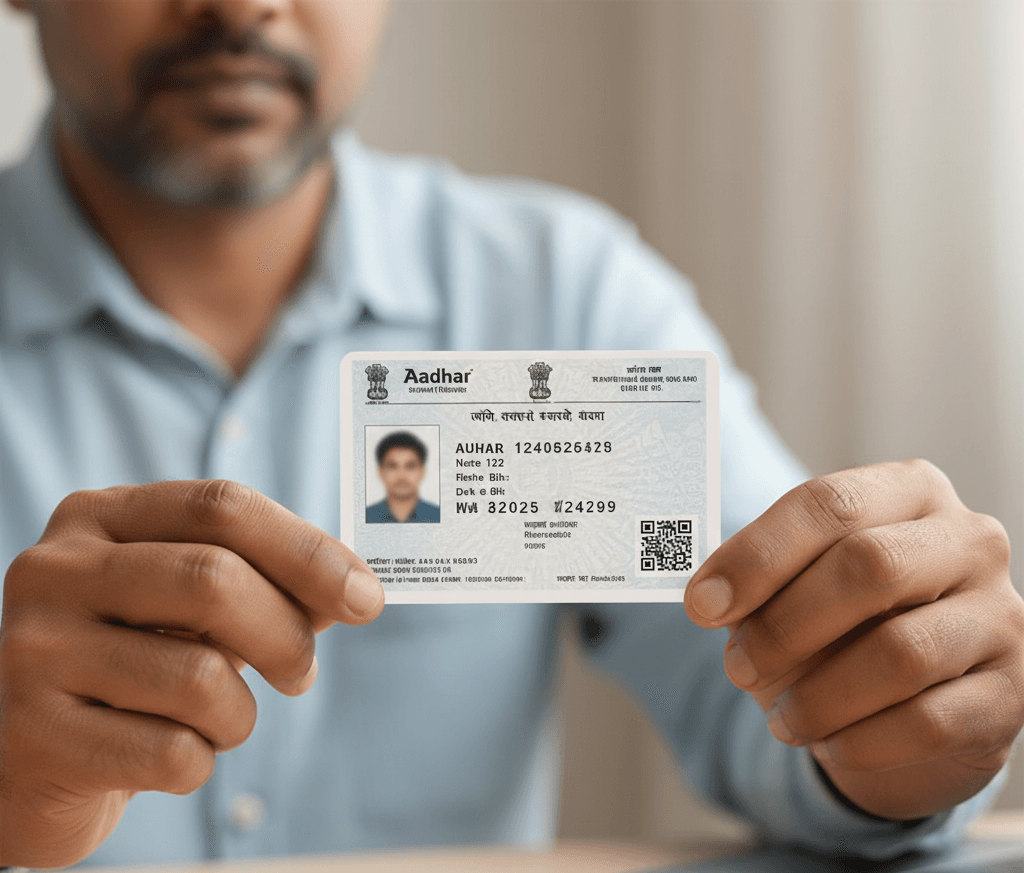
Documentary verification works from the artifact. A customer uploads a passport or driver's license, the system inspects security features, fonts, holograms, and machine-readable zones, and a selfie is often matched to the document photo. This is the basis of conventional document verification. Genuine, legible documents produce strong evidence. The catch: the customer needs a current document and a clean capture, and you take on the data-retention burden of storing copies of sensitive identity documents.
Non-documentary verification works from the data. It checks the attributes the customer asserts against records held by bureaus, telcos, and government registries, so there is no image to capture and less document imagery to retain. Most low-risk customers clear faster, and people whose documents are unavailable or expired still get through. Its strength, though, rests entirely on the depth and accuracy of the underlying data in a given market. Mature compliance programs do not pick one. They run non-documentary checks as the default for lower-risk segments and escalate to documentary or biometric verification when the data is thin, the result is ambiguous, or the customer's risk profile demands it.
The Data Sources Behind Non-Documentary Checks
A non-documentary program is only as reliable as the data feeding it. Several categories of source do the heavy lifting.
Credit bureau records confirm that a name, address, and date of birth correspond to an established financial footprint. An absent record can itself flag a synthetic identity. Mobile and telco data ties a phone number to a named subscriber and a tenure, hard for a fraudster to fabricate at scale. Electoral rolls and government population registries authoritatively confirm name and address where regulated businesses can reach them. Sanctions, watchlist, and PEP databases run in parallel through AML screening and monitoring, so identity confirmation and screening happen as one step rather than two disconnected ones.
No single source is sufficient everywhere. Coverage and quality swing sharply by jurisdiction. A program built for cross-border onboarding therefore needs access to many sources and a way to weight them by market. Government database verification is one input among several. The value comes from corroborating identity across independent feeds rather than trusting any one of them in isolation.
Book a Customer Onboarding Demo to see how layered data sources resolve an identity in real time.
When Regulated Firms Use Non-Documentary Methods
Firms reach for non-documentary verification when speed and conversion matter and the customer's risk is low to moderate. Account opening, lending, and digital wallet onboarding are the usual cases. A data check that clears in seconds keeps drop-off down while still producing a defensible record. The method also earns its place where a meaningful share of applicants cannot reliably produce a document scan, because it leans on records the customer never has to upload.
The decision is risk-based, not absolute. In markets with deep data, lower-risk customers can often clear on non-documentary checks alone. Higher-risk customers, large transaction thresholds, or jurisdictions with thin data trigger an escalation to documentary or biometric verification. Build that logic into a risk-tiered workflow rather than applying one method to everyone, and onboarding stays both fast and compliant. A strong customer onboarding process sends each applicant down the lightest path that still satisfies the firm's obligations.
Non-Documentary Methods Under US CIP
In the United States, the customer identification program rule under the Bank Secrecy Act expressly contemplates non-documentary verification. A covered firm's CIP must describe the methods it will use to verify identity, and the rule permits non-documentary methods, documentary methods, or a combination. Named in the regulatory framework: contacting the customer, comparing the information provided against information held by a consumer reporting agency or public database, checking references with other financial institutions, and obtaining a financial statement.
Documents are not mandated. What the rule requires is that the firm form a reasonable belief that it knows the true identity of each customer, and that its CIP set out, based on its risk assessment, when documentary methods, non-documentary methods, or both will be used. Firms tend to lean on non-documentary verification when an account is opened without the customer appearing in person, when documents are unfamiliar, or when they want to confirm details a document alone does not establish. Keep records of the methods used and the results. That is how the program gets demonstrated to an examiner.
How KYC Hub Supports Non-Documentary Verification
KYC Hub's customer onboarding platform runs documentary and non-documentary checks within a single risk-tiered workflow. It connects to credit bureau, telco, electoral, and government data sources across markets, corroborates an identity across independent feeds, and runs sanctions, watchlist, and PEP screening in the same pass. Ambiguous result, or a risk profile that calls for more? The workflow steps up automatically to document or biometric verification, so low-risk customers clear in seconds while higher-risk cases get the scrutiny they need. Every check, source, and decision is logged. That gives compliance teams the audit trail a CIP and AML program has to stand behind.
Book a Customer Onboarding Demo to see non-documentary verification mapped to your own onboarding flow and risk policy.