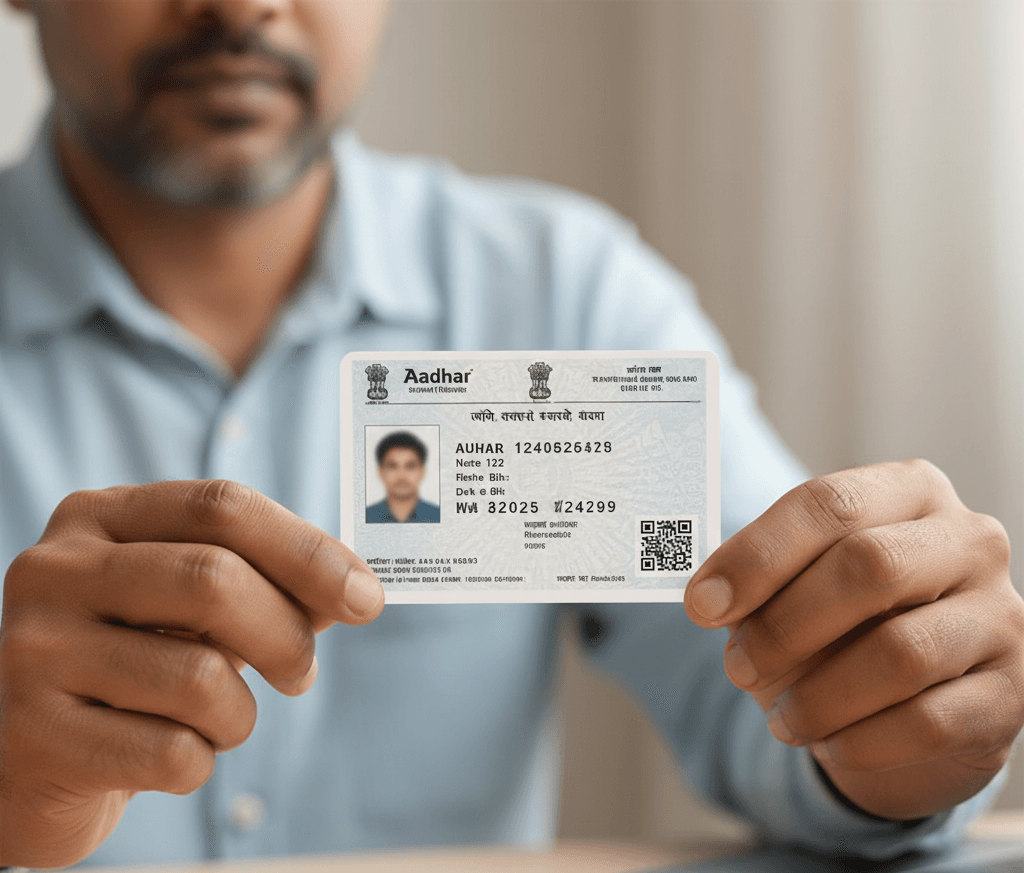
Video KYC: How V-CIP Works for Regulated Firms

Video KYC verifies a customer's identity remotely. It all happens in a single live, recorded video session, one that pairs biometric facial matching with document forensics and liveness detection. In India, regulated firms answer to the Reserve Bank of India, which governs the process through the Video-based Customer Identification Process, or V-CIP. The upshot for banks, fintechs, and other regulated entities: onboarding in minutes, no branch visit, and AML and KYC obligations still met.
This guide is for compliance teams weighing Video KYC for production. It covers what Video KYC actually verifies, how a V-CIP session runs step by step, what the RBI demands, and the security controls you need in place before any customer sees it.
What Is Video KYC?
Video KYC trades the in-person verification step for a live, audited video interaction. No branch visit, no physical documents handed across a counter. Your onboarding flow captures the customer's identity data, walks them through a real-time video session, and runs the same identity, document, and risk checks you would have done face to face.
The difference from traditional KYC is operational, not regulatory. Confirming identity, screening against sanctions and watchlists, retaining evidence: those obligations hold. What changes is the interaction itself, now digital, recorded, and structured so anyone can review and audit it later. Do that at scale and Video KYC comes out faster and cheaper, with an evidentiary trail that beats anything a paper file ever produced.
For regulated firms, the payoff is simple. A single remote session can satisfy customer due diligence that used to require physical presence. And that session feeds straight into your identity verification and onboarding stack rather than sitting off to the side as a separate, manual checkpoint.
How V-CIP Works Step by Step
A compliant Video KYC session follows a defined sequence, which is what keeps every check captured and reproducible. Here is how a typical V-CIP flow runs.
- Registration and consent. The customer provides core identity details and gives explicit, recorded consent to be verified over video. Consent capture is a regulatory requirement, not a formality.
- Document capture and forensics. Government-issued ID goes in first. Before the live call proceeds, the system runs document forensics, optical character recognition, and tamper checks to confirm the document is genuine and unaltered.
- A trained agent, or an automated assisted flow, conducts the live video session. Liveness detection confirms a real person is present in real time and defeats photos, replays, and pre-recorded video.
- Biometric face match. The customer's live face is matched against the photo on the verified document. The output is a biometric confidence score, not a subjective human call.
- Screening and risk assessment. Identity data is screened against sanctions, PEP, and adverse media sources, and the customer is assigned a risk score.
- Everything is recorded, time-stamped, and retained. The system logs an approve, decline, or refer decision with the supporting evidence attached.
KYC Hub's V-CIP solution chains these steps together with configurable workflow automation. Low-risk customers clear an automated path; higher-risk cases route to a human reviewer. Throughput stays high, and the controls still hold on the cases that actually matter.
RBI V-CIP Requirements
The Reserve Bank of India lays out specific conditions a Video KYC process must meet to qualify as a valid V-CIP. Build against these from the start. Retrofitting them later is where teams lose time.
- The session must be live and conducted in real time. Pre-recorded video does not satisfy the requirement, which is why liveness detection is mandatory.
- The official conducting the V-CIP has to verify that the customer is physically present and that the interaction is genuine, capturing the customer's live photograph and matching it to the identity document.
- Location data must be captured to confirm the customer is within the permitted jurisdiction at the time of verification.
- Record the entire interaction. A clear, audible, and visible capture of both the customer and the official is retained as part of the audit record.
- The process needs safeguards against tampering and impersonation, including checks on the integrity of the identity documents presented.
Build your flow around these requirements from the outset and one configuration can carry regulated onboarding without manual exceptions. Requirements evolve, though, which is exactly why the workflow has to be configurable rather than hard-coded.
Benefits for Banks and Fintechs
For regulated firms, the case for Video KYC lands on three fronts at once: throughput, cost, and control.
- Faster onboarding. A verification that once took days of branch coordination now closes in minutes. That lifts conversion on regulated products directly.
- Automating document forensics, liveness, and face matching strips out most of the manual review burden. A human stays in the loop only where risk demands it, which is what drives the lower cost per verification.
- Wider reach. Onboard customers in geographies where you have no physical presence, and do it without relaxing your standards.
- Every session produces a recorded, time-stamped, auditable file. Regulatory examinations and internal reviews get far easier to satisfy when the evidence is already sitting there.
- Consistent decisions. Biometric scores and automated screening cut the variance of human-only judgment. Same risk, same treatment, every time.
Security and Anti-Fraud Controls
Video KYC is only as strong as the controls behind it. Going remote strips away the physical friction that used to slow fraudsters down, so your technical defenses have to pick up that work instead.
- Liveness and presentation-attack detection. The front line against spoof attacks. Liveness checks confirm a live human is present and reject photos, masks, and replayed video.
- Deepfake and synthetic-media defense. Injection-attack detection and media-authenticity checks guard against synthetic video feeds and AI-generated faces. Both are a fast-growing threat to remote onboarding.
- Synthetic identities blend real and fabricated data to slip past naive checks. Cross-referencing document, biometric, and screening signals exposes the inconsistencies any single check would miss.
- Document forensics. Tamper and template checks confirm the identity document is genuine before any biometric match is trusted.
- Pair the session with AML screening and monitoring and a customer who passes onboarding stays checked against sanctions and adverse media on an ongoing basis, not just once.
These controls work together. A customer who clears liveness but fails document forensics, or who matches the document but trips an adverse-media flag, gets routed for review rather than approved. It is that layering, not any single check, that makes Video KYC defensible to a regulator.
Integrating Video KYC Into Onboarding
Video KYC pays off only when it sits inside your existing flow, not beside it. Treat the session as one step in the broader customer onboarding journey, and it can pass its verification result, risk score, and recorded evidence straight into your case management and core systems.
That means clean APIs, configurable decision logic, and room to branch by product, jurisdiction, and risk tier. A high-net-worth account opening and a low-value wallet should never run the identical path. Wire in configurable workflow automation and real-time alerts, and your team hears about a session that needs human attention in the moment, rather than finding it in a batch review the next day. Clean integration is what separates a Video KYC pilot from one that actually carries production volume.
KYC Hub provides an RBI-compliant V-CIP that brings biometric certainty, document forensics, configurable workflows, real-time alerts, and enterprise-grade security into one platform.