Types of AML Screenings and AML Screening Best Practices
AML screening is critical in any financial institution’s compliance process. It helps institutions identify suspicious transactions and protect themselves from money laundering and other financial crimes. In this blog, we’ll explore the types of AML screening and the best practices associated with it.
Types of AML Screening
As the world becomes increasingly interconnected, the threat of financial crime and money laundering continues to grow. For this reason, Anti Money Laundering screening has become a crucial component of any effective AML compliance program. There are several types of AML screening, each with its unique purpose and benefits.
7 types of AML screening are:
- Transaction Monitoring
- Customer Due Diligence
- Enhanced Due Diligence
- Name Screening
- Sanctions Screening
- PEP Screening
- Negative News Screening
Now let’s look at each in greater detail:
-
Transaction Monitoring
This type of screening involves monitoring transactions for suspicious activity. The system looks for patterns and anomalies indicating money laundering attempts or any other kind of financial crime. Transaction monitoring is a complex process, but it can help to detect money laundering attempts quickly and effectively.
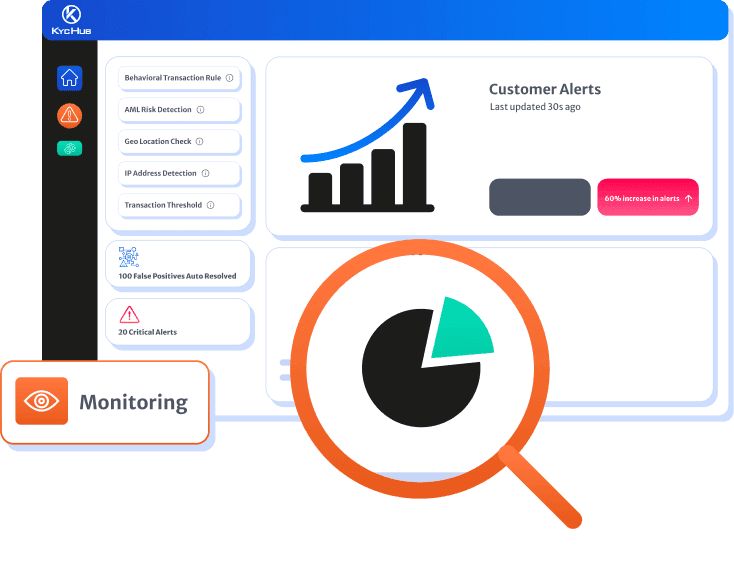
Transaction Monitoring is vital for detecting and preventing financial crime, as it allows financial institutions to monitor their customers’ transactions in real-time. Based on a United Nations Office on Drugs and Crime (UNODC) report, transaction monitoring is an essential part of AML compliance programs because it can identify unusual or suspicious activity that could point to instances of money laundering or terrorist financing.
Two critical factors the UNODC states in monitoring are clarity and uniformity among financial institutions and governmental authorities. Financial institutions can identify and investigate potentially fraudulent or criminal activity by analyzing transactions for anomalies and red flags.

-
Customer Due Diligence
Customer Due Diligence (CDD) screening is when the identity of customers is verified, and their risk assessment profile is assessed. Institutions use AML screening software to identify high-risk customers more likely to participate in money laundering activities. The information collected through CDD screening helps institutions assess customer risk and determine if a customer needs to be monitored more closely to adhere to anti-money laundering compliance regulations.
According to a statement from the Financial Action Task Force (FATF), CDD is necessary to prevent financial institutions from being tools for money laundering or terrorist financing. CDD typically involves obtaining identifying information from the customer, such as names, addresses, and dates of birth, and conducting a risk assessment to determine the level of due diligence required for that customer.
-
Enhanced Due Diligence
Enhanced Due Diligence (EDD) Screening is verifying and identifying customers and assessing their risk profile in further detail than customer due diligence. It is a more in-depth customer diligence typically used for higher-risk customers or transactions. EDD screening can help institutions identify higher-risk customers and understand their financial activities and patterns.
EDD involves gathering additional information about the customer and their transactions to understand their risk level better. According to the FATF, EDD may include obtaining information about the customer’s source of wealth, business relationships, and beneficial ownership.

EDD can help financial institutions identify potential money laundering or terrorist financing risks that may not be apparent through regular CDD procedures. Institutions use these two AML screening processes to understand better customers who pose a higher risk of money laundering.
-
Name Screening
AML Name screening is a critical process within Anti-Money Laundering (AML) compliance. Financial institutions use it to assess client risk during the initial KYC onboarding process.
It involves comparing customer names, aliases, and other identifying information against various databases, watchlists, and sanctions lists to determine potential matches that may indicate risk or association with financial crime.
Financial institutions can effectively implement name-screening procedures to identify high-risk individuals and take appropriate measures to mitigate potential risks.
-
Sanctions Screening
Sanctions screening involves checking customer information against government and international databases to ensure customers are not on watchlists or sanction lists. This type of Screening is essential to prevent institutions from doing business with individuals on these lists, as this could result in hefty fines, according to AML regulations for financial institutions.
Various government agencies and international organizations maintain sanctions lists containing individuals and entities subject to economic sanctions. Sanctions screening is critical to AML compliance programs because it can help prevent financial institutions from doing business with sanctioned individuals. The FATF outlines in its International Best Practices that it mandates its members to comply with United Nations Security Council resolutions to avoid inadvertently financing terrorists or other socially detrimental causes.
Sanctions screening is vital to any effective Financial Crime Compliance (FCC) program. It should be applied with other risk prevention and control processes.
Here are the fundamental pillars of an FCC program according to the Wolfsberg Guidance on Sanctions Screening:
- Policies and Procedures: Clearly defining what must be screened, in what context and frequency, and how alerts should be adjudicated. This includes particular attention to resolving signals where information is unavailable, incomplete, or potentially unreliable.
- Responsible Person: Ensuring that the screening process is conducted by individuals with appropriate skills and experience in understanding the nuances of sanctions requirements and how they might influence screening outcomes and decisions.
- Risk Assessment: Applying risk-based decisions to resolve specific questions of what data attributes to screen, when to screen, what lists to use, and how exact or “fuzzy” to set the screening filter. The decision-making and governance structure must be clearly articulated, documented, and supported by analysis and testing.
- Internal Controls: Implementing screening control processes requires understanding the various methodologies and technologies available and their operational consequences. FIs should document how their screening systems are configured to demonstrate that they are reasonably likely to detect the specific sanctions risks to which the FI is exposed.
- Testing: Regularly testing the screening system to validate its expected performance and assess its effectiveness in managing the particular risks articulated in the FI’s Risk Assessment. Metrics, analysis, and reporting should support testing.
-
PEP Screening
Politically Exposed Persons (PEP) screening is a process of verifying the identity of customers who may pose an elevated risk due to their high status as a politician or any other type of public official. PEPs are considered higher risk because they may have access to government funds and may be more likely to commit financial crimes. Institutions use this type of Screening to identify high-risk customers and check that they follow AML compliance.
A paper by the Stolen Asset Recovery (STAR) Initiative of The World Bank outlines three key actions to combat PEP (politically exposed persons) corruption:
- Strong and sustained political will and mobilization are necessary to prioritize PEP measures and allocate adequate resources. It is also essential to support more aggressive enforcement by regulators to improve customer due diligence procedures and detect the proceeds of corruption.
- Clarification and harmonization of the international requirements on PEPs are necessary. The current variations among approaches serve as an excuse not to act and are seen by some as impediments to developing and implementing adequate PEP controls.
- Stock-taking of the emerging typologies is necessary, focusing on lifting what impedes the identification of beneficial owners who are PEPs. PEP identification efforts are complicated by the increased use of close associates, legal entities, and other methods to hide beneficial ownership or control by senior public officials.
-
Negative News Screening
Negative News Screening or adverse media screening plays a crucial role in today’s regulatory landscape, helping organizations mitigate risks and protect their reputation. By actively monitoring publicly available information and media channels, such as news articles, blogs, and social media platforms, organizations can identify any negative mentions related to their clients.
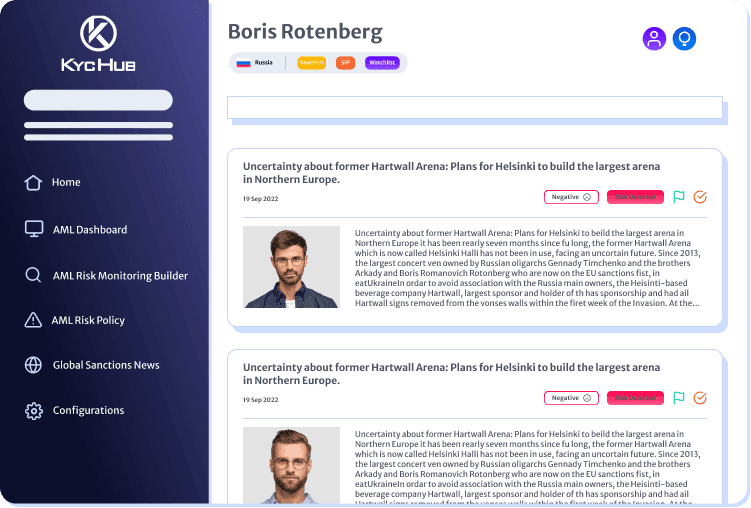
This screening process is critical in identifying potential associations with crime of all forms. Implementing effective harmful news screening procedures enables organizations to make informed decisions and maintain trust.
Best AML Screening Practices
When it comes to AML screening, there are several best practices that financial institutions should follow:
Comprehensive AML Compliance Checklist
A comprehensive AML compliance checklist ensures adherence to regulatory requirements, enhances risk management and promotes effective AML screening. It provides a structured framework to conduct screening, fostering a culture of compliance. Here’s the AML Screening best practices checklist:
1. Use Automation
Using automated AML screening systems helps streamline the process to make it more efficient than if it were to be conducted manually. This can help reduce human errors and ensure that existing customers, as well as new ones, are screened quickly and accurately.
2. Regularly Monitor Risk Levels
It’s essential to regularly monitor and update the risk levels of existing or potential customers. Not only does this help institutions stay up-to-date with any changes in their customer’s risk profiles, but it will also ensure they remain compliant with AML regulations.
3. Updating Monitoring Lists Regularly
International monitoring lists are being updated daily due to how prevalent crime is. Regular updates of company lists, therefore, ensure the inclusion of the latest sanctions, PEPs, and watchlists. This prevents the risk of missing relevant information and helps maintain compliance with regulatory requirements.
4. Establish Effective Monitoring and Alert Systems
Effective monitoring and alert systems enable the timely identification of suspicious activities, ensuring prompt action. In financial crime, such timely measures can go a long way in preventing such serious outcomes as reputational risks.
5. Have a Robust Compliance Program
A robust compliance and risk-based approach program is essential for financial institutions and their screening process. This should include policies and procedures that cover AML screening and other related compliance programs.
6. Utilise Third-Party Solutions
Utilizing third-party solutions for AML screening can ensure accuracy and efficiency and reduce false positives. These solutions should be regularly monitored to ensure they are updated with the latest regulations and adverse media data. They should also provide regular reports so institutions can assess their AML compliance.
7. Stay Up-to-Date With Regulatory Changes
Financial institutions must stay up-to-date with the latest regulatory changes to comply with AML regulations. This includes updating screening processes and ensuring customer data is accurate and up-to-date.
8. Train Staff
Staff training ensures a knowledgeable and vigilant workforce capable of recognizing red flags and conducting proper AML screening. It promotes a culture of compliance, which goes a long way in ensuring a company-wide attitude of vigilance and rapid action.
9. Conduct Regular Internal Reviews
Regular internal reviews assess the effectiveness of AML screening processes, identify improvement areas, and address compliance gaps. In a sphere like financial crime, where regulations and issues evolve equally, such regular measures reinforce the company’s commitment to AML risk mitigation.

Conclusion
By implementing the right processes and utilizing competent third-party solutions, financial institutions can ensure they adhere to AML regulations while reducing the risk of money laundering. This way, they can protect their customers and institutions from legal or financial consequences. With the right strategies, financial institutions can create a robust AML screening process that will help keep their customers and institutions safe.