NFC Identity Verification: How It Works for KYC and Compliance
NFC identity verification confirms a person's identity by reading the encrypted chip built into modern identity documents, such as e-passports and national ID cards, using Near Field Communication. A reader or an NFC-enabled smartphone extracts the chip's data, validates its digital signature, and matches the stored biometric image against the customer's face. For compliance teams, that means checking a document at onboarding in a tamper-resistant way, rather than taking a photo of it on trust.
This guide walks through how NFC identity verification works, why it matters for KYC and AML programs, what to look for in a provider, and how it fits a broader identity verification strategy.
What Is Identity Verification, and Where NFC Fits
Identity verification is the process of confirming that a customer is who they claim to be before granting access to a regulated product or service. In a compliance context, it underpins Know Your Customer (KYC) and Anti-Money Laundering (AML) obligations. You cannot screen, risk-rate, or monitor someone you have not reliably identified in the first place.
Most digital identity verification flows combine several checks: document authentication, biometric matching, and data validation against trusted sources. NFC sits inside the document authentication step. Rather than inspecting a scanned image of a passport, an NFC check reads the actual chip and confirms its cryptographic integrity. That makes it one of the strongest signals available that a document is genuine and unaltered.
How NFC Identity Verification Works
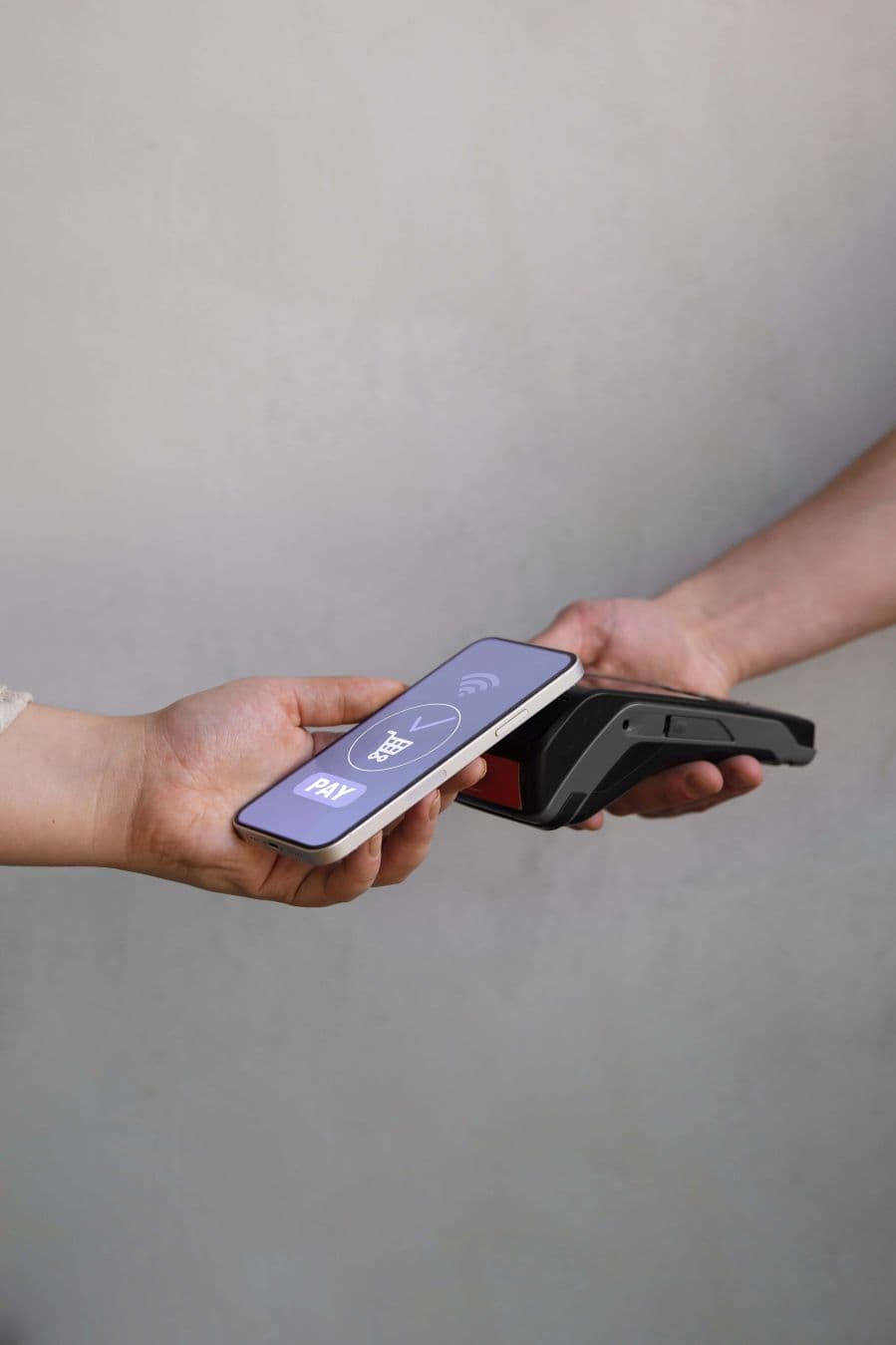
Near Field Communication is a short-range wireless technology. It lets two devices exchange data when they are held very close together, typically within about 4 centimetres, and it is built on radio frequency identification (RFID) with support for bi-directional communication. Where Bluetooth or Wi-Fi need pairing, an NFC connection forms on its own the moment the devices touch. That speed is exactly what fast verification needs.
In an identity verification workflow, the process runs through a few clear steps.
- Document authentication. The customer holds an identity document containing an NFC chip against an NFC reader or a compatible smartphone.
- Data extraction. The reader connects to the chip and pulls the stored data. That usually includes personal details (name, date of birth, nationality), document data (issue date, expiry date, document number), and biometric information such as a facial image.
- Digital signature check. Every chip carries a digital signature from the issuing authority, and the system verifies it to confirm the document is authentic and untampered.
- Data consistency. Chip data is compared against the printed information on the document to confirm the two match.
- Biometric verification. In most deployments, the facial image from the chip is matched against the customer's live face, captured in real time.
The whole sequence takes only a few seconds. Since the check rests on the issuer's cryptographic signature and not a reviewer's eye, it removes much of the manual judgment that bogs down traditional document checks.
Why NFC Matters for KYC Identity Verification
For regulated firms, the value of NFC is not contactless convenience. It is assurance. With today's editing tools, a scanned passport image can be altered, reused, or forged. A chip read over NFC is a different story: the issuing government's digital signature protects it, so a verification platform can prove the document is real and its contents unchanged.
All of this lifts the quality of the underlying KYC record. Verify the document at the chip level, match the customer's face against the chip's biometric image, and the firm now holds a high-assurance identity it can carry into downstream controls such as AML screening and monitoring and ongoing risk assessment. Stronger proofing at onboarding also keeps synthetic and stolen identities out of the customer base in the first place.
Book an Identity Verification Demo
NFC Identity Verification Across Regulated Sectors
NFC-based checks are already in use wherever high-assurance identity matters.
- Banking and financial services. Banks and fintechs build NFC verification into onboarding, so customers are identified securely while the firm meets its KYC and AML requirements.
- Border control and immigration. At checkpoints, immigration agencies read NFC e-passports to verify travellers quickly and accurately.
- Government services. Public bodies apply NFC verification to benefit payments, licensing, and secure access.
- Healthcare. Chip-based identification helps providers confirm patients correctly and cut down on medical identity theft.
- Physical access control. Some organizations have swapped traditional key cards for chip-based digital identity to secure facility access.
The common thread? Each of these settings needs to trust the document, not just look at it.
What to Look for in NFC Identity Verification Providers
When evaluating identity verification platforms that support NFC, weigh a few practical criteria rather than the technology alone.
- Document coverage. Confirm which e-passports, national ID cards, and residence permits the provider can read, and how that coverage maps to the markets you serve.
- Chip authentication depth. A good provider validates the issuer's digital signature and detects cloned or tampered chips. Reading the data is not enough on its own.
- Biometric matching and liveness. Strong identity document verification pairs the NFC read with a face liveness check, so the person presenting the document is genuinely present.
- Fallback flows. Not every document or device supports NFC. The platform needs a reliable fallback to image-based document verification.
- Compliance reporting. Look for an auditable record of each verification decision to support regulatory examinations.
- Workflow fit. Ideally the check slots into your wider onboarding and case management process rather than sitting off to the side.
Limitations Compliance Teams Should Plan For
NFC is powerful but not universal, and a realistic program accounts for its constraints.
Start with the documents themselves. Not every identity document contains an NFC chip. E-passports are widely chipped, but many national ID cards and driver's licenses are not, so a chip read cannot be the only option in your flow. Deployment also depends on compatible reader hardware or NFC-capable smartphones, and a damaged chip can defeat a read entirely. There is a privacy dimension too: because biometric data is collected and processed, the program needs clear data protection controls and transparent customer communication. A sound design uses NFC as the high-assurance path and keeps a compliant fallback ready for the documents and devices that cannot support it.
How KYC Hub Supports NFC-Backed Identity Verification
KYC Hub runs identity verification for customers worldwide, built around the pillars a compliance program actually depends on. Facial biometrics and liveness checks work alongside document verification, so each customer is confirmed against a trusted source. Onboarding stays low-friction and smooth for the customer, and security tightens on high-risk transactions where deeper proofing is warranted.
Reporting counts for as much as the check itself. Behind every decision, KYC Hub keeps detailed compliance evidence, which leaves the whole record auditable. The identity check also ties straight into broader controls like AML screening and ongoing monitoring, giving teams one path from onboarding through risk assessment. For firms adopting chip-based document checks, an NFC read can feed a complete, defensible KYC record rather than a standalone result.
To see how chip-level document checks and biometric verification fit your onboarding flow, Book an Identity Verification Demo.