Money Laundering Cases in India: Major Scandals & Regulatory Framework
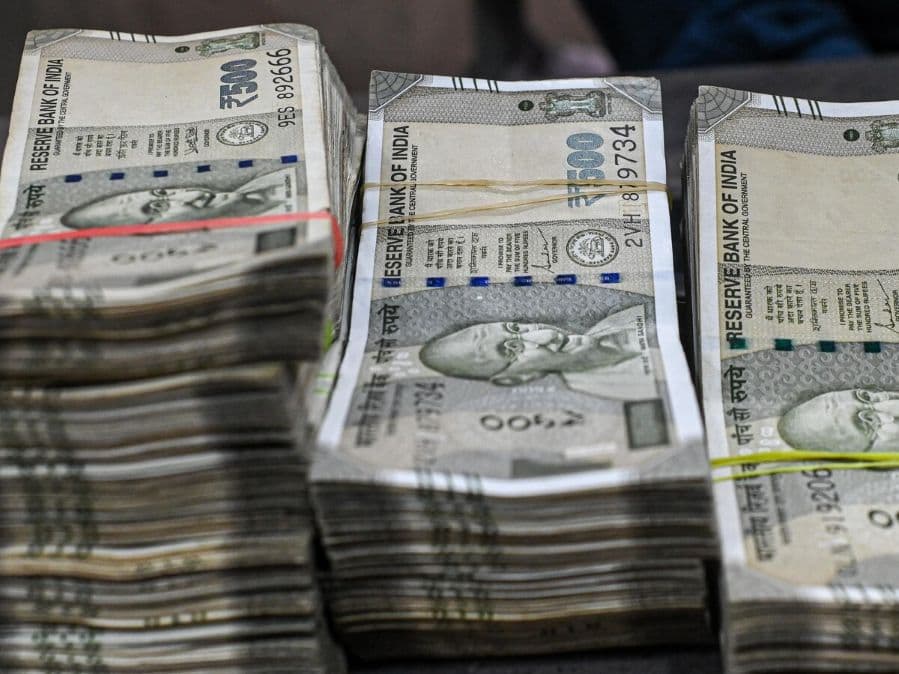
Money laundering continues to be one of the most significant financial crimes affecting India’s economic integrity. From high-profile business tycoons fleeing the country to elaborate schemes orchestrated from within prison walls, India has witnessed some of the world’s most complex money laundering cases. This comprehensive guide examines the major money laundering cases in India, the regulatory framework designed to combat these crimes, and how businesses can protect themselves through robust anti-money laundering (AML) compliance.
What is Money Laundering in India?
Money laundering is the process of concealing the origins of illegally obtained money, typically by passing it through a complex sequence of banking transfers or commercial transactions. In India, money laundering involves three distinct stages:
- Placement: Introducing illicit funds into the financial system
- Layering: Conducting complex transactions to obscure the source of funds
- Integration: Making the laundered money appear legitimate through investments and purchases
The Indian legal framework defines money laundering under the Prevention of Money Laundering Act (PMLA), 2002, which criminalizes the process of projecting proceeds of crime as untainted property. Money laundering in India often involves corporate fraud, corruption, tax evasion, illegal mining, drug trafficking, and various other predicate offenses.
Money Laundering Cases in India
Number of Money Laundering Cases in India
This has resulted in a lot of money laundering cases in the form of tens of thousands of crores of rupees, involving high-profile cases like those in India. Both of these cases have laid bare systemic weaknesses in the financial system and also emphasised the need for stringent regulations.
Vijay Mallya Case
The Kingfisher Loan Default and Fund Diverting in Brief
Vijay Mallya’s case, which is still one of the most infamous money laundering cases in India, has seen the collapse of Kingfisher Airlines and money being diverted more than Rs 9,000 crores.
The “King of Good Times”, Vijay Mallya, borrowed heavily from various Indian banks with a high volume of loans to finance Kingfisher Airlines. When the airline started to trouble the sky, Mallya was accused of diverting loan funds earmarked for the carrier to other business activities and personal assets. It shut down in 2012, leaving enormous debts and thousands of unemployed workers.
Alleged Money Laundering Amount
The entire amount of unpaid loans from a group of banks, including the State Bank of India, is in excess of Rs 9,000 crores. Assets, including properties, shares, and other investments in India and foreign property belonging to Mallya, which could be thousands of crores, were also attached in this case by the Enforcement Directorate in India.
Legal Proceedings in India & UK Extradition
Mallya fled to the UK in March 2016, just after Indian authorities attempted to revoke his passport. The Enforcement Directorate brought a money laundering case against him, and the Central Bureau of Investigation filed fraud and criminal conspiracy charges against him. In 2018, UK courts approved his extradition to India despite multiple legal battles, though he continues to challenge this through a series of legal appeals. The case has come to be a symbol of the difficulties in reclaiming assets and prosecuting wealthy criminals who flee abroad.
Yes Bank Scam – Rana Kapoor
Charges of Kickbacks For Bad Loans
The Yes Bank scandal revealed how kickbacks and corrupt lending practices at a big banking operation were able to ruin an institution, with corrupt lending practices in a country with the highest profile and one of the biggest banking crises in the whole nation for a long time, which also led to India.
Rana Kapoor, Yes Bank’s ex-CEO and managing director, was arrested in March 2020 by the Enforcement Directorate for taking kickbacks in return for sanctioning loans and lending them to businesses that subsequently defaulted in the aftermath of the default. The probe found that Kapoor gave loans to companies with flimsy financials worth thousands of crores–in return for his benefit and the benefit of his family.
Money Laundering Via Shell Companies
The ED investigation uncovers that Kapoor got kickbacks from a dense network of shell companies and benami properties. His family members received payments and investments into several real estate schemes in quid pro quo for lending sanction. Another notorious case concerned loans to Dewan Housing Finance Corporation Limited (DHFL), in which Kapoor was reportedly compensated with Rs 600 crores in kickbacks through his wife’s business.
ED Investigation Details
The Enforcement Directorate attached assets of over Rs 2,000 crores related to Kapoor and his family members. It uncovered a close inspection and confirmed the fact that Yes Bank had granted Rs 3,700 crores worth of loans to DHFL, which in turn was purported to have wired the funds to Kapoor’s family entities. What followed was a massive management overhaul at Yes Bank and a rescue package by the Reserve Bank of India, which was launched to ensure the bank was rescued from the brink of collapse.
Nirav Modi & PNB Scam
How the Scam Happened
The Punjab National Bank (PNB) scam involves diamond merchants, Nirav Modi and his uncle, Mehul Choksi, who allegedly defrauded the bank of over Rs 14,000 crores.
The fraud emerged in January 2018 when PNB officials found that fraudulent Letters of Undertaking (LoUs) dating from 2011 had been sent to Nirav Modi’s businesses. LoUs are basically bank guarantees that facilitate customers in seeking foreign credit from one of the branches of Indian banks. With the assistance of bank employees, Nirav Modi and Mehul Choksi got at least these guarantees worth more than Rs 14,000 crores with no collateral and no approvals.
Banks and Loopholes Exploited
The scam took advantage of a key vulnerability in PNB’s internal systems. The bank’s top management was blind to the phishing LoUs that were issued over the SWIFT messaging system and never recorded in the bank’s existing core banking system for a period of time. When the fraud was discovered, the fraudsters, Nirav Modi and Mehul Choksi, had already been out of the country. The fraudulent LoUs were used to secure loans from Indian bank offices abroad that went without repayment.
Current Status of the Case
Both Nirav Modi and Mehul Choksi left India before the scam became apparent. Nirav Modi was arrested in London in March 2019 and is struggling against extradition to India. A judicial referral to the United Kingdom in 2021 enabled his extradition, for which he remains appealing. Mehul Choksi got citizenship in Antigua and Barbuda before being extradited, and he stays there. The Enforcement Directorate has retained thousands of crores worth of assets in India and overseas and is seeking to recover funds for the scam.
Satyam Scam
Corporate Fraud and Accounting Trickery
One of India’s biggest corporate frauds, the Satyam scam, came to light in 2009. It demonstrated massive accounting manipulation and diversion of funds by individuals to other individuals or companies.
The founder of Satyam Computer Services, Ramalinga Raju, confessed in January 2009 that he had cheated the company’s books for many years. The fraud involved inflating revenues, margins, and cash balances to the scale of more than Rs 7,000 crores. The cash balance of the company was actually Rs 5,040 crores (versus the reported cash balance of Rs 5,361 crores) and continued widening as the fraud went on.
How Funds Were Siphoned
Raju and the people helped him create phony employees and then forged fictitious employees and invoices to take money out of the company. They also inflated revenues by fabricating fake customers and transactions to boost revenues by creating fake customers and transactions. The cash was reportedly used for purchasing land and other projects. The scam was so ingenious that auditors didn’t catch it all right up for years, and it cast serious doubts on corporate governance and audit practices in India.
Connection to Loopholes & Financial Ripples
Since the Satyam case investigated under the Prevention of Money Laundering Act came about, as those funds were laundered through various corporate entities, Raju and others were found guilty in 2015 and sentenced to seven years in prison. The case resulted in some remarkable changes in corporate governance regulations for India, with stricter disclosure rules, increased requirements for independence of boards, and new requirements for more robust auditing.
Delhi Liquor Policy Case
Disconnection of Excise Policy Implementation Allegations
The Delhi liquor policy case is one of the most politically-charged money laundering cases in recent years, and involves allegations of corruption in the drafting and implementation of Delhi’s excise policy.
The Delhi government introduced the excise policy for 2021-22 in November 2021 under conditions of cash flow generation and modernisation of alcohol sales in the respective city. A plan that was intentionally written with gaps in favor of some liquor providers, and a collusion of cartel formations to facilitate it. A CAG report identified irregularities that eventually resulted in revenue loss of above Rs 2,026 crores for the government.
Laundering with Corruption and Crime linked to Political and Business Entities
The Enforcement Directorate argued that the liquor policy was designed to lend wholesale liquor businesses to private companies with fixed margins, for a pecuniary windfall of Rs 100 crores. These kickbacks were paid to political leaders through shell companies and were earmarked towards electoral purposes, the ED argued. The policy was said to have favored specific groups of businesses in that it cut license fees, allowed penalties to be waived, and allowed certain players to play in certain zones.
ED & CBI Ongoing Investigation
An Enforcement Directorate action was thereafter taken to investigate the money laundering. Delhi’s then-Deputy Chief Minister Manish Sisodia in February 2023 and Chief Minister Arvind Kejriwal in March 2024 were arrested, which drew media attention. In September 2024, the Supreme Court granted Kejriwal his release through bail after he had spent over five months in jail. The policy was withdrawn in July 2022, and investigations are ongoing across Delhi by the ED and CBI.
Sukesh Chandrasekhar Case
Fake Identity, Extortion from High Impact Figures
Sukesh Chandrasekhar is an unusual example — a conman who is reported to be orchestrating a Rs 200 crore extortion racket from inside Delhi’s Tihar Jail that implicates celebrities, luxury purchases, and cryptocurrency.
Sukesh Chandrasekhar, a serial conman with more than 30 fraud charges against him throughout India, reportedly engaged in elaborate extortion schemes while incarcerated in the jail of Rohini and Tihar in Delhi. He impersonated key government officials, including the Union Home Minister’s office, by phone spoofing technology to ring and extort wealthy individuals to cough up money.
Money Laundering via Luxury Items, Crypto
Chandrasekhar’s demanded funds were laundered in a variety of channels. The Enforcement Directorate said in its investigation that he had spent crores worth of luxury items, including expensive cars, designer clothes, jewelry, and electronics. A surprise raid against his jail cell in Mandoli Jail in January 2023 revealed luxury goods, including Rs 1.5 lakh of Gucci slippers, Rs 80,000 of expensive jeans, and cash, raising serious allegations about locking up and corruption. Chandrasekhar also reportedly used cryptocurrency to launder some of the extorted cash, complicating tracing.
Celebrities Linked, ED’s Investigations
The case was popular among the press and critics when it was revealed that Bollywood actress Jacqueline Fernandez had received multimillion-dollar gifts from Chandrasekhar. The ED alleged that Chandrasekhar had reached out to Fernandez by faking phone numbers and pretending to be an affluent businessman with ties to ex-Tamil Nadu Chief Minister J. Jayalalithaa, the owner of Sun TV. He lavished her with gifts of luxury cars, designer jewellery, designer handbags, and even a yacht named “Lady Jacqueline.” Another actress, Nora Fatehi, was also interrogated by the ED following a claim by the actress for a luxury car and other gifts received from Chandrasekhar.
Both actresses, it has been alleged, knew about Chandrasekhar’s criminal past but continued to take the proceeds of crime, the ED continued. Chandrasekhar, under surveillance, made use of an aide, Pinky Irani, to link up with celebrities and transfer gifts, investigators found. Chandrasekhar and his wife, Leena Maria Paul, are currently in judicial custody, with multiple charges pending under the Prevention of Money Laundering Act, as of 2024. The Delhi High Court has permitted the ED to auction 26 luxury vehicles purchased with laundered money, with proceeds to be kept in an interest-bearing fixed deposit.
Role of PMLA (Prevention of Money Laundering Act), 2002
The Prevention of Money Laundering Act (PMLA) is India’s primary legislation to combat money laundering and forms the backbone of the country’s anti-money laundering framework.
Key Provisions of PMLA
The PMLA defines money laundering as a process involving the concealment, possession, acquisition, or use of proceeds of crime, or projecting such proceeds as untainted property. The Act empowers authorities to attach and confiscate property derived from money laundering activities. One of the most significant features of PMLA is that money laundering is treated as a standalone offence, meaning individuals can be prosecuted for money laundering even if they were not involved in the predicate offence that generated the illegal proceeds.
Offences and Penalties
Under Section 4 of the PMLA, anyone found guilty of money laundering can face rigorous imprisonment for a term ranging from three to seven years, along with a fine of up to Rs 5 lakhs. For offences involving narcotic drugs and psychotropic substances, the punishment can extend up to ten years. The Act also provides for the attachment of property involved in money laundering and empowers courts to order confiscation of such property upon conviction.
Significant Amendments
The PMLA has been amended several times to strengthen its provisions and close loopholes. Significant amendments include:
- 2009 Amendment: Expanded the definition of “proceeds of crime” and included provisions for mutual legal assistance with foreign countries
- 2012 Amendment: Introduced the concept of “reporting entities” and mandated customer due diligence requirements
- 2013 Amendment: Made furnishing false information a punishable offence and strengthened provisional attachment provisions
- 2019 Amendment: Extended PMLA provisions to cross-border offences and included provisions related to fugitive economic offenders
Recent Supreme Court judgments, particularly the landmark Vijay Madanlal Choudhary case in 2022, have upheld the constitutional validity of various PMLA provisions while clarifying the scope of enforcement powers.
Role of Enforcement Directorate (ED)
The Enforcement Directorate is India’s premier financial investigation agency responsible for enforcing economic laws and combating financial crimes, including money laundering.
Powers and Functions
The ED operates under the Department of Revenue, Ministry of Finance, and is responsible for investigating money laundering cases under the PMLA. The agency has wide-ranging powers, including:
- Attachment of Property: The ED can provisionally attach property suspected to be proceeds of crime for up to 180 days, which can be extended with court approval
- Search and Seizure: Officers can search premises and seize documents and assets believed to be connected to money laundering
- Arrest Powers: The ED has the authority to arrest individuals suspected of money laundering offenses
- Summoning: The agency can summon individuals for questioning and record their statements
Investigation Process
The ED’s investigation process begins with the registration of an Enforcement Case Information Report (ECIR), which is the equivalent of an FIR under the PMLA. The ED typically initiates investigations based on predicate offenses registered by other agencies like the CBI, Income Tax Department, or state police. As of 2024, more than 7,000 ECIRs have been filed since the PMLA came into force.
Track Record and Statistics
According to government data presented in Parliament, the ED registered over 5,297 money laundering cases between 2014 and 2024. The agency has achieved 40 convictions during this period with only three acquittals, resulting in an impressive conviction rate of approximately 93 percent. Over 1,700 cases are currently at the trial stage across Indian courts. The ED has attached assets worth thousands of crores in various instances, demonstrating its effectiveness in recovering proceeds of crime.
Regulatory and Legal Framework
India’s anti-money laundering framework involves multiple regulatory bodies working in coordination to prevent and detect financial crimes.
Role of RBI, SEBI, FIU-IND
Reserve Bank of India (RBI)
The RBI plays a crucial role in regulating banks and financial institutions to ensure AML compliance. The central bank issues master directions on Know Your Customer (KYC) and Anti-Money Laundering standards that all banks and financial institutions must follow. These guidelines cover customer identification, risk categorisation, monitoring of transactions, and reporting of suspicious activities.
Securities and Exchange Board of India (SEBI)
SEBI regulates capital markets and securities intermediaries, including stock brokers, mutual funds, and portfolio managers. SEBI has issued detailed AML guidelines that require market intermediaries to implement KYC procedures, conduct customer due diligence, and report suspicious transactions. The regulator conducts regular inspections to ensure compliance with AML standards.
Financial Intelligence Unit – India (FIU-IND)
FIU-IND is the central national agency responsible for receiving, processing, analyzing, and disseminating information relating to suspect financial transactions. Established in 2004, FIU-IND acts as an independent body that reports directly to the Economic Intelligence Council, headed by the Finance Minister. The unit collects cash transaction reports, suspicious transaction reports, and cross-border wire transfer reports from reporting entities and shares intelligence with law enforcement agencies.
FATF Influence on India’s Anti-Money Laundering Laws
The Financial Action Task Force (FATF) is an intergovernmental organization that sets international standards for combating money laundering and terrorist financing. India has been a member of FATF since 2010 and is also a member of the Asia/Pacific Group on Money Laundering (APG).
India’s FATF Assessment
In September 2024, a joint FATF-APG-EAG assessment concluded that India has implemented an anti-money laundering and counter-terrorist financing framework that is achieving good results in many areas. The evaluation found that India has achieved a high level of technical compliance with FATF Recommendations and has taken significant steps to tackle illicit finance. The country received positive marks for risk understanding, access to beneficial ownership information, and depriving criminals of their assets.
However, the assessment also identified areas for improvement, including the need to complete money laundering trials more expeditiously, ensure appropriate sanctions for offenders, and take a more risk-based approach with non-profit organizations. The report noted that while India pursues money laundering related to fraud and corruption effectively, there is room for improvement in prosecuting cases related to human trafficking and drug trafficking.
Amendments to Tighten Loopholes
India has continuously updated its AML framework to address emerging challenges and close regulatory gaps:
Banking Regulations
Recent amendments to banking regulations have mandated stricter customer due diligence requirements, enhanced screening of politically exposed persons (PEPs), and improved beneficial ownership identification for corporate customers. Banks are now required to conduct periodic reviews of high-risk accounts and implement transaction monitoring systems.
Virtual Asset Regulation
Recognizing the money laundering risks posed by cryptocurrencies and virtual assets, India has brought Virtual Asset Service Providers (VASPs) under the ambit of PMLA reporting requirements. VASPs are now required to register with FIU-IND, implement KYC procedures, and report suspicious transactions.
Beneficial Ownership Requirements
The Ministry of Corporate Affairs has mandated that all companies must file information about their beneficial owners—the ultimate individuals who own or control the company. This transparency measure helps prevent the misuse of corporate vehicles for money laundering purposes.
Impact of Money Laundering on the Indian Economy
Money laundering has far-reaching consequences that extend beyond individual cases to affect India’s entire economic ecosystem.
Economic Distortions
Money laundering creates artificial demand for certain assets, particularly real estate and precious metals, leading to price distortions and asset bubbles. This makes these assets less affordable for legitimate buyers and can destabilize markets. The injection of illicit funds into the financial system also affects monetary policy effectiveness, as central banks find it harder to control money supply and inflation.
Loss of Tax Revenue
A significant portion of laundered money represents untaxed income, resulting in substantial revenue losses for the government. These losses reduce the government’s ability to fund essential public services, infrastructure development, and social welfare programs. The tax burden on honest taxpayers increases to compensate for these losses, creating economic inequality.
Reduced Foreign Investment
High-profile money laundering cases damage India’s reputation as an investment destination. When international investors perceive weak enforcement mechanisms and high corruption risks, they become hesitant to invest in Indian markets. This leads to reduced foreign direct investment (FDI) flows, affecting job creation and economic growth.
Weakened Financial Institutions
Banking frauds and money laundering cases like the PNB and Yes Bank scams erode public trust in financial institutions. When banks suffer large-scale fraud, they face capital erosion, increased non-performing assets, and higher borrowing costs. This reduces their ability to lend to legitimate businesses and individuals, affecting overall economic growth.
Impact on Competition
Businesses that operate with laundered money can offer artificially low prices or bribe officials to gain unfair advantages over competitors who operate legitimately. This creates an uneven playing field that discourages honest entrepreneurship and innovation.
KYC Hub’s AML Solutions for India
KYC Hub offers comprehensive anti-money laundering solutions specifically designed to help Indian businesses comply with PMLA requirements and protect themselves from financial crime risks.
Automated Customer Onboarding and Verification
KYC Hub’s platform enables businesses to conduct digital customer onboarding with automated identity verification using government-issued documents such as Aadhaar, PAN cards, and passports. The system uses AI-powered document verification to detect forgeries and ensure authentic identity proof, significantly reducing onboarding time while maintaining compliance with RBI and SEBI guidelines.
Risk-Based Customer Due Diligence
The platform implements risk-based approaches to customer due diligence as mandated by Indian regulations. It automatically categorizes customers into low, medium, and high-risk categories based on factors such as occupation, geography, transaction patterns, and business relationships. This allows businesses to apply appropriate levels of scrutiny and ongoing monitoring based on actual risk profiles.
Sanctions and PEP Screening
KYC Hub provides real-time screening against global sanctions lists, watchlists, and databases of politically exposed persons (PEPs). The system includes Indian-specific PEP databases covering politicians, senior government officials, and their family members. Automated screening during onboarding and periodic re-screening ensure continuous compliance with PMLA requirements.
Transaction Monitoring and Suspicious Activity Detection
The platform offers advanced transaction monitoring capabilities that analyze customer transactions for unusual patterns and suspicious activities. Using machine learning algorithms, the system can detect potential money laundering red flags such as structuring, rapid movement of funds, transactions inconsistent with customer profiles, and patterns indicative of layering activities.
Beneficial Ownership Identification
KYC Hub helps businesses comply with beneficial ownership requirements by providing tools to identify and verify the ultimate beneficial owners of corporate entities. The system maintains audit trails of ownership structures and automatically flags changes that may indicate attempts to conceal actual ownership.
Regulatory Reporting
The platform simplifies regulatory reporting by automatically generating suspicious transaction reports (STRs), cash transaction reports (CTRs), and other reports required by FIU-IND. It maintains comprehensive audit trails and documentation to demonstrate compliance during regulatory inspections.
Integration with Existing Systems
KYC Hub’s solutions integrate seamlessly with existing banking systems, core banking solutions, and enterprise resource planning systems through APIs. This ensures that AML compliance measures become an integral part of business processes without disrupting operations.
Continuous Monitoring and Updates
The platform stays current with regulatory changes and automatically updates screening databases, watchlists, and compliance rules. This ensures that businesses remain compliant even as regulations evolve and new threats emerge.
Conclusion
Money laundering cases in India have exposed significant vulnerabilities in the country’s financial system while also demonstrating the determination of regulatory authorities to combat financial crimes. The Prevention of Money Laundering Act, backed by vigilant enforcement through agencies like the ED, has created a robust legal framework for prosecuting money launderers. The high conviction rate and billions of rupees in attached assets demonstrate the effectiveness of this framework.
As India continues to grow as a significant economic power, strengthening its defenses against money laundering will be crucial for maintaining the integrity of its financial system, attracting foreign investment, and ensuring that economic growth benefits all citizens rather than enriching criminal enterprises. The cases discussed in this article serve as reminders of the constant vigilance required to protect India’s financial future.
Digital KYC in India lives or dies on the compliance detail. KYC Hub's India KYC solution covers Aadhaar, Video KYC, and CKYC so your team isn't stitching tools together. Talk to us.